

What Does It Mean If Your Gas Water Heater's Flame Is Yellow Or Orange?
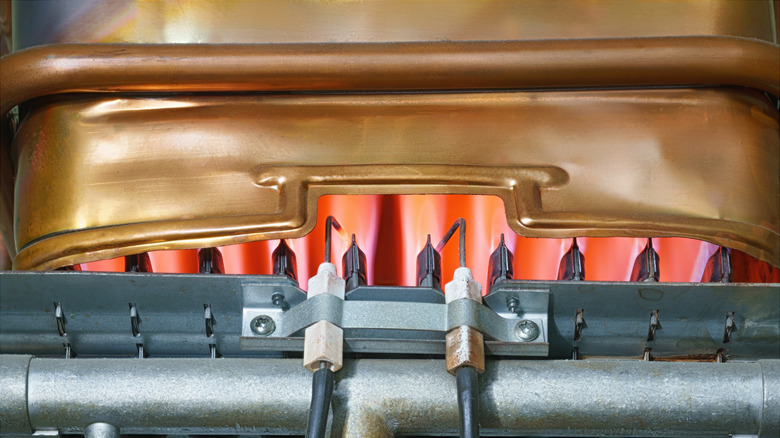
Many of us ignore the burner flame on our gas water heater, but it's an important part to keep an eye on. The flame color can indicate whether the water heater is functioning properly. When everything is alright, the flame should ideally be blue, indicating proper combustion. However, sometimes your gas water heater's flame may turn yellow or orange, which can be a sign of improper or incomplete combustion. It's also something you need to get inspected and fixed promptly.
The biggest problem with incomplete combustion is that it can increase the production of carbon monoxide (CO). For context, carbon monoxide is a harmful gas, and inhaling high levels of it can cause dizziness and unconsciousness by displacing oxygen in your bloodstream. Long-term exposure can have severe effects on the human body. Apart from that, improper combustion results in reduced efficiency, which in turn increases operating costs and may shorten the water heater's lifespan. So, you may end up paying more in the long run.
Keep in mind that some parts of the flame may be yellow. For instance, the inner cone or the tip may have a yellowish tint, and that's completely normal. However, if the flame is completely yellow or orange, it's a sign that something is wrong with your gas water heater or the fuel.
Yellow or orange flame indicates improper combustion
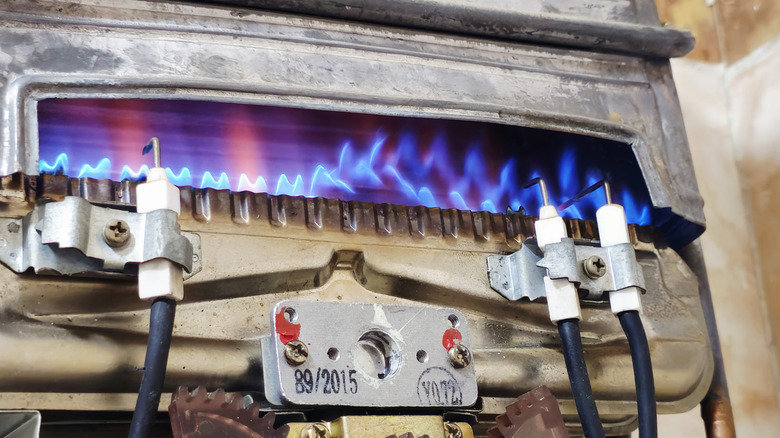
There are several reasons behind a persistent yellow or orange flame in a gas water heater. Before we get to that, let's first understand the combustion process. When a combustible gas burns completely, it primarily produces carbon dioxide, water vapor, and heat. This is largely harmless if you have proper provisions for ventilation. Also, the flame color in this case is blue.
Incomplete combustion, on the other hand, produces a yellow or orange flame and carbon monoxide. It can happen if the burner is clogged, as it restricts airflow. This is a fairly common problem caused by dust and debris blocking the burner. Other likely reasons for a yellow or orange flame include low gas pressure, an improper air-to-gas ratio, contaminated fuel, incorrect setup, or high moisture levels.
So, if you recently made any changes to the setup, adjusted the air pressure, or introduced new equipment or an appliance in the vicinity, such as a humidifier, that could be the reason you are noticing the change in flame color. The good news is that some simple adjustments should fix the problem for most of you in no time.
Fixing incomplete combustion in a gas water heater
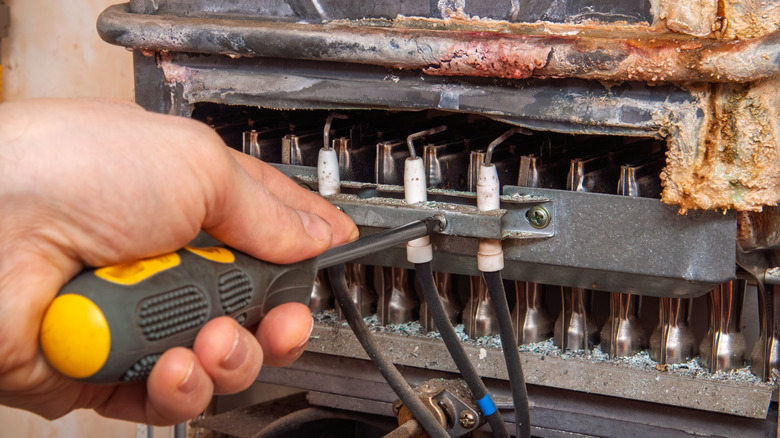
Remember, one or more of these factors could be behind the yellow/orange flame in your gas water heater. It's not always possible to pinpoint the exact cause by simply looking at the flame's color. However, if the burner hasn't been cleaned in a while, that should be the first step. Something as simple as cleaning the burner, which is usually part of routine maintenance, should get your gas burner to produce blue flames. Also, if you have a humidifier in the area, turn it off, remove it temporarily, and check whether the flame changes color. If it does, high moisture levels were most likely the problem. If none of that works, you should consult a professional. They will inspect the various components and the fuel, identify the fault, and fix it. Since different models operate differently, this is the best approach from both a safety and practicality standpoint.
Lastly, you must realize that a gas water heater's yellow or orange flame is something you shouldn't ignore. That's because it's affecting the water heater's efficiency and producing harmful carbon monoxide. Even though the gas is colorless and odorless, the flame's color is a sign that its concentration may be increasing. So, make it a point to inspect the flame's color from time to time. More importantly, make sure the gas water heater receives regular maintenance from a qualified professional, as it will prevent the problem from arising in the first place. You can also switch to an electric water heater, as these don't face the same issues.