

How Many Engine Hours Is Considered A Lot For A Boat?

Checking the mileage is likely one of your first steps when buying a used car. You want to be confident a vehicle hasn't been driven so often it's likely to break down on you at the worst possible time. Similarly, if you're in the market for a pre-owned boat, it's wise to check the engine hours before making a purchase. However, unless you have experience, you might not know how many engine hours are a lot for a boat.
Engine type is a critical factor when assessing whether a boat has too many engine hours to be worth your money. Generally, if a boat is gasoline-powered, 1000 or more engine hours is a red flag that the vehicle may not be as seaworthy as you'd like. Boats with diesel engines may be reliable at up to 6000 to 8000 engine hours, assuming they've otherwise been properly maintained. Although these numbers can vary somewhat from one manufacturer to another, they offer solid rules of thumb to consider when trying to figure out if a used boat's engine has too many hours on it.
Factors influencing what constitutes excessive boat engine hours
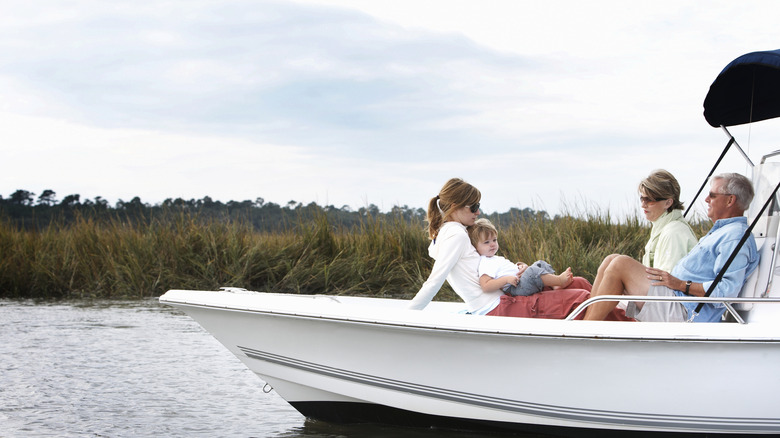
Just as there are various general factors to keep in mind when buying a used boat, you should account for certain details when evaluating whether a used boat has too many engine hours. Consider the following points about gasoline-fueled boat engines based on their drivetrain types: an outboard motor has a typical lifespan of 1500 to 3000 hours, a sterndrive has an expected lifespan of 1000 to 1500 hours, and the expected lifespan for an inboard engine is 1000 to 2000 hours.
Typical usage means a boat should accumulate about 75 to 150 engine hours per year. How well a boat has been maintained also matters. For example, a gas-powered boat with 300 engine hours may be a worthwhile purchase if the engine's been properly maintained.
Ask if the current owner can provide maintenance logs. A used boat with moderate engine hours may be a decent purchase if the owner can prove they've stayed on top of upkeep. Naturally, cost is a factor. The more engine hours a boat has, the lower the cost should be. However, a seemingly inexpensive boat might actually be costly in the long run if you need to rebuild or replace the engine shortly after purchase.
How to check engine hours on a pre-owned boat's engine
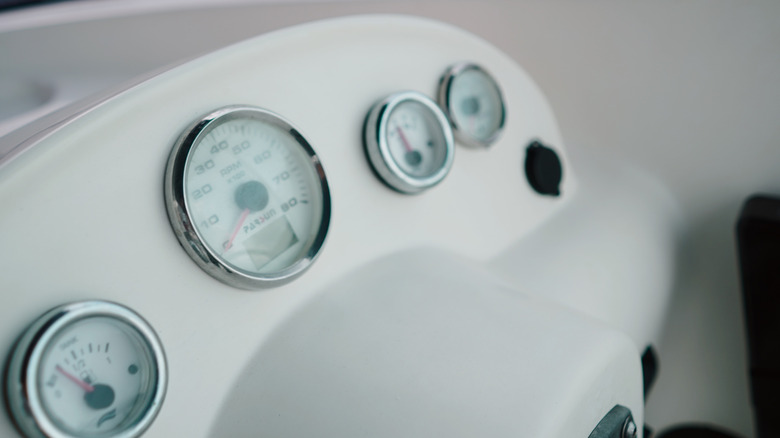
The process of checking a used boat's engine hours depends on such factors as when the engine was manufactured. If a boat was manufactured pre-2000s, there's a good chance its instrument panel has a meter telling you the engine hours. Newer boats tend to store engine hour data in their computers. While some boats have displays where you can easily access that computer data, not all do. The manual may also explain how to check engine hours.
You may need a mechanic if a boat doesn't have an obvious engine hour display. A professional can tell you how many engine hours a vessel has. Or you can ask the owner to provide maintenance logs or similar records. Some boat owners keep detailed records that include information about engine hours.
Hopefully, anyone trying to sell you a used boat will be honest about the engine hours. Still, it doesn't hurt to be a little cautious when making such a significant investment. Warning signs that indicate someone may have tampered with engine hour data include engine hours that are too perfect or round, discrepancies between maintenance records or other logs and the reported engine hours, and low engine hours for an engine that visibly appears to have gone through significant wear and tear. Remember, if you're not sure whether a vessel's reported engine hours reflect its actual usage, you can hire a professional to take a closer look. Once you've found a boat worth your money, you can optimize your experience with the right boating gadgets.