

'We're Way Behind': America's Next Naval Shipyard Is Fighting An Uphill Battle
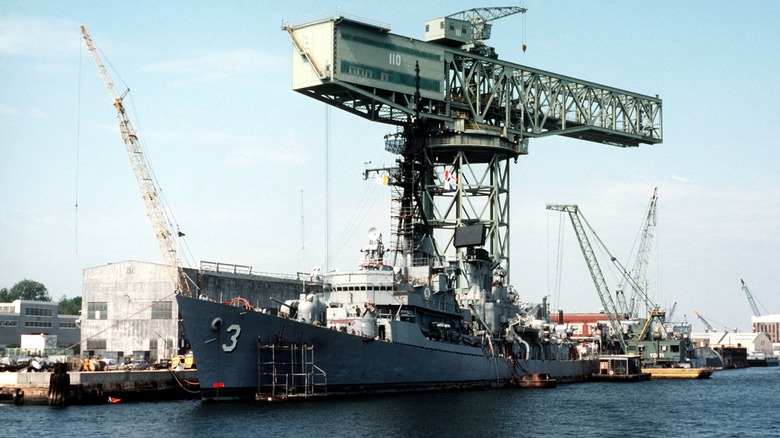
The United States' 2027 defense budget calls for 41 new ships, which is the largest demand for naval vessels since World War II. The budget calls for $65.8 billion for 18 combat vessels and 16 combat support ships for the Navy. Additionally, it calls for five new ships for the U.S. Coast Guard and Army, a scientific research ship, and a ferry for the National Park Service. The budget comes with a big ask, and American shipbuilders aren't capable of delivering, with current ship production and upgrades tying up drydocks across the nation.
The White House issued a memo calling for foreign-made military vessels, which isn't the norm for how the Navy produces its new ships. The Navy isn't in the habit of having its warships constructed elsewhere, calling the plan into question. As of writing, the U.S. has four active naval shipyards: Norfolk Naval Shipyard, Portsmouth Naval Shipyard, Puget Sound Naval Shipyard, and Pearl Harbor Naval Shipyard, with the latter two also functioning as Intermediate Maintenance Facilities.
To increase production, President Donald Trump signed the presidential memorandum that "Rebuilds the United States Navy and America's Shipbuilding Industrial Base," on August 13, 2026, calling for the creation of a new public shipyard. Once completed, it would be the first such facility constructed in 80 years, but the odds of it being ready to produce ships anytime soon is unlikely. The unfortunate reality of these kinds of facilities is that it could take 10 to 20 years before production is where the president wants it, and looming global conflicts could disrupt the White House's plans.
The problem with meeting the president's shipbuilding goals
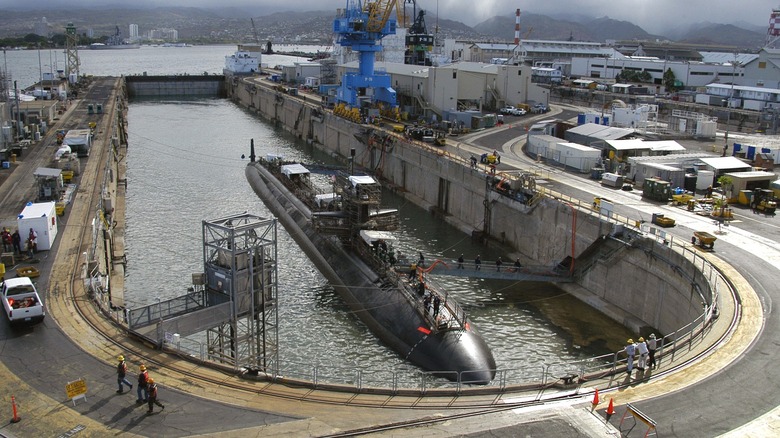
The U.S. Navy operates numerous modern warships, and with only four shipyards to construct and maintain them, adding production only increases the queue. The president also called for a dedicated submarine repair center, so there's more than a single shipyard that needs to be constructed. Additionally, in order for any of this to proceed, Congress needs to authorize the expenditure, which would be significant. Building a new shipyard isn't like constructing a port, and it could cost U.S. taxpayers over $1 trillion while taking around a decade to finish.
Retired U.S. Marine Corps intelligence officer Hal Kempfer shed some light on the problem in an interview with Military.com. When asked about the prospect of meeting the president's goals, Kempfer said, "We're way, way behind. We're going [in] the right direction, but we're so far behind. We're talking about the possibility of going to war with China within a few years. It's going to take 10 to 20 years to get our shipyards up to where they're good to go. So, it's the right direction, but it's too little, too late. We'll have to fast-track this and get it moving fast."
Adding a new shipyard, especially on the Pacific Coast, would be beneficial in many ways by introducing jobs, uplifting the local economy, and of course, providing a new means of constructing warships. Still, it's a massive construction project to build a new shipyard, so even if a new one is built, it won't produce any new vessels for more than a decade. Unfortunately, shipbuilding is a slow process, as nuclear supercarriers like the USS John F. Kennedy and the 12-year-wait for the USS Gerald R. Ford have proven.