

2026 Kawasaki Ninja ZX-10R Review: Less Power, More Appeal
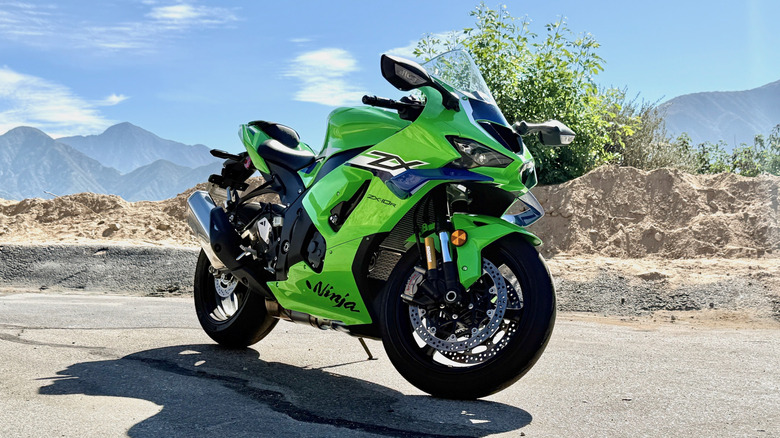
Some superbikes are a bit high-strung, and if it's been a while since you've ridden a 1,000-cc sport bike, it can be intimidating when you swing a leg over, crank the key to the right, and go out for your first ride. The new 2026 Kawasaki Ninja ZX-10R, though, can be a relatively docile thing if you treat it that way.
I was able to commute on it, ride to friends' houses, and generally live with it as a mode of transport without ever being scared off by the monster levels of power and performance it provided. But when I wanted to, I could easily twist my right wrist and make the newest Ninja liter-bike come alive.
 Travis Langness/SlashGear
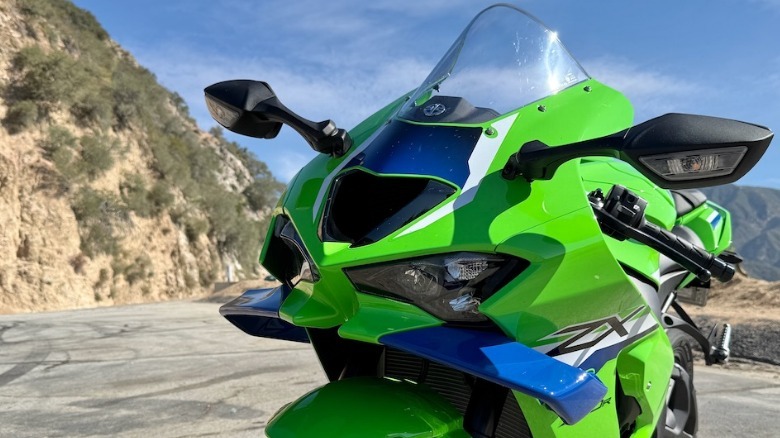
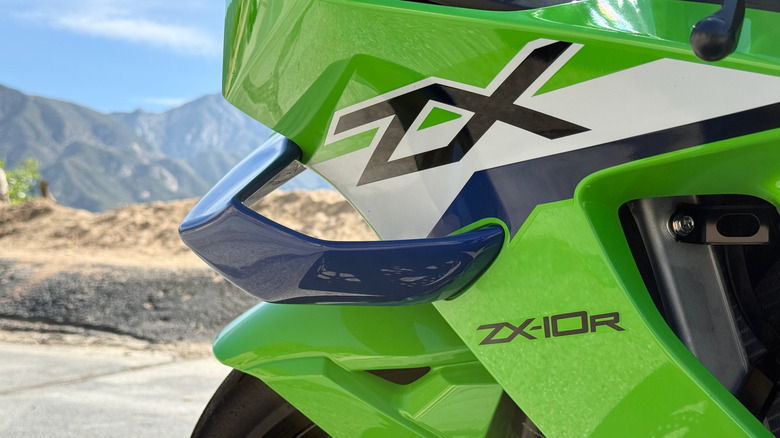
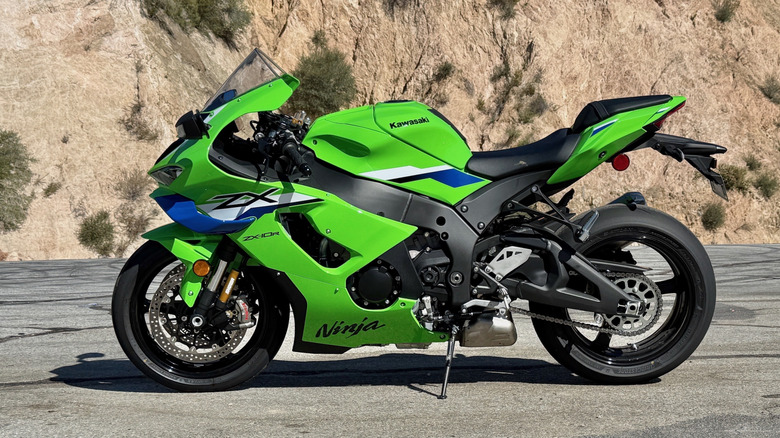
With a redesigned set of fairings, the 2026 Kawasaki Ninja ZX-10R looks the part of an aggressive, race-ready liter bike. It has hard angles and sharp creases designed with aerodynamics in mind. It gets winglets up front that hint at its track performance capabilities. It also gets a new rider screen for 2026 with a clear display and lots of easily accessible rider settings meant for molding the bike to your riding style. Pair that with some new chassis geometry and suspension settings, and you've got a thoroughly updated bike for 2026. And while it might be fast, the newest Ninja ZX-10R is pretty friendly for such a fire-breathing machine.
A brand new bag
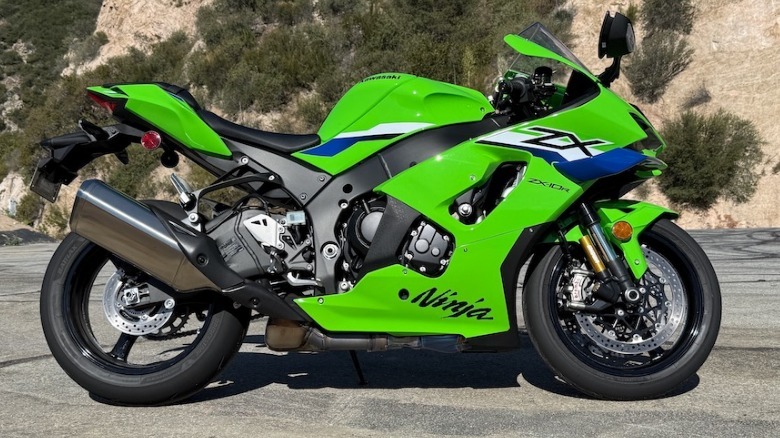
From a looks perspective, the 2026 Ninja ZX-10R (also just known as the ZX-10R, for short) is rocking an entirely new vibe. Naturally, it still comes in bright Kawasaki Lime Green, paired with Blue 24 for some of the aerodynamic accents, or it can be had with a black-and-gray combo called Metallic Matte Graphensteel Gray with Metallic Spark Black. Mounted inside the aluminum twin-spar frame is a 998cc inline-four cylinder engine that mostly carries over from the previous model-year.
 Travis Langness/SlashGear
The ZX-10R's chassis geometry has changed, and according to Kawasaki, that's done with downforce in mind. The swingarm pivot position, for instance, has been brought up by 2mm to maximize rear wheel traction. Without back-to-back high-performance sessions on the old model and the new one it's hard to tell if those changes have performed as advertised, but in person, I certainly enjoy the look of the new ZX-10R — even if winglets are tough to get full use out of while street riding.
Less power but does it really matter?
In the global pursuit of emissions reduction, though, some changes have been made to the ZX-10R's engine. It's down a few horsepower as a result, but it's still a really healthy power outlet: the old ZX-10R made 196 horsepower and 83.9 lb-ft of torque, while the newest model puts out 190 hp and 82.5 lb-ft. The loss doesn't make the ZX-10R feel even remotely underpowered, though.
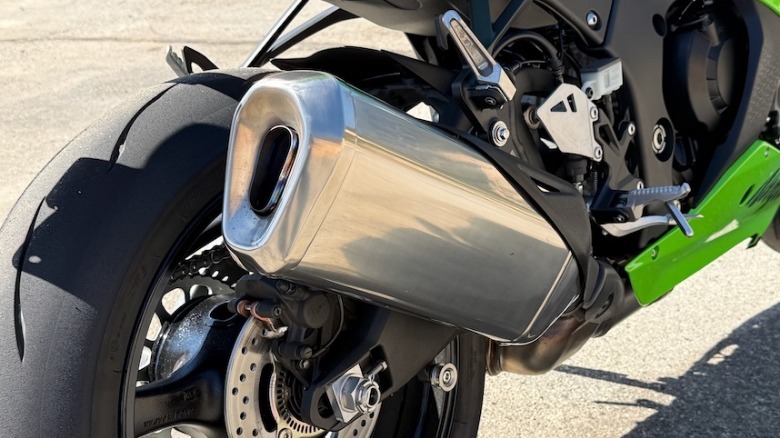
In basically any gear, at any speed, I was able to rotate the throttle back and rocket towards the horizon and monumental speeds. Rev the ZX-10R up towards redline, and the engine feels lively as it passes 4,500 rpm, changing soundtracks from a low, unassuming rumble to an enthusiastic growl. Around 8,000 rpm and on its way to peak power at 11,500 rpm, the ZX-10R feels like the missile you expect. Enjoyable but deeply antisocial speeds are possible in a hurry. On my first ride, I realized that if I owned one of these, I'd start shopping for aftermarket exhaust solutions to bring it to life a bit more. It's held back, but I could hear the potential, waiting to be unlocked.
 Travis Langness/SlashGear
There are three predetermined rider modes (Rain, Road, Sport) that each deliver power in their own way: progressively with a bit more sensitivity from the throttle and a bit more power being delivered to the rear wheel (along with four customizable Rider modes, too). For moving around town slowly, the Sport mode felt a bit too sensitive for me, so I spent most of my time in Road mode, and it never felt dull. The quick shifter felt properly light when I applied pressure to upshift or downshift, too. This new supersport Ninja might have less power than its predecessor, but it doesn't lack sharp response or outright speed.
Handling (and braking) with all that speed
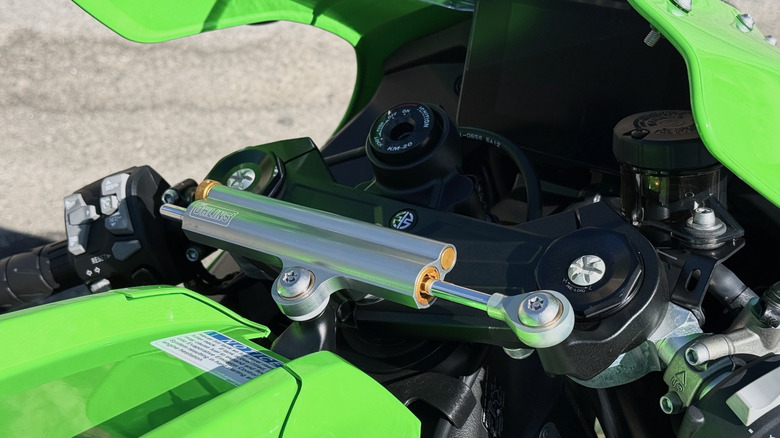
With an adjustable Öhlins steering damper as part of the standard equipment, it's no surprise that the ZX-10R feels stable through corners. At first, I thought the 10R's steering felt heavy, especially at slow speeds, but that passing consideration faded away in a hurry when I showed the bike a few corners. The 2026 ZX-10R uses Bridgestone Battlax RS12 tires, upgraded from the old model's RS11s, and while the new RS12s don't tip in very quickly, they grip with unassailable confidence.
 Travis Langness/SlashGear
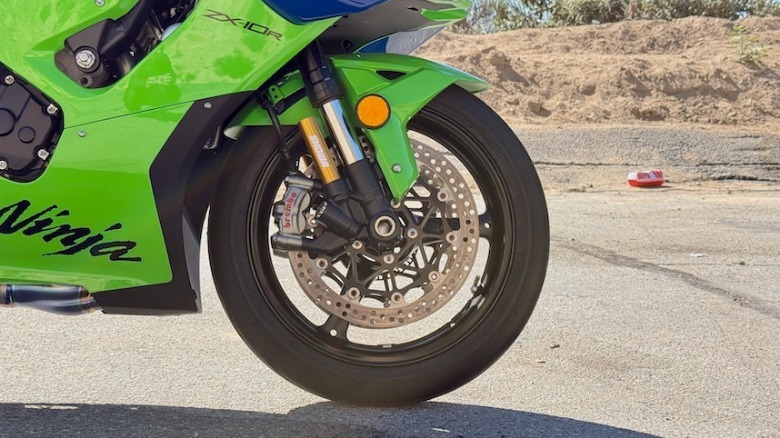
Eyes up, wrapped around the side of the tank, I'm able to look through corners, rotate my body with ease, and keep the bike steady over even rough mountain roads. Charging into a few corners with a head of steam, I was able to properly squeeze the front brakes and nearly stomp on the rears without any lockup. Two 330mm Brembo front discs and a Brembo four-piston caliper provide the stopping power up front, while a 220mm disc and a single-piston caliper do the clamping in the rear. Both are responsive without being oversensitive.
After a few weekend trips to the canyon, I came to the conclusion that I'd be doing this bike a disservice if I owned it and never took it to a track day. There are some performance upgrades that come with the ZX-10RR that make it more adept at track-day duty (a single seat for less weight, high-performance brakes with steel lines, lightweight pistons, Diablo Supercorsa tires), but this single-R version would be no slouch.
Dialing in the comfort
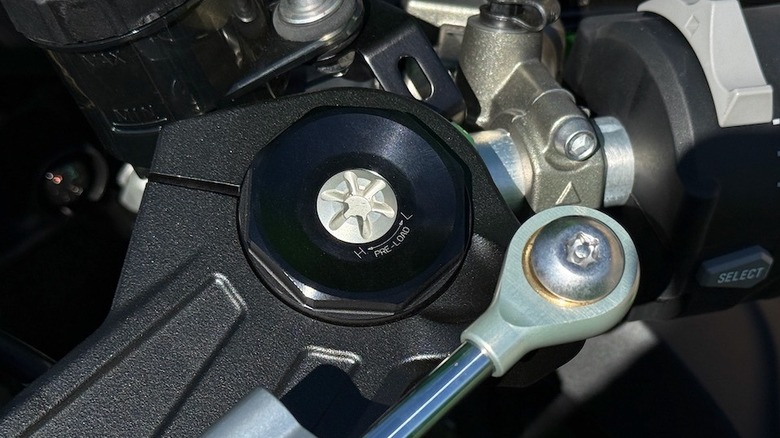
The speed came easily, but getting the comfort right on the ZX-10R took a bit of doing. I made a few suspension adjustments during my time with the bike, which is possible thanks to independently adjustable compression and rebound damping. There wasn't much I could do to dial out the bounciness of the ride on the 405 freeway, which is one of the hardest comfort tests for any performance motorcycle, but elsewhere, the ride was calm enough to keep me pain-free in the saddle.
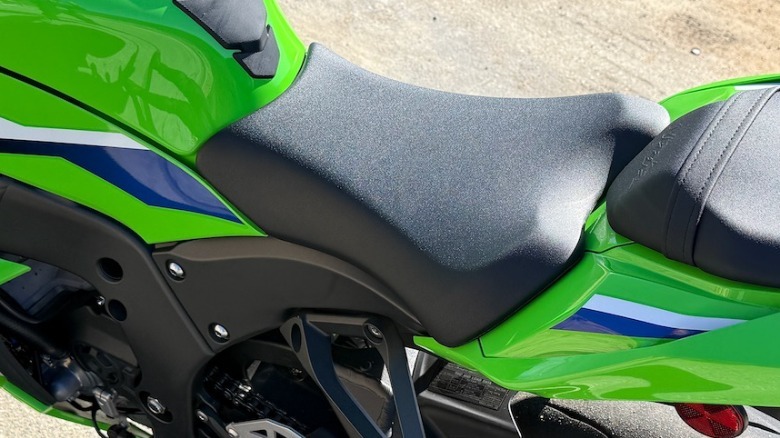
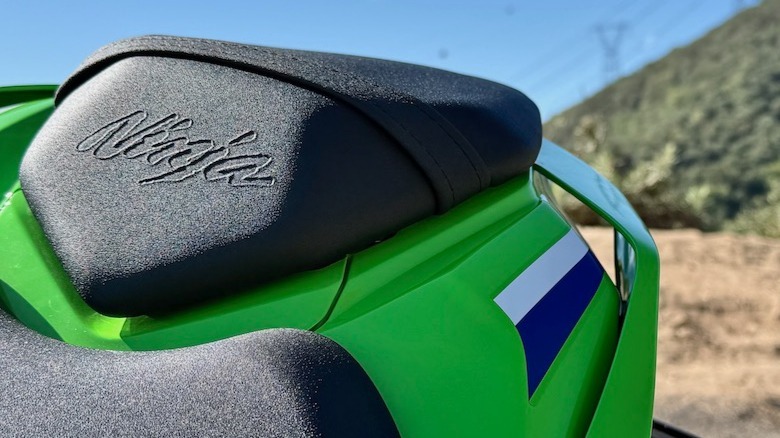
The ZX-10R's seat was relatively comfortable, too, with a decent amount of padding. The seat height of 32.5 inches meant I could flat-foot it at a stop while wearing boots, but riders with anything less than a 30-inch inseam will have a tougher time.
 Travis Langness/SlashGear
The foot pegs are mounted relatively high, and the handlebars are relatively low — a natural position for such a capable sport bike, but it meant that getting comfortable for long rides was a bit tough. With the forward-leaning sort of riding position that the ZX-10R has, I had to keep my uninterrupted riding time down to about two hours before I needed to dismount and stretch a bit.
Plenty of tech and modern features
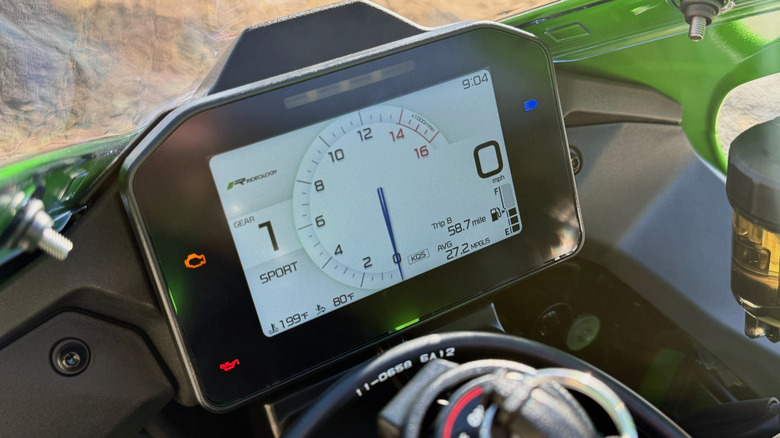
When I wasn't dialing in the suspension settings or doing my best to place the ZX-10R and properly track through every corner I could find, I spent a good amount of time fiddling with the upgraded display. The new 5-inch rider screen is a great addition to the ZX-10R. It's easy to see, with a slightly matte finish that eliminates glare, even in direct sunlight, and it feels a bit more upscale than the old, glossier screen.
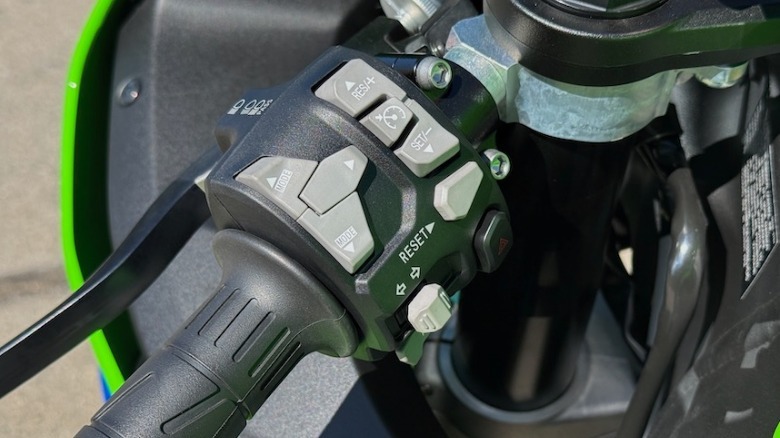
Switching through the various ride modes and adjusting settings takes a bit more work than I'd like, and the buttons aren't as intuitive as I'd prefer, which meant I had to redo or undo changes I made a few times. After a week or two on the bike, though, I got the hang of it.
 Travis Langness/SlashGear
Cruise control, while not a new feature, is something I appreciate on the ZX-10R, and it's a feature that worked pretty well for the most part. The ability to set a sport bike's speed, then let it do the work of maintaining forward motion, is a big comfort addition if you commute or even just regularly ride. It took pressure off my right wrist in a big way. In Sport mode, however, when setting a highway speed — say 70 mph in sixth gear — the cruise control could get jerky. The bike would lurch forward a bit on uphill sections of road, gaining or losing 1-3 mph depending on the grade. Switching into Road or Rain mode seemed to remedy the jerky-cruise-control problem, so that's how I ended up riding the ZX-10R when I was on long freeway sections.
2026 Kawasaki Ninja ZX-10R verdict
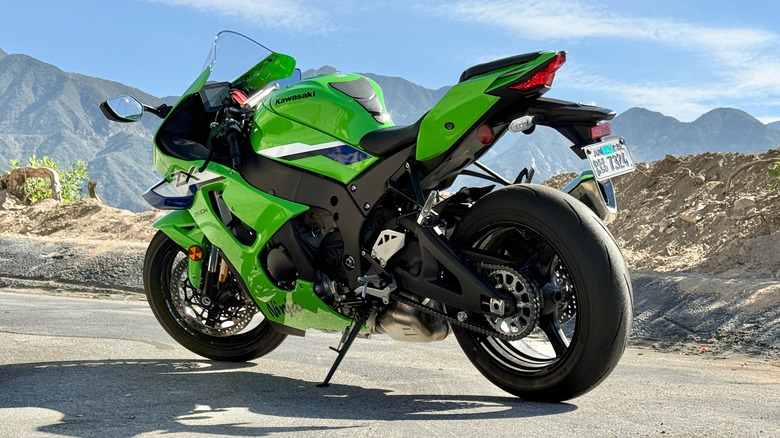
Instead of being daunting, the 2026 Ninja ZX-10R is approachable. There isn't a single liter bike I'd recommend for beginners, but if someone wanted to step up to the superbike level after mastering their technique on something smaller in the 600-cc class, this would be a great bike to make that transition. The ease of use encourages riding at a quick, but progressively quicker pace. The ZX-10R isn't twitchy or tough to become acquainted with. In the bright green paint scheme, it gets lots of looks and lots of respect, too: even if you aren't the fastest rider in your group, it'll turn heads.
As Kawasaki continues to clear out old versions of the ZX-10R, the 2025 model year can still be found on their website, with an MSRP of $17,839 (including an $840 destination fee) for non-ABS models, and $18,839 for those equipped with ABS. That's the same price as the current 2026 ZX-10R, so it's a bit of a bargain to get the new model with its tech and cosmetic upgrades without paying a premium. It's also on par with most of the ZX-10R's top rivals.
 Travis Langness/SlashGear
There are a few competitors worth considering if the Kawi's bright-green attitude and appeal don't seem right for you. The Honda CBR1000RR is a properly fast liter bike that offers similarly approachable levels of speed to the ZX-10R. The CBR is pretty far behind the curve when it comes to rider tech, though. Suzuki's iconic GSX-R1000R has also been updated recently, and it's priced similarly to the Kawi and the Honda, so it's worth a closer look.