

How Many Batteries Do You Really Need For Your Ryobi Tools?
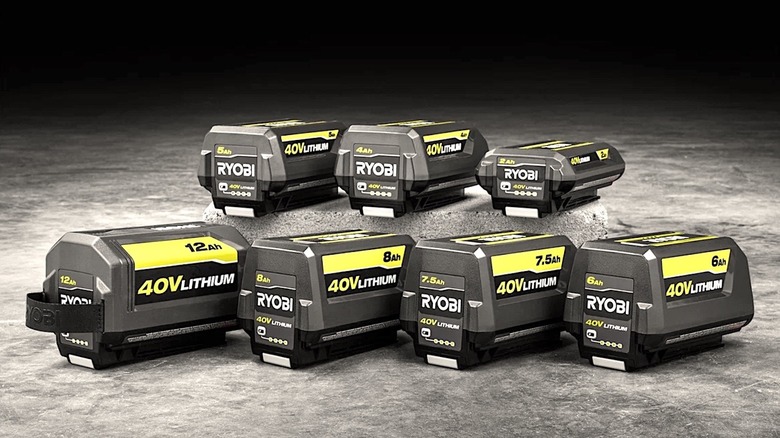
We may receive a commission on purchases made from links.
Ryobi power tools can be found in tool kits and garages throughout the world. So too can the lithium-ion batteries that power them, though it's a safe bet that the number of power packs from the Techtronic Industries-owned brand varies significantly from one household to the next.
That number will no doubt fluctuate based on the number and style of power tools in each owner's arsenal. When it comes to Ryobi batteries, however, most fans of the brand likely find themselves asking "how many is enough" on a fairly regular basis. I've asked it a few times myself, as I have accumulated a handful of Ryobi tools in recent years. The bulk of those tools are from the 40V lineup, but a few are also from the 18V line.
As I've gotten comfortable with Ryobi tools and their power packs, I've come to believe there's not a "right" number of batteries for users to have because it largely depends on the tools you use and how you use them. At present, I have three 40V batteries, one 2Ah, one 4Ah, and one 6Ah. The latter I use primarily with a Ryobi lawn mower and tend to have a little power left over whenever I mow. The other two came with a Ryobi blower and chainsaw, and those tools are used more sparingly. I do use all three batteries on the regular, however, and I've found that a little power pack management is essential in managing my power needs.
Battery and tool management can effect your power needs
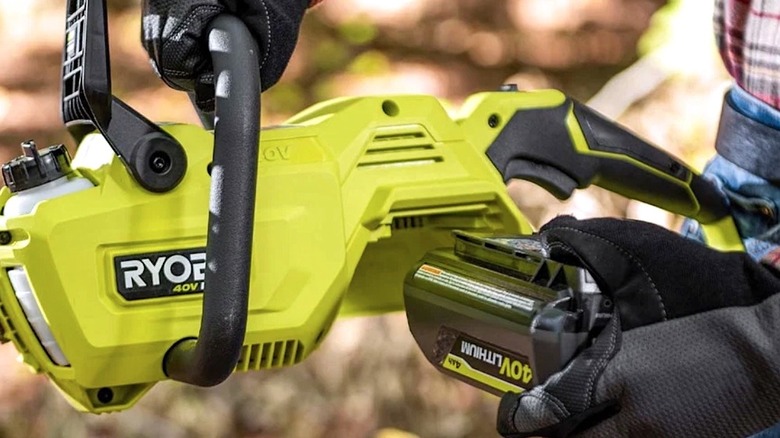
That being said, I sometimes still find myself sitting around mid-project while I wait for one of my Ryobi 40V power packs to power back up. That is a far more frequent occurrence in the fall, when leaves begin to cover the lawn and my Ryobi blower is pressed into heavy-duty action. It's then that I wish I had an extra 40V battery or two on hand, or at least ones with longer runtime capabilities and faster charging.
At present, I have just a couple of 18V Ryobi tools on hand — a string trimmer and a clamp speaker — and each came with a 2Ah power pack. I've found that these batteries are quicker to run out during use. With the string trimmer in particular, I can easily burn through both 2Ah batteries. Ditto for the Bluetooth speaker I use in the garage and on the campground. As it is, with both the 18V and 40V tools, I'm of the belief that it's wise to have at least one backup battery in the same ampere hour range for each. With heavy-use tools like lawn mowers and leaf blowers, you'd probably be wise to have at least two extras.
According to some Ryobi diehards online, even that number might not suffice, with some outright stockpiling batteries for their tools. However, this is probably not necessary for most average Ryobi owners who only have a few tools they regularly utilize. And yes, at some point it also gets a little tricky finding spaces to properly store the power packs.
How much to Ryobi batteries cost?
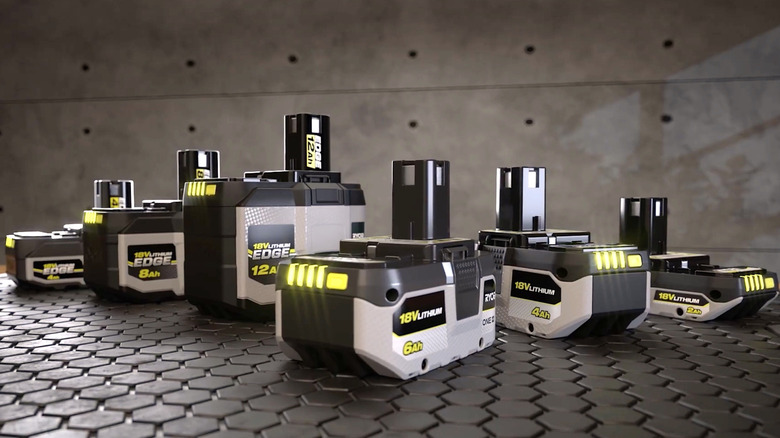
It can be a task to keep your batteries charged up and ready to work as well. Rather than stockpiling, I'd advise the average Ryobi user to instead invest in batteries with higher ampere hour (Ah) ratings, as they can often provide enough of a bump in runtime to account for your needs.
Whichever course you take, adding rechargeable Ryobi lithium-ion battery packs in either the 18V or 40V variety will almost certainly require a sizable monetary investment. That's even more true if you are looking at higher-Ah batteries, which can be significantly more expensive. Case in point: If you're shopping for a 4Ah 40V battery through The Home Depot, it'll cost you $159. That's without a charger, which ups the price to $199. Meanwhile, a 6Ah battery with charger will run you $279. The prices only go up from there, particularly if you're looking at Ryobi's more efficient 40V Edge batteries.
Batteries for the 18V lineup tend to cost a little less, though they're hardly cheap either. For instance, a single 4Ah 18V battery will run you $99 at The Home Depot, while a 6Ah model is priced at $129. An 18V charger adds about $30 to the cost. As with the 40V batteries, the sticker price goes up even further. You will also pay a premium for 18V packs bearing the Edge or High Performance monikers. For either sect, package deals often provide better value, with THD currently featuring a 3-battery 18V High Performance pack with two 6Ah and one 4Ah packs for $159.