

Why Did GM Stop Making Separate V8 Engines For Each Brand?
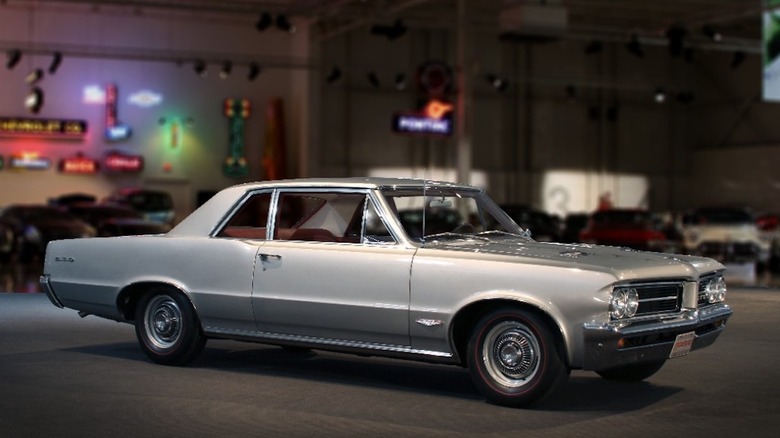
Back in the 1950s, 1960s, and the early-to-mid 1970s, General Motors let each of its divisions develop its own individual V8 engine families. Unfortunately for GM, something happened that had not been foreseen: General Motors saw its market share slide from having 50% of the U.S. auto market for most of the 20th Century to a much lower share as the years went by. There were also the rising costs of meeting the increasingly stringent emissions and safety standards that were a fact of life for GM and other automakers. Now, each division having its own unique V8 was seen as a cost to eliminate.
GM's individualized engine scheme worked well for a while, as exemplified by the keen competition within the General's A-body muscle car brands being produced during the late 1960s and early 1970s. It all started with the Pontiac GTO back in 1964, which was later joined by the Chevelle SS, the Buick Grand Sport, and the Oldsmobile 4-4-2. All these vehicles were powered by brand-specific V8 engines, and were vying for supremacy in the marketplace. This golden era includes some of the best A-body GM muscle cars that are still worth remembering to this day.
This arrangement was not employed by GM's competitors, Ford and Chrysler, which had each been making a single line of V8s since the layout gained popularity during the 1950s. For GM, it came to a head with the Oldsmobile-Chevrolet engine-swapping scandal in 1977, in which Chevy engines were built into Oldsmobile vehicles without consumers' knowledge, angering the brand-conscious public.
What did General Motors do in the aftermath of the 1977 engine swapping scandal?
Let's briefly travel back to 1965, when the General Motors U.S. divisions that included Cadillac, Oldsmobile, Buick, Pontiac, and Chevrolet produced a total of eight different V8 engines that came in 14 different displacements — the sheer complexity of this approach is mind-boggling. That said, GM learned a valuable lesson during the 1977 engine-swapping scandal that served them well going forward: It was not so much that the engine-swapping was the problem, it was that GM never told its customers it engaged in this practice.
In the years following the scandal, economic necessity accelerated the shift to more vehicles using GM "corporate" drivetrains. This saw Buick being the first GM division to stop making its own V8s in 1980, followed by Pontiac in 1981. Oldsmobile, which made V8 engines for other GM vehicles until 1990, was also responsible for producing one of the worst American diesel engines, the LF9 V8, made from 1977 through 1985.
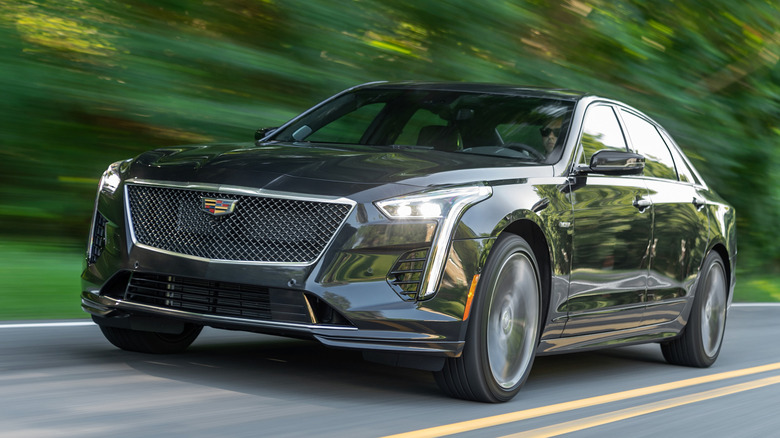
The Cadillac division didn't share a single one of its overhead-valve engines with another GM entity, but its problematic Northstar DOHC V8, the engine that ruined its reputation, was used by Buick, Olds, and Pontiac. Cadillac's final exclusive engine, the 4.2-liter Blackwing twin-turbo, appeared very briefly and was used for only one year in the 2019 CT6-V. Chevrolet, on the other hand, sent its V8 engines to every GM division, including Cadillac and GMC, up until the point where the General Motors branding took over completely. Now, everything General Motors makes has a General Motors powertrain.