

How Do Some Cars Detect Driver Fatigue?
Collision prevention, adaptive cruise control, assistive parking, lane centering, and hands-free autopiloting have turned today's cars into computers on wheels and are among some of the best modern car safety features available today. Aside from the flying bit, these advanced driver assistance systems make today's cars as smart as those in "The Jetsons," and might make them even sharper than the Knight Industries Two Thousand from "Knight Rider." They're certainly more powerful than the spacecraft NASA sent to the moon.
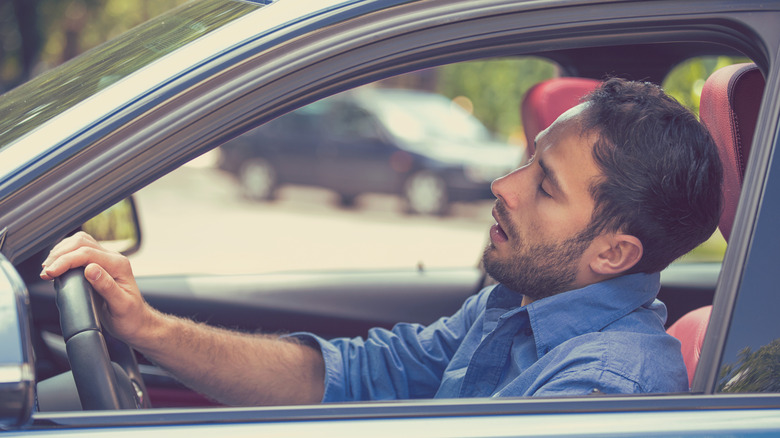
Advanced Driver Fatigue Detection Systems, another component of ADAS, makes your vehicle even smarter, helping keep you from nodding off unexpectedly while sitting behind the wheel. The Centers for Disease Control and Prevention reports that about one in 25 adults have fallen asleep while behind the wheel.
A National Sleep Foundation report claims that the AAA Foundation for Traffic Safety found that fatigue causes 21% of all fatal crashes, and another 13% of crashes that result in hospitalizations. AAA feels driver drowsiness causes "...over 300,000 police-reported crashes, over 100,000 injuries, and as many as 6,400 deaths in the United States every year."
Auto manufacturers are installing fatigue detection systems to help mitigate the issue. They can either directly or indirectly monitor a person for any signs of sleepiness and alert the driver through haptic, sound, or visual cues to refocus attention back on the road. Most commonly, they use existing lane-centering cameras to detect when the car drifts from its lane. More advanced technology includes embedded sensors or dedicated infrared cameras in the dashboard or steering wheel, all of which can breathing and blink patterns.
Keep your eyes open and on the road
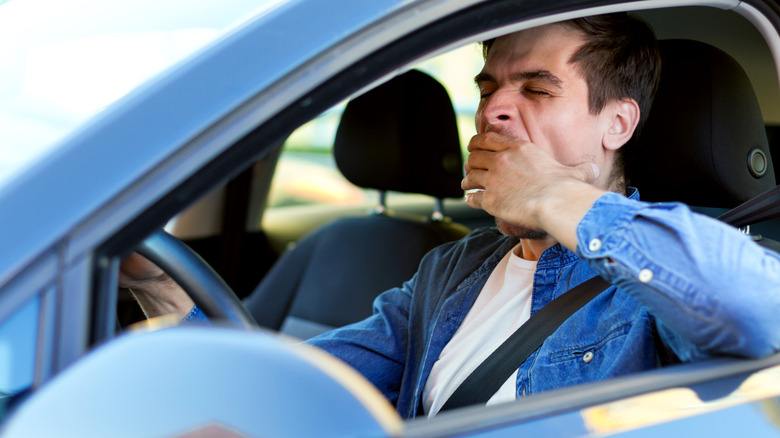
While rolling down the window to let a cold breeze smack you in the face, or turning up the radio were ways to stay awake, today's modern vehicles that are capable of receiving over-the-air updates take safety to a whole other level. Machine learning technology takes images from interior-mounted cameras. It sifts through them using facial recognition algorithms, analyzing everything from yawns to the percentage of eye closure (PERCLOS) to head positioning (i.e., nodding or drooping).
Yes, the vehicle can learn how you drive over an extended period, which may make some consumers wary of the technology. Bosch already has a system that does precisely that — it can detect driver drowsiness by evaluating some 70 individual signals, including the aforementioned facial expressions and behavioral tendencies. But it can also take into account trip length, turn signal usage, and even the time of day. A steering-angle sensor fixed onto the steering shaft detects subtle steering movements. If any abnormalities are detected, the system alerts the driver by flashing a coffee cup icon on the dash.
Other systems use the vehicle's GPS and can suggest rest stops or coffee shops along the designated route, strongly suggesting to the driver that they need to stop and take what it deems a much-needed break. That said, no currently available driver fatigue detection systems can actually prevent a sleepy person from driving, nor can it shut off the car. Not yet, anyway. Several manufacturers, such as Tesla, Ford, Honda, and Mercedes-Benz, offer some form of driver attention monitor in their cars, which should help you follow the safety rules on your next road trip.