

What Is The 3 To 1 Rule For Landing A Plane?
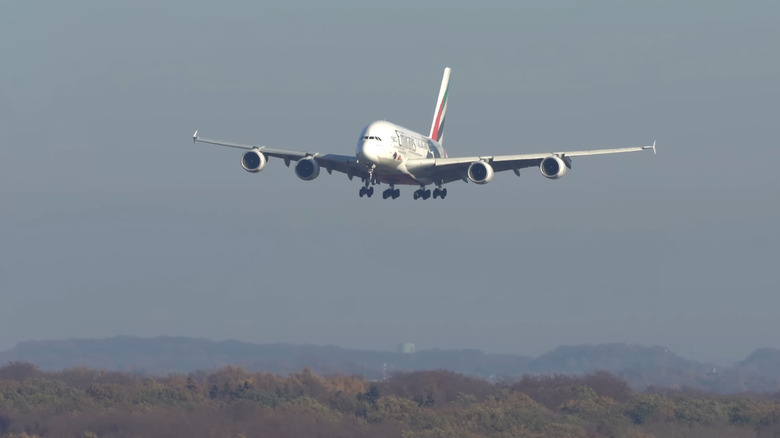
Unlike a helicopter or VTOL aircraft, the average airplane cannot simply park itself above the runway and drop straight down to land. Therefore, the descent has to begin far before the airport comes into view. The key to getting it right is to lose altitude gradually by trading height for miles of forward travel.
The 3 to 1 rule (or rule of three) helps figure out the correct ratio. It states that for every 1,000 feet of altitude you need to shed, you have to allow three nautical miles of forward travel. A nautical mile equals 6,076 feet, and there's a logical reason why planes use it.
As the time to land nears, you take your cruising altitude and subtract the elevation of the airport you are heading for. With whatever number is left, you remove the zeros and multiply the remaining number by three. So, suppose you are cruising at 7,500 feet and your destination airport sits at a field elevation of 500 feet. That leaves 7,000 feet to lose. Cut the zeros out, and you're left with seven. Seven times three equals 21, the final figure. So, you should start your descent roughly 21 nautical miles from the airport.
The 3 to 1 rule is only a part of the equation
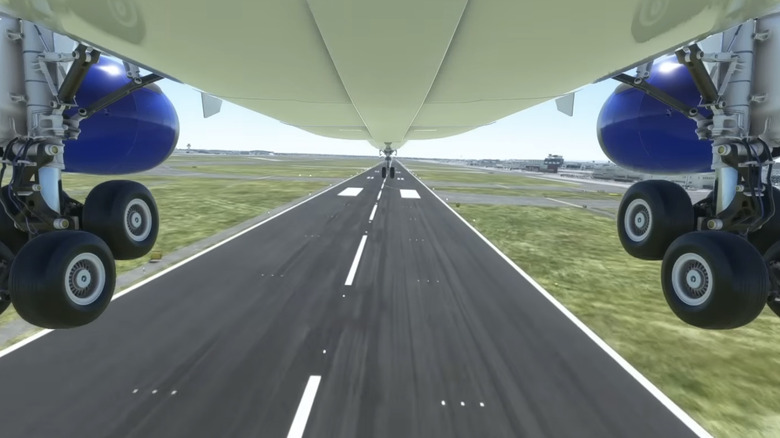
That calculated number is called the top of descent, TOD, and it's basically the point where an airplane quits cruising level and starts heading down. Three miles of travel per 1,000 feet of height produces a path angled at roughly three degrees. That angle is the international standard for a final approach. Airline crews and pilots flying light general aviation planes both rely on it.
That said, the 3 to 1 rule is only part of the equation. A pilot also has to figure out how quickly the plane has to come down — the rate of descent (counted in feet per minute) — and there's a separate calculation for that.
Pilots get it by multiplying their groundspeed by five. Groundspeed is the distance actually being put behind the airplane relative to the ground below. An airplane crossing the ground at 90 knots, then, works out to a target of about 450 feet of descent per minute.
Landing also has to account for wind and obstacles
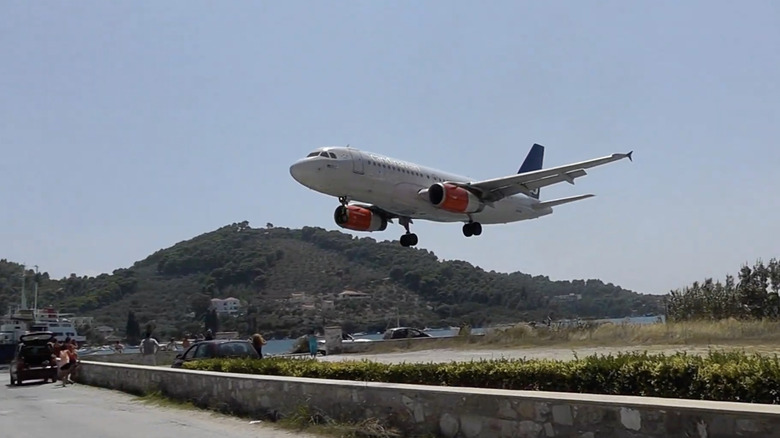
Wind also causes variations in an airplane's groundspeed. Pilots account for this by picking an altitude that is coming up shortly and running both sums again with the groundspeed showing at that moment.
It doesn't end there, though, because the numbers also assume that the space between the plane and runway is empty — and that's rarely the case. There may be mountains or tall buildings along the path, so the pilot or the flight system has to account for those as well.
However, even if the 3 to 1 rule is a standard, it's certainly not universal. Larger jet airliners need more distance than three miles per thousand feet. That's why some crews use another formula called 30 per 10 plus 10. The 30 and the first 10 in that are the nautical miles and the height. Every 10,000 feet of descent gets 30 miles, so a jet coming down from 30,000 feet needs 90. The second 10 is 10 more miles tacked onto the end, purely to give the jet room to slow down, taking that number up to 100. Airplane speed brakes help here by adding drag.
That said, most of these distances aren't something the pilot has to calculate in their head, since the flight management system helps with those – though the computers still hand the airplane back further down, which is why pilots turn off autopilot before landing.