

What Happens To Your Car Loan If The Vehicle Is Totaled?
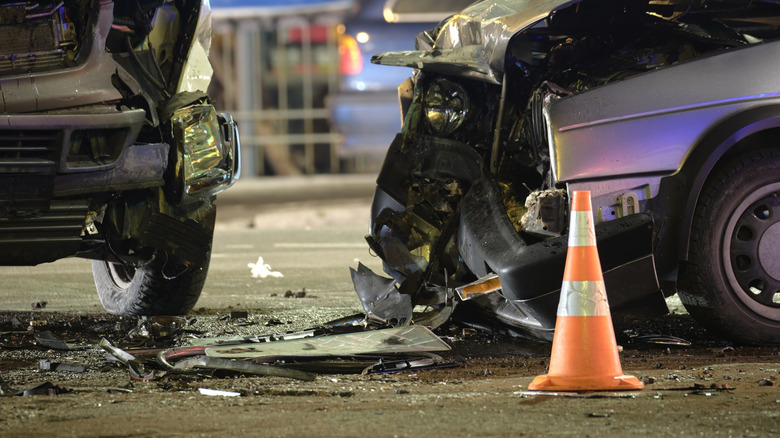
With living expenses continuing to increase in 2026, some drivers are opting to finance a car they can keep for many years to come after it's paid off versus ongoing lease payments. But what happens if you're still paying off the loan when you total the vehicle?
When your car is totaled in an accident, your insurance company will provide you with your car's market value at the time of the accident, or the actual cash value (ACV). This is what you'll be paid minus the deductible. If your loan balance is equal to or less than that determined ACV, this means the insurance payout will cover the loan. You won't owe anything. On the other hand, if the remaining loan balance is greater than the ACV (which is known as being "underwater" on a loan), you have to pay the rest of the loan out of pocket.
For example, your totaled car's ACV is $15,000. Your insurance provider will give you a check for $15,000. If you still owe $17,000 towards your car loan, you will need to give them the $15,000 from the insurance plus another $2,000 from your own savings. However, you usually don't need to pay the remaining balance all at once. In most cases, your loan repayment terms won't change after the accident, meaning you will continue paying the same amount monthly until you have paid it off as originally planned.
Should you get GAP insurance?
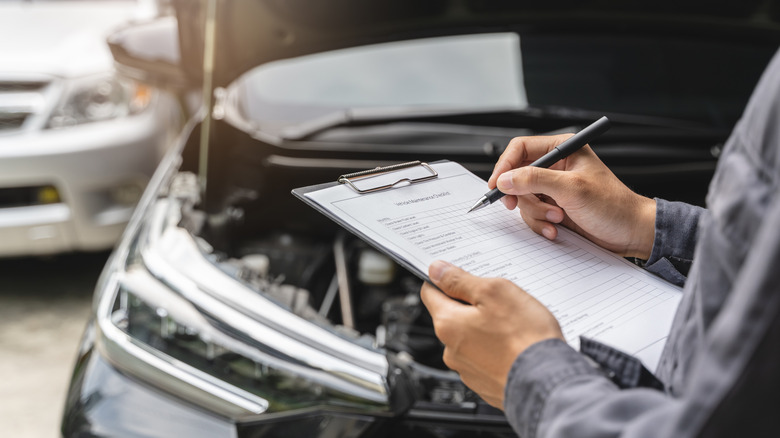
One way around a large out-of-pocket payment is something called GAP coverage. After your car is totaled in an accident, contact your insurance company for the ACV estimate and then ask if your insurance policy came with Guaranteed Asset Protection (GAP) insurance. This is meant to cover the difference between your car's ACV and remaining loan balance — so $2,000, if we use the previous example.
Some policies already have GAP insurance included, but if yours doesn't, you should only get it under certain circumstances. Some car loans and leases require GAP insurance, making it a bit of a hidden expense for some used car purchases. You may want GAP insurance if you owe more on your car loan than what the vehicle is actually worth. If you own your car or whatever amount you still owe is less than the car's value, you shouldn't get GAP insurance.
If you do need it, however, you should bundle it with your existing car insurance to get a better rate — prices can be as low as $20 to $40 a year, although it will depend on your vehicle's value, your age, where you live, and other factors.