

What Are The Levels Of IP Ratings & Which Indicates The Most Waterproof?
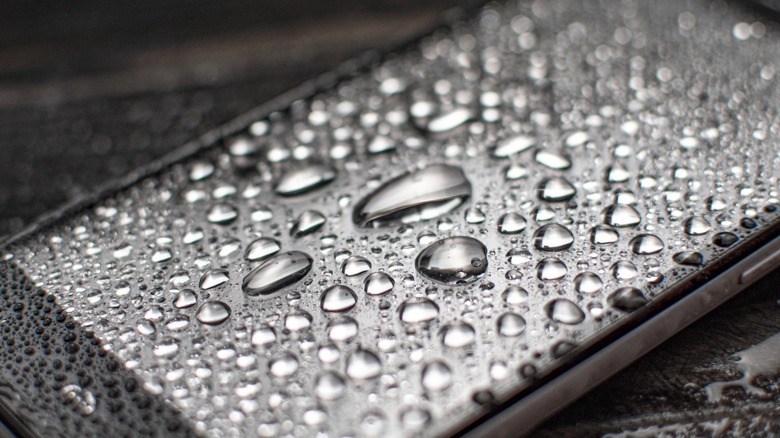
We've all accidentally gotten our electronics wet, and the main spec separating one that still works after a dip in the pool from a fried one is its water resistance, often presented as an IP rating. You've almost certainly heard of or seen IP ratings before, especially if you've checked out our list of the highest-rated outdoor speakers you can buy or any number of other electronic devices that use IP ratings to communicate how resistant they are to dust and water.
IP stands for "ingress protection" and refers to a system of standards first created by the International Electrotechnical Commission (IEC) in 1976. Any product with an IP rating must undergo tests to ensure that its case protects its internal components from moisture or physical debris. IP standards only apply to equipment with a rated voltage of 72.5 kV or lower. This includes many common devices, such as Bluetooth speakers, flashlights, drones, outdoor cameras, action cameras, power banks, and solar panels.
If you're wondering what the numbers on the IP ratings of smartphones and wearables stand for, there's a fairly simple way to decode them. An IP rating has two digits, each representing a separate metric. The first digit represents resistance to dust and debris, while the second digit represents water resistance, with the bigger number indicating greater resistance. That means anything with a "9" as its second digit is the most waterproof something can be. A third digit or letter may sometimes provide supplemental information, with the strongest overall IP rating a device can earn being IP69K. Here's a closer look at what exactly an IP rating can tell you about a device.
What the first digit indicates

Normally, the digits following "IP" in an IP rating will range from 0 to 8 (and occasionally 9), with the bigger number correlating with greater protection in that category. The first digit in an IP rating ranges from 0 to 6 and indicates how much protection a device has against solid objects such as dust, wires, and physical touch.
If the first digit is a 0 (like IP08 or IP05), it's very delicate and not protected from solids at all. If it's a 1, it's protected from foreign objects larger than 50 mm in diameter, while a 2 drops the size cutoff down to 12.5 mm. If it's a 3, it's protected from objects larger than 2.5 mm, while a 4 means it is safe from anything greater than 1 mm. Five means it has limited protection against fine particles such as dust, while the highest rating, 6, means that the device's casing is fully dustproof.
You may sometimes see an "X" in place of the first or second digit, which means that the information in that category is not available. The device may not have been tested to confirm an official IP rating yet. An "X" in place of the first digit is more common; certain Kindles, for example, are rated IPX8, which means they can withstand water but have not been tested against dust.
Water-resistant versus waterproof
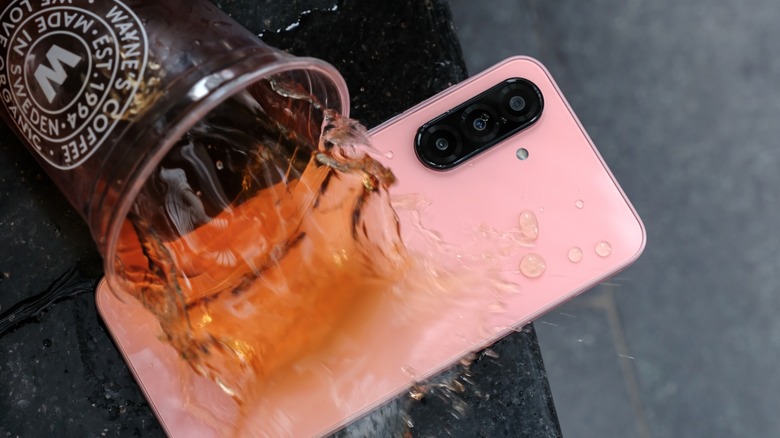
While the first digit handles solids, the second digit covers liquids — namely, water. Having a 1 in the second digit indicates the device is protected from condensation. Two and 3 refer to protection from water spray at 15 and 60 degrees, respectively; 4 means it can endure water splashes, while 5 means it's protected from low-pressure jets from any direction. Going up to 6 means the same but for high-pressure water. A 7 means a device can withstand being temporarily immersed in water between 15 cm and 1 meter deep. Eight means a device can handle long-term immersion beyond 1 meter, although the exact depth depends on the manufacturer.
Thus, only IP67 and higher are truly waterproof, taking into account factors such as water depth and submersion duration. Anything less than that is more accurately termed water-resistant and will be enough to protect a device from sweat, light rain, or accidental splashes.
The highest rating in the IP standard is IP69K. The 6 means fully dustproof, while the 9K is a higher standard of water resistance: the device can even withstand high-pressure, high-temperature steam-jet cleaning. While your iPhone won't survive such conditions, equipment in food and beverage processing industries that gets thoroughly cleaned may require the rating. There are also other third characters, which are not part of the standard but can provide extra info. These include "F," which means it's oil-resistant; "S," indicating that the IP rating only applies when a device is standing still; and "M," which refers to a device in motion.