

What Is The Strobe Light On A Flashlight Used For?
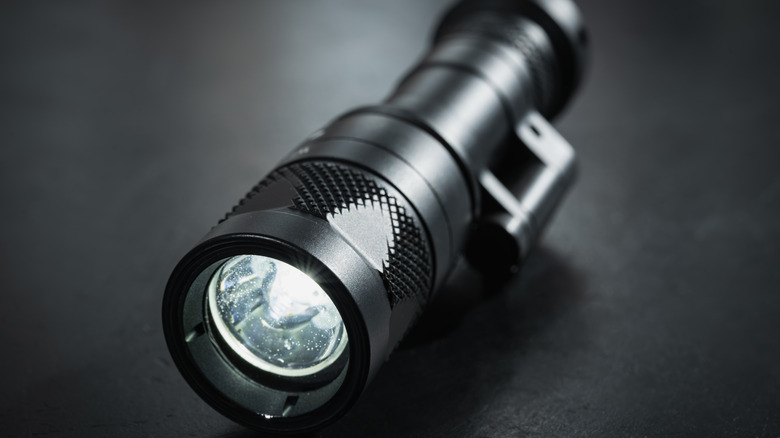
Many flashlights available these days include unique features that can be helpful in different circumstances. For instance, some emit different colors, such as a green light flashlight which won't affect wildlife to the same degree as the traditional white light. However, products with a strobe light function have been garnering some attention for their potential benefits in two key areas: self-defense and emergency scenarios. A strobe on a flashlight transforms the typical static beam of light to a rapid on/off blinking pattern.
Strobe lights can disorient an approaching attacker, as the sudden bright flash of the strobe will leave them with a temporary residual image (kind of like a TV screen with minor burn in). In addition, a bright light in dark conditions will cause a loss of adapted night vision, which requires several minutes and the body to release a chemical called rhodopsin to regain.
Beyond protection, these strobing flashlights could also be beneficial in search and rescue circumstances. A flashing light source might be enough to draw the attention of first responders or search teams, providing a beacon to identify your position.
A few things to keep in mind
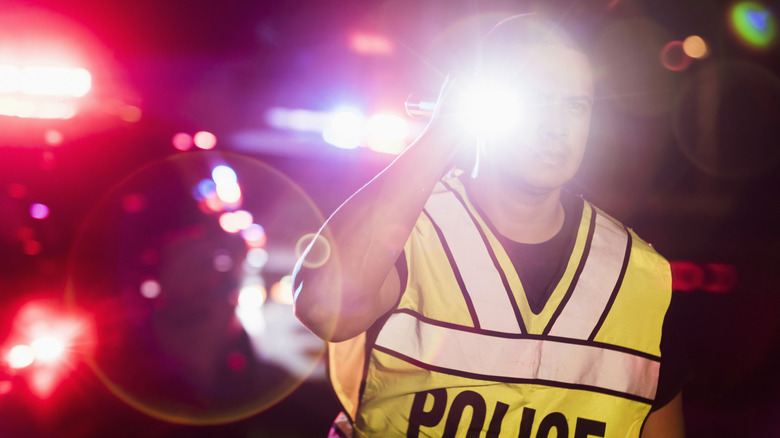
Studies from several decades ago looked into the effects of strobing lights, with some reporting disorientation and feelings of vertigo upon exposure. However, subsequent research into the topic hasn't been able to definitively or consistently recreate these reactions. That being said, according to a survey by Police Mag, of the officers whose flashlights did include a strobe function, 37% stated they had engaged the strobe light on the job.
However, while a strobe on a flashlight can work to thwart an aggressor, you also run the risk of the light effecting you as well. In law enforcement, in order to mitigate this risk, another officer would wield a static light in a covering role. Without this backup, a strobe light could reduce the user's ability to accurately see movement from an attacker, with training tests showing position changes weren't detected until the aggressor moved around 10 inches.
With regard to emergency situations, while a strobe on a flashlight could potentially be beneficial, there is another feature ideally suited for these scenarios, SOS mode. Some flashlights come with an SOS mode built-in, and SOS may not stand for what you think. Blinking a morse code pattern using three short blinks, three longer blinks, and three short again in a repeating fashion, will communicate a distress signal over distances. Given the choice of either a strobe function or an SOS in dire circumstances, the latter would be a better choice.
Who should stay away from strobe lights?
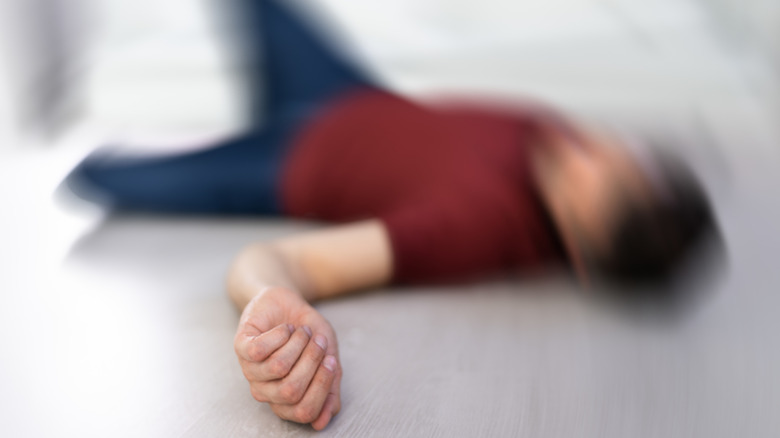
While the effect of strobing lights is typically resigned to temporary vision impairment, there are some who can be far more negatively impacted. Among those with epilepsy, which is a neurological disorder, around 3% of those with the condition can go into a seizure when exposed to strobing light.
A seizure is essentially when electrical signals in the brain go into sudden overdrive. A person experiencing a seizure can twitch or move uncontrollably, become confused, and even lose consciousness. Usually, an episode lasts between 30 seconds to a few minutes, but requires emergency medical intervention if lasting more than 5 minutes.
There's reason someone with photosensitive epilepsy responds to strobing light this way. In a Q&A with Brain Facts, Stanford Epilepsy Center director Dr. Robert Fisher had this to say: "Certain patterns of light — flashing bright lights at particular frequencies — synchronize cells within the visual cortex. If the neurons then fire through their networks at too high a level, they can recruit other neurons into a hyper-synchronous discharge. That's what happens in the brain during a seizure."
And it isn't just strobe lights than can bring about a seizure in those with the condition, but also entertainment media. Notable video game release "Cyberpunk 2077" got an epilepsy warning, with developer CD Projekt Red promising a fix after some players suffered major seizures.