

Why Are Young People Bringing Back Old-School Typewriters?

There are so many screens these days, from binge-watching TV shows on Netflix to doomscrolling TikTok on your phone to checking work emails on a laptop. However, some people have found an escape from the hacks, tracking, distractions, and nonstop advertisements by switching to typewriters. Attention spans have shrunk in 2026 due to never-ending notifications and constant switching between tasks. Grammercy Typewriter Co.'s owner, Jay Schweitzer, told NBC News demand for typewriters has increased: "A lot of working people are tired of staring at that screen all day and they find it kind of refreshing to be in front of a typewriter and really focus and concentrate."
From the younger generation who like the satisfaction of pressing and hearing physical character keys to millennials who miss having instant physical copies of their written work, typewriters are making a comeback. In 2023, refurbished typewriter sales increased by 31%. In 2024, online typewriter auctions saw 36% more listings. The typewriter market hit $1.8 billion in 2025 and is expected to continue growing over the next 10 years. "There are no distractions. It's really just you, your thoughts, and the paper," poet Shana Roark told NBC News.
The typewriter's history and impact
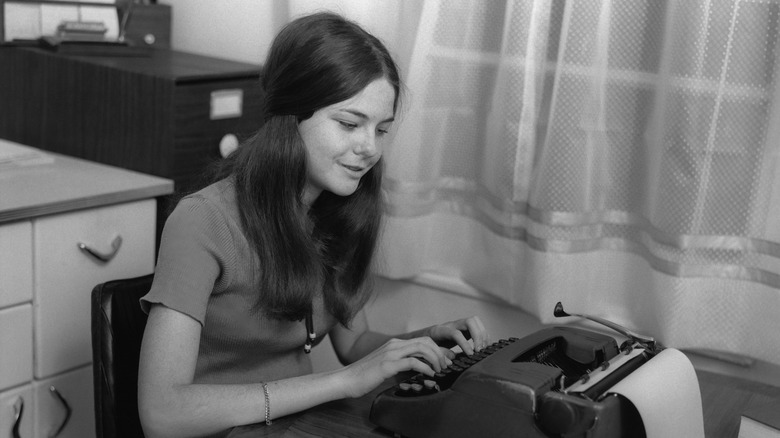
Recognizable typewriters made their first appearance in the 1870s, sold by E. Remington & Sons in the United States. At the time, they were considered a luxury – Sholes & Glidden sold a typewriter at this time for $125, which was about half of a clerk's annual salary back then. However, typewriter popularity grew in the 19th century as various industries realized their potential in the office.
Early typewriter models had varied keyboard designs, but one stand-out was Christopher Latham Shole's piano-like assembly, which had two rows of letters, numbers, and punctuation (just the period and dash). By 1868, he reversed the order of the second half of the alphabet, then changed to four rows by 1870. In 1873, he presented a QWERTY keyboard to Remington & Sons, pushing the most commonly used letters to the outside keys to possibly avoid jamming when people typed too quickly. The QWERTY keyboard was patented by 1878, and it became known as the "Universal" keyboard.
IBM popularized the electric keyboard in the 1930s, known for being faster and quieter. The 1980s started the decline of the typewriter as personal computers became more commonplace — also from IBM. Easier editing and digital storage won out and the keyboard was seen as obsolete. Of course, collectors, writers, and other hobbyists kept typewriters alive outside the workplace — and it seems there could be a typewriter revolution on the horizon.