

5 Air Conditioner Brands Owned By Bosch
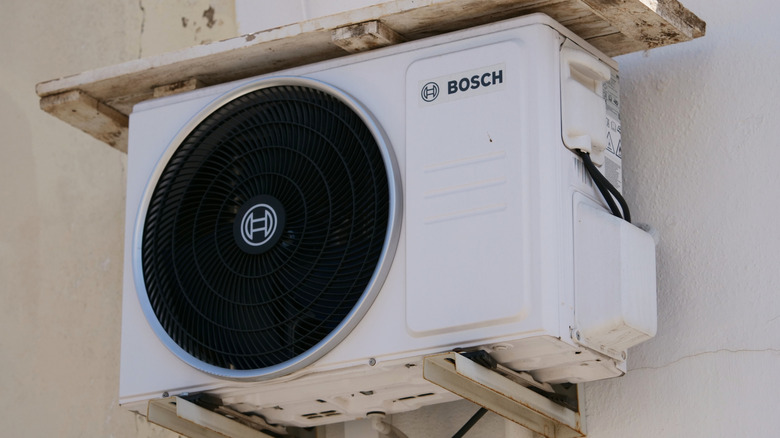
Bosch is an absolute powerhouse of a corporation with a wide expanse of companies under its umbrella. You might know the Bosch brand for its high-quality power tools, but it's also invested in several other markets. For instance, the company makes a lot of different household appliances as well.
Bosch's washing machines are ranked among the quietest options available according to Consumer Reports, and the company also makes some pretty impressive air conditioner units. Bosch also owns several different companies, four of which offer broad international coverage, and over a dozen others that specialize in regional distribution within either North America or Europe.
These aren't just the same machines with a different logo slapped on the front, either. Different brands specialize in different types of machines. Some of them may specialize in providing budget-friendly AC units, while others might be more targeted toward energy efficiency. Likewise, some of these companies may primarily make smaller single-room units while others might be more focused on large-scale installation HVAC systems.
The lead brand, Bosch Home Comfort, is one of the bigger options out there, specializing in intelligent heat pump cooling solutions, but some people might be curious what other brands fall under its corporate umbrella. There are also those who are looking to pick up a new unit to help fight the summer heat that might want to consider taking a look at some of the options that these other brands have to offer.
Buderus
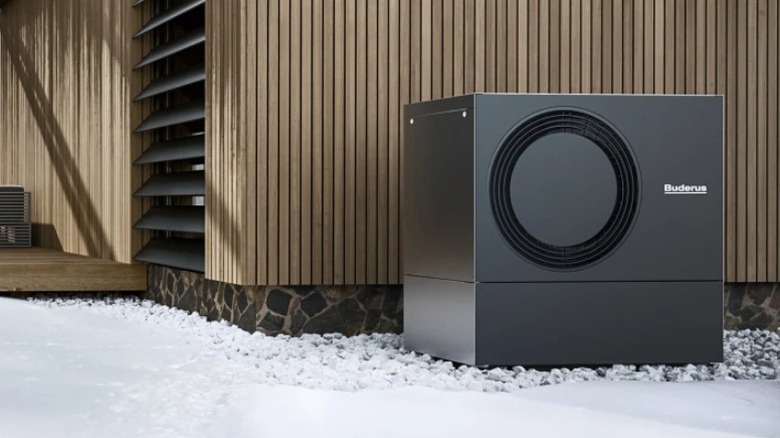
One of the larger European brands that Bosch owns is Buderus. It creates products for heating, ventilation, and cooling in a multitude of different sizes and form factors. According to Bosch, Buderus offers "holistic system solutions that are efficient, reliable, and have perfectly matched components." It's available in more than 20 countries across the globe. Most of these countries are in Europe, but the brand also sells products in the U.S. and Canada.
The company has been around for a long time, too. It was founded by Johann Wilhelm Buderus all the way back in 1731, and started manufacturing sectional boilers and cast iron radiators in 1895. It wasn't actually acquired by Bosch until 2004.
Buderus primarily focuses on full system heating and cooling solutions. Not only does Buderus make these units, but they also offer professional installation services and wholesale for other HVAC installation companies. Buderus now makes heating and AC units for all kinds of different structures, starting with single-family homes, and going all the way up to large commercial buildings. It makes boilers, heat pumps, hybrid systems, air conditioners, water heaters, energy management systems, and solar thermal systems.
It has established itself as a great option for commercial architecture, district heating networks, and historical property retrofits where custom heating and cooling loops are required. It also has a big hand in sustainability, offering heating and cooling solutions that are able to run on gas and electricity, as well as more renewable energy sources, such as solar-thermal setups, that help to reduce CO2 emissions.
Hitachi
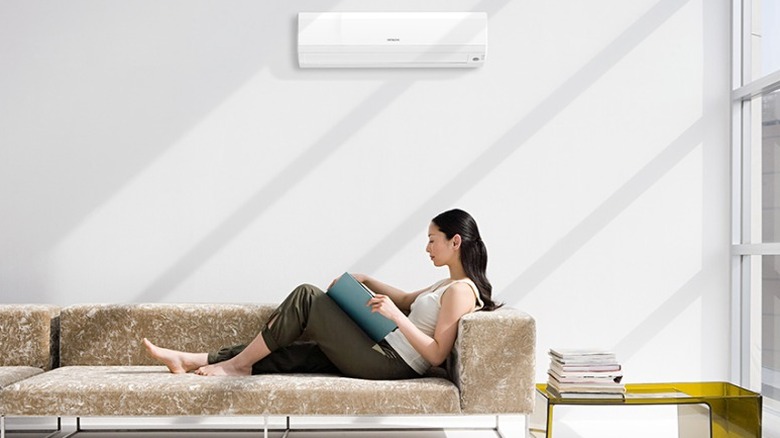
The Japanese automotive and electronics company, Hitachi, is also under the Bosch umbrella. Hitachi was founded all the way back in 1910, and it was the first company in the world to launch an air conditioner with integrated circuits. It remained independent for over a century, but it combined with Johnson Controls in 2015, forming the joint venture group called Johnson Controls Hitachi Air Conditioning. Bosch then acquired the joint venture in August 2025 in a historic $8 billion dollar deal, and thus became the new licensee of the brand.
Hitachi emphasizes energy efficiency and personalization in its products, as well as quiet, high-efficiency cooling for both residential homes and multi-zone commercial properties. It makes single-room air conditioners, air-to-water heat pumps, commercial split systems, variable refrigerant flow systems, chillers, and so on. While Hitachi does make a handful of solutions for businesses and other large buildings, it offers a broader range of individual units, rather than fully integrated HVAC systems.
The single-room airHome series is particularly extensive, with six different models on offer. Hitachi also has a reputation for its quiet inverter technology, which continuously adjusts motor speed to maintain exact temperatures. The brand also focuses heavily on indoor air quality through specialized features like FrostWash technology, which freezes and melts away dust and mold built up inside the indoor heat exchanger.
Hitachi marks Bosch's largest presence in Asian markets, but its products are also widely available on the global stage. The brand has a large presence in North America as well, with the company stating that it has "over 1,000 trained certified technicians and nine product training centers (2 dedicated & 7 partners) across US and Canada."
York
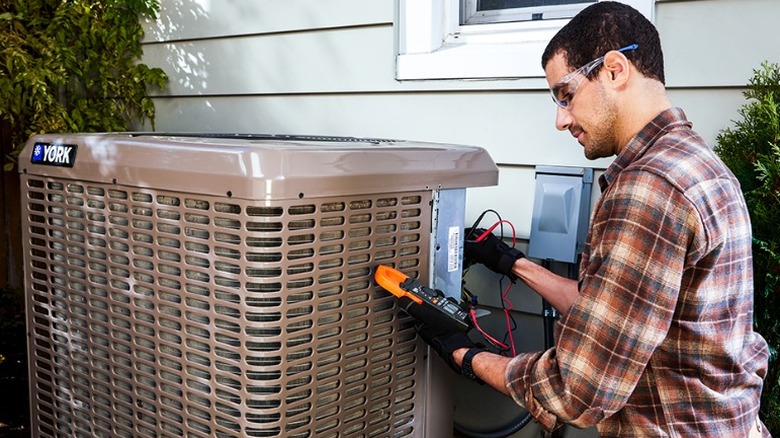
York was founded, perhaps unsurprisingly, in York, Pennsylvania back in 1874, developing the very first so-called air-washing system in 1914, which was a sort of precursor to the modern air conditioner. It also installed the AC system for the world's first air-conditioned office building in 1924. York was actually acquired by Johnson Controls in 2005, roughly a decade before it merged with Hitachi. This means that it was also acquired by the Bosch Home Comfort Group in that aforementioned 2025 acquisition.
York has built quite a reputation as an American institution, despite its current German ownership. Its equipment is famously installed in landmarks like the Empire State Building and the U.S. Capitol. It specializes in more traditional high-performance ducted central air-conditioning systems, but it also makes heat pumps, evaporator coils, gas furnaces, large-scale packaged rooftop units, and a lot more.
These are aimed at both home and business owners who are looking for heavy-duty equipment that promises long-term reliability. That doesn't mean that these are low-tech, though. The company also makes a selection of touch-screen smart home thermostats and has the GoTemp Pro mobile app available for installers, which gives them product information, as well as tech guides, installation manuals, wiring diagrams, and more. Like many of the others on this list, York has also been leaning more heavily into sustainability in recent years, and finding ways to reduce energy consumption.
Champion
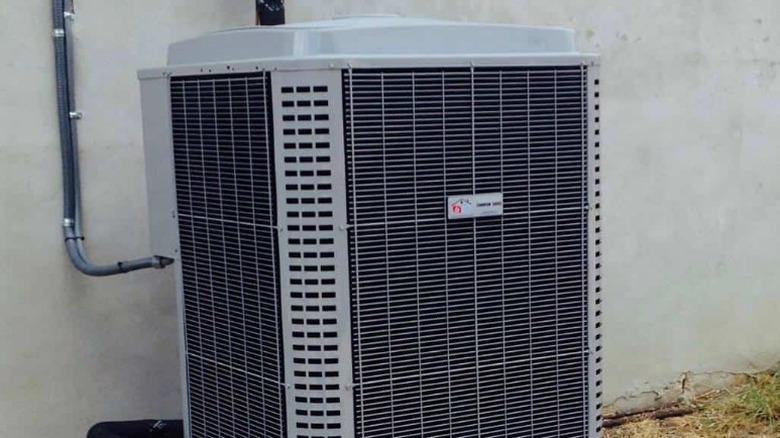
Shifting to the company's regional brands, the first one you might want to take a look at is Champion Heating and Cooling. This is one of the newer air conditioner brands that Bosch owns. It places more of an emphasis on value, but seeks to do so without sacrificing quality. It was originally introduced as a Johnson Controls original brand in 2015, before transitioning to Bosch in 2025. You won't find many frills here. Champion was designed to offer no-nonsense, efficient, and budget-friendly HVAC systems that could serve as an alternative to the more expensive premium options.
Like all of the others listed on here, Champion manufactures products for both residential and commercial use. It makes imperial split and mini-split systems, as well as packaged outdoor and rooftop units. It also produces air handlers, evaporator coils, gas furnaces, and standalone heat pumps.
This isn't quite the spectrum of product types that we see from some of the bigger brands, but it does offer a surprising range of models in each category and nearly all of the company's lineup boasts impressive SEER ratings and Energy Star certifications. This promotes a strong value option for those who want to save on both upfront costs and long-term energy bills, so long as they don't mind giving up a few fancy smart controls and extra features.
Coleman HVAC
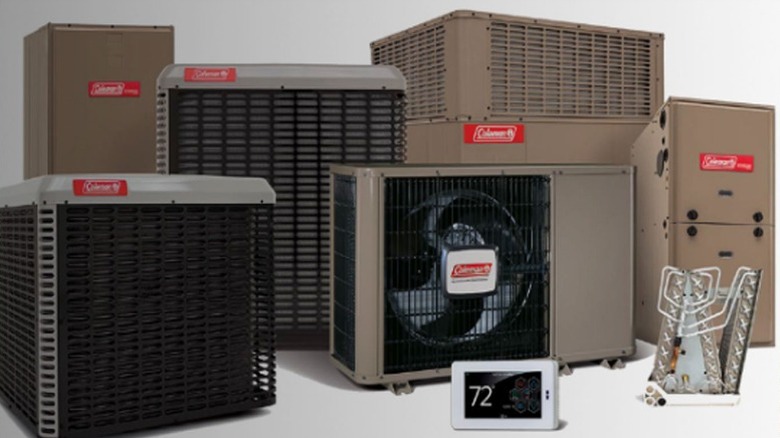
Bosch owns several smaller AC brands, like IVT, Luxaire, TempMaster, Vulcano, Worcester, Dakon, and Ferroknepper, but Coleman HVAC is probably has the biggest presence in the U.S. You've probably bumped into Coleman's camping gear at your local Home Depot, but you might not have realized that the very same brand also makes air conditioners. The company was founded in 1900, and it has been producing heating and air conditioning products since the 1950s. Coleman was purchased by Beacon Capital and Evocon Industrials in 1990, which was purchased by Jonson Controls, and then, as mentioned preivously, Bosch purchased Jonson Controls.
Coleman HVAC's products are designed with "rugged reliability" and durability at the fore. The company manufactures central air conditioners, heat pumps, gas furnaces, packaged outdoor and rooftop units, commercial split systems, mini split systems, ductless systems, and indoor air quality systems, thermostats and controls, and more. The Echelon series is popular for homes for its competitively priced variable-speed functionality, while their commercial Point series rooftop units have garnered significant attention among businesses as they feature, according to Coleman, "the most economical comfort cooling in the 15-27.5 ton range."
A significant number of Coleman's products boast Energy Star ratings, but one of the biggest selling points for the brand is ease of installation. The brand won the Dealer Design Award in 2018, and it has a well-earned reputation for being contractor friendly, and being engineered to fit standard curbs and footprints without fuss. This makes them ideal for retrofits and replacements, particularly when it comes to rooftop units.