

Samsung Says Its Smart Glasses Will One-Up Meta's On Battery Life
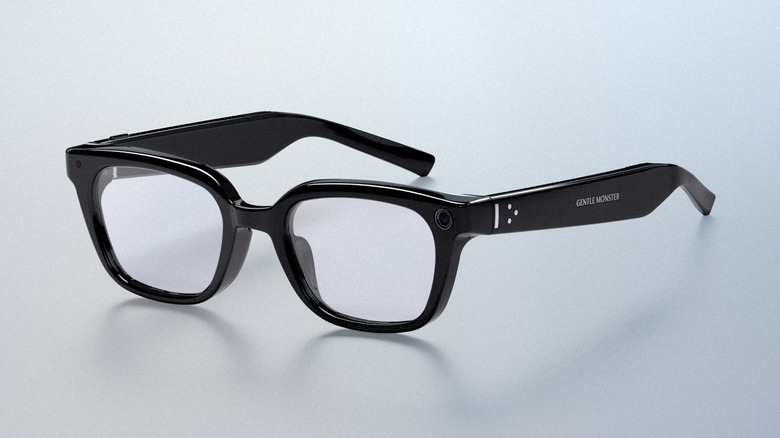
So far, Ray-Ban Meta has been something of a default answer in the smart glasses category, and nothing really has threatened its position. There's a new entrant now — Samsung, which, in partnership with Google, has developed a new pair of glasses. One of the highlights of these glasses is their battery life. Currently, Ray-Ban Gen 2 Meta smart glasses are rated for up to eight hours of runtime with typical use. Samsung's upcoming glasses, which debuted at Galaxy Unpacked on July 22, will last up to nine hours per charge, giving them an extra hour of battery life.
The charging case that comes with it holds another seven full charges. This shows that here too, the Samsung glasses are one-upping Meta's. Meta's Gen 2 case is good for 48 hours, which works out to about six full charges. Another important detail is that Samsung claims the nine-hour figure should hold up during active use. That covers Gemini Live, music, notifications, and video recording across a day. Meanwhile, Meta's eight-hour claim is about "typical use," though it elsewhere also adds that the battery drops to five hours when the glasses are used with continuous audio or voice calling.
As for the actual reason behind these gains, it likely comes down to optimization, since both Meta and Samsung glasses run on similar hardware, right down to the same Qualcomm Snapdragon AR1 Gen 1 chip.
Other features of Samsung's smart glasses

Neither company has published battery capacities in mAh, making it difficult to tell whether Samsung's advantage comes from a larger battery, software optimization, or both. Because smart glasses don't have much space for large batteries, manufacturers also have to balance battery life with weight and comfort.
As for other features, Samsung's glasses come in two distinct looks that are sourced from two separate partners. There's Gentle Monster with a more fashion-forward take on a slim black frame. Then there's Warby Parker with its brown, more everyday shape. The camera has long been a bone of contention among people uneasy with the very idea of smart glasses. Like Meta's glasses, Samsung's version has an LED that lights up while recording, so it would already satisfy a proposed law in Pennsylvania that would require a recording light on all smart glasses sold in the state. Neither lets you record if the LED is blocked or tampered with.
Another interesting feature is that users can ask the glasses to capture information from a whiteboard and organize it in Samsung Notes. Gmail, Calendar, and Maps all work from day one too. Now, Meta is not without app integrations here, since its glasses already tie into Google Calendar alongside messaging and music services. What it lacks is Google Maps, as even the Display model runs navigation on Meta's own mapping rather than Google's. The gap is one of five smart glasses features where Google may one-up Meta. Samsung's glasses ship this fall, and pricing is yet to be announced.