

Detergent Or Non Detergent: What Oil Type Is Best For A Lawn Mower?
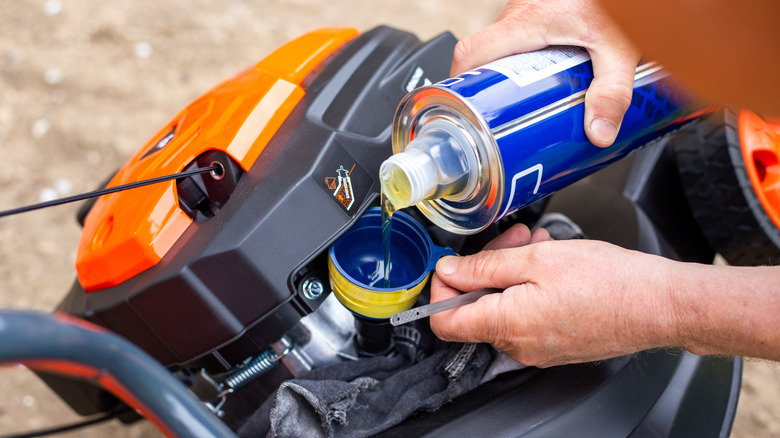
If properly cared for, a lawn mower engine should last through numerous mowing seasons without issue. Of course, that requires routine maintenance and care by the owner every mowing season. One of the most crucial steps in lawn mower engine care is performing regular oil changes and getting the nuances right. You want to choose the right oil for your mower, and part of that is knowing the difference between detergent and non-detergent motor oil. You should go with the former for your lawn mower, since the consequences of using non-detergent could be serious.
For those unfamiliar, detergent motor oil contains various additives designed to keep the parts it flows through clean and clear of debris. It helps prevent the buildup of deposits inside a lawn mower's engine and other parts, which can cause performance drops or even damage over time. That's to say, non-detergent oil lacks these cleaning agents, leaving the mower more susceptible to debris build-up and all of the negatives that come with it. Thus, if you run a modern mower and want it to stay clean and functional for as long as possible, always ensure the oil you're using contains detergent.
Overall, the presence of detergent is an important element to consider when buying lawn mower motor oil. Still, it's just one of several key components in selecting the right bottle for your next oil change.
Other key lawn mower oil elements besides detergent
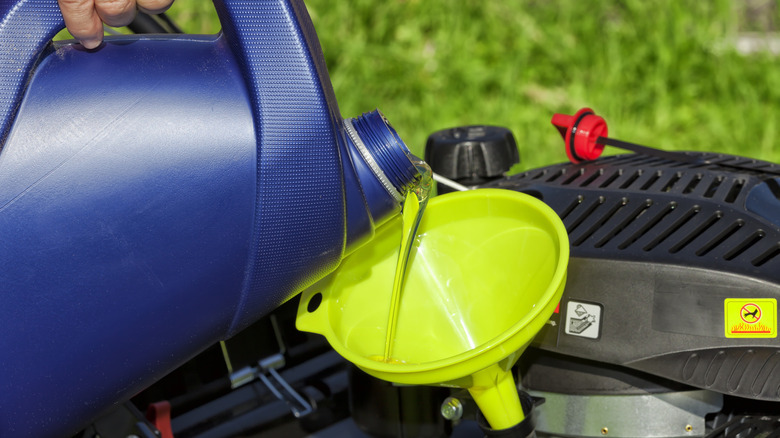
When looking over a bottle of lawn mower oil, the presence of detergent is just one of multiple things to keep an eye out for. For one, you should know what type of engine your mower has, four- or two-stroke, as this will determine what your oil change will look like. In four-stroke engines, there are a couple of different oil types to consider, as they determine the viscosity level and, therefore, the performance of your mower in certain mowing situations. The most common four-stroke mower oil type is SAE 30, while SAE 10W-30 is an option for optimal cold-weather starting.
Meanwhile, two-stroke mowers are another can of worms entirely. These engines require a mixture of oil and fuel to operate correctly. This generally involves a 50:1 or 40:1 ratio, which would be specified in the mower's manual and on the bottle of oil itself. In the case of both four- and two-stroke lawn mower engines, you're likely to encounter different oil blends, too: conventional, semi-synthetic, and full synthetic. They all get the job done, though partial and full synthetics are likely to last longer and perform better than conventional in different temperature extremes, albeit at slightly higher costs.
With the engine style clarified, the presence of detergent confirmed, and the correct oil type determined, you're ready to replace your lawn mower's oil. Fortunately, the process isn't too involved and doesn't take all that long.
Refreshing lawn mower oil
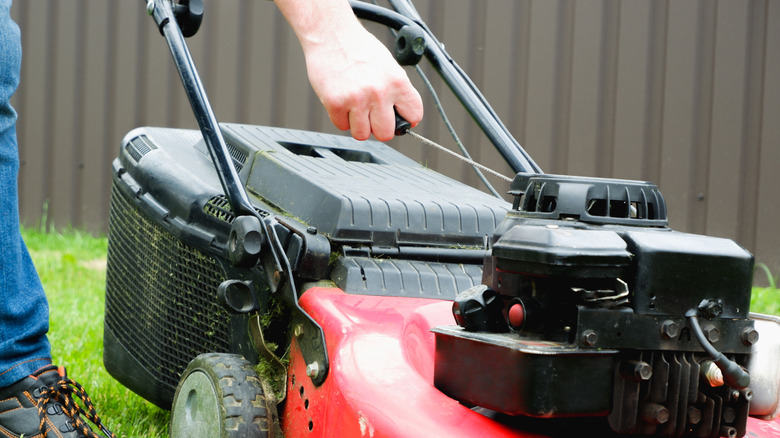
If your mower's oil level is low or it's been a season since you last changed the oil, it's time for a refresh. Generally, it's recommended to change the oil every 50 hours of use, but once a year is typically fine for most residential mowers. All it takes to complete an oil change is fresh oil, a pan to pour the old oil into, a bag to cover the gas cap, and a new oil filter(if your specific mower uses one). It's also worth having some rags or paper towels on hand in case of spills.
- Power up the mower as usual and allow it to run for a few minutes before powering it down.
- Place a plastic bag under the gas cap and screw it back on tightly, as creating this seal prevents gas leakage when tipping the mower.
- Gradually tip the mower on its side the correct way.
- Position the oil pan beneath the oil cap, remove the cap, and let the oil drain out.
- With the old oil drained, set the mower back up and remove the old filter (if your engine is equipped with one).
- Attach the new filter and pour in the fresh oil.
- Use the dipstick to check the oil level and add more if needed.
- Fire the mower up and check for performance issues and leaks.
With that, your lawn mower's oil and filter change is complete. So long as you've used the correct oil type, complete with detergent, your mower should run smoothly, reducing the risk of harmful debris buildup with each mow.