

5 Once-Classic Car Movies That Are Unwatchable Today
From the Transformers' metamorphosis to James Bond's vehicles, cars are a crucial component in many films. However, only a select group of motion pictures could really be considered car movies, since the vehicles establish themselves as plot movers and shakers. Even fewer of these fall into the prestigious classics category.
Yet not everything that glitters is gold. Sometimes, once-classic car movies age about as gracefully as a bottle of milk on the kitchen counter. Sure, they might have been transformative, once upon a time, and become beacons of their era for car and film lovers around the world, but the passage of time hasn't been kind to them. That's what we're set to explore in detail here.
Whether the flicks were surpassed by what came afterward in the franchise, or they became unpopular when problematic elements that were acceptable at the time resurfaced, these films are what we consider simply unwatchable today. If you disagree, that's fine! This is just my opinion as someone who loves cars and movies. Please note: no Fast & Furious movies were harmed in the writing of this feature.
Smokey and the Bandit
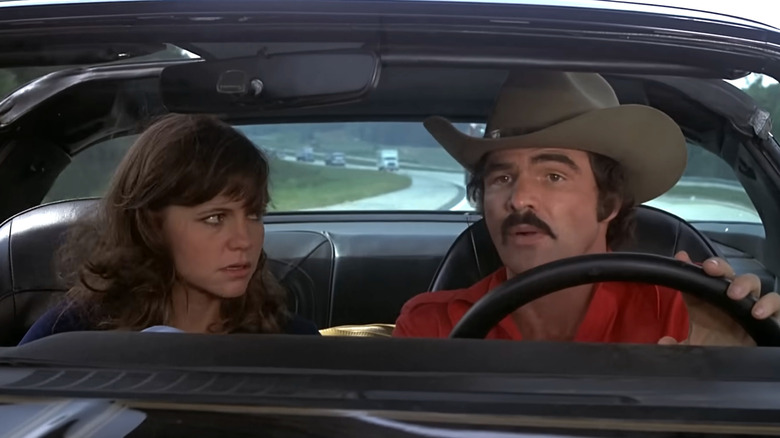
In 1977, "Smokey and the Bandit" established itself as a classic car movie by weaving action and comedy into an insatiable package that made everybody crave a cross-country road trip. The film follows a simple premise: Bandit (played by Burt Reynolds) and his partner Snowman (Jerry Reed) hit the road and embark on a bootlegging mission. However, their journey receives an unexpected extra passenger after they encounter Carrie (Sally Field), who has an angry sheriff (Jackie Gleason) on her tail.
"Smokey and the Bandit" isn't short on thrilling car chases, quips between the leads, and a stunning black and gold Pontiac Trans Am, also known as the "Bandit Edition". Apart from that, though, when I unpacked the film I found a flimsy story in which Carrie was portrayed more as a possession than a human being. While there's a lot to love about Carrie's independent and defiant demeanor, her role is still to be "something" to be attained. Gleason's Sheriff Buford T. Justice chases after her because she left his son at the altar, and while she might not be a typical damsel in distress, the need for Bandit to save her is very prevalent in the movie.
Even Field herself told the "This Morning" show that she and Reynolds recognized the script wasn't great, saying "I think he said something like, 'I know this is a piece of poop,' but he thought we could sort of ad-lib our way through it."
Mad Max
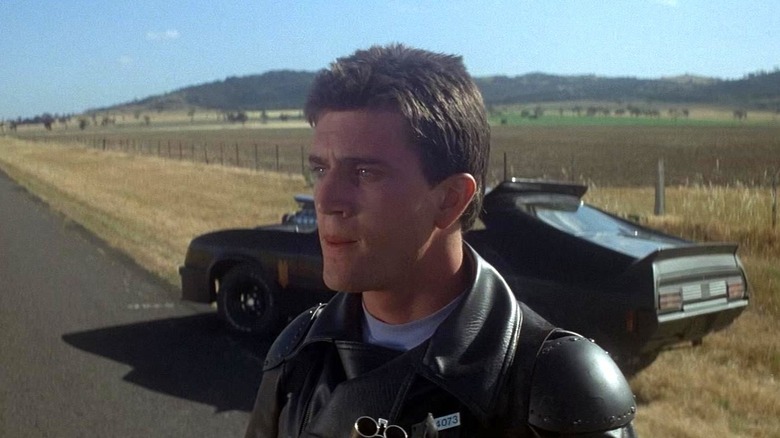
George Miller's Mad Max series changed movie history in many ways. Most importantly, it was the movie in which the Australian filmmaker figured out how to tell post-apocalyptic stories set between carnage-capped scenes of vehicular combat. The first entry in the franchise, "Max Max," arrived in 1979 and introduced Mel Gibson's Max Rockatansky to viewers around the globe.
Violent and jam-packed with fiery car stunts, this movie set the bar and dared others to beat it. Well, it happened — within its own franchise, actually. Looking back at "Mad Max" now, it pales in comparison to its 1981 sequel "Mad Max 2" and 2015's "Mad Max: Fury Road." The latter, in particular, is widely regarded as one of the best action movies of all time. It pushed up the level of what was possible and garnered six Academy Awards for its excellence — honestly, who ever thought that Cirque du Soleil-type stunts could happen between vehicles? Plus, let's not deny that the Mad Max vehicles have become much cooler in the sequels.
The original is only ranked as the fourth-best out of five films in the series on Rotten Tomatoes, which is a testament to the franchise's legacy but doesn't bode well for the 1979 classic. Yes, "Mad Max" paved the road and injected speed and danger into this dystopian series, but it's unlikely to be the first flick that any fan reaches for when in the mood for a sandy spectacle.
Death Race 2000
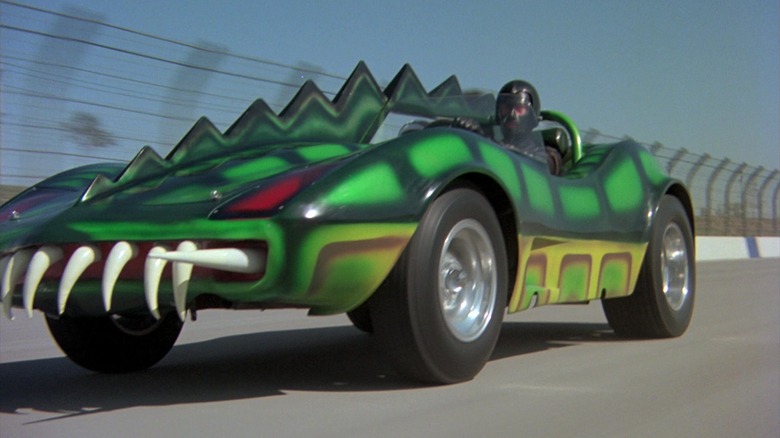
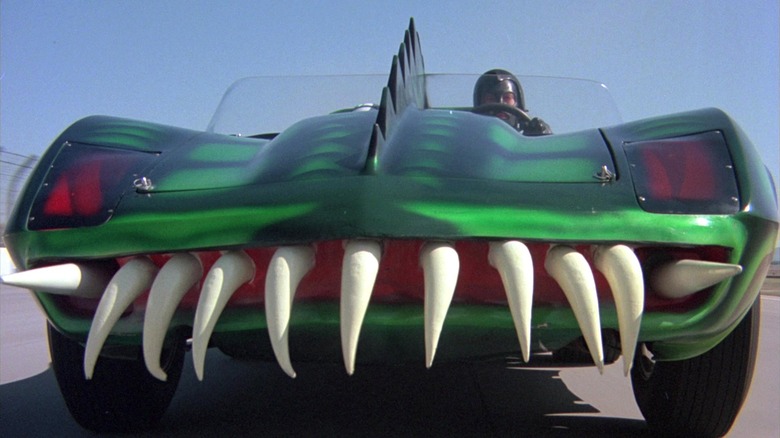
Think of 1975's "Death Race 2000" as a live-action (and more violent) version of "Wacky Races." Set in a futuristic world where the Transcontinental Road Race becomes a source of gruesome entertainment, the audience watches as drivers clamor for victory — through any means necessary. The film stars David Carradine as well as a pre-fame Sylvester Stallone.
While there's a constant satirical element to "Death Race 2000," and even if it established itself as a cult classic in the futuristic sports sci-fi subgenre, it isn't exactly the extravaganza one would imagine from its premise. For one, this film was produced by Roger Corman. Anybody who is familiar with Corman's movies knows that the producer was able to make films cheaper than some gourmet sandwiches, and the lack of budget shows in more than a few of the car race sequences. They don't look impressive or exciting, at all. Then there's the issue of tone: The violence often comes across as too goofy, when more seriousness could have helped the movie.
Here's the capper: Paul W.S. Anderson's 2008 reboot "Death Race," starring Jason Statham, is arguably the better overall car movie. While it might lack the satire of its predecessor, the carmageddon is a full-blown assault on the senses that leaves the heart pumping and the hairs raised.
Vanishing Point
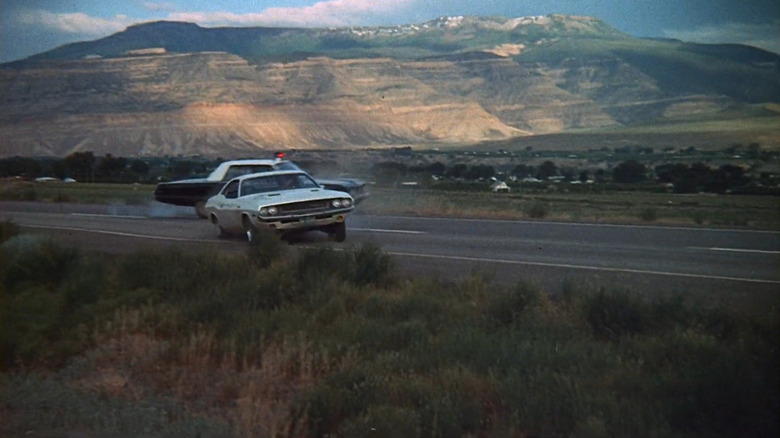
"Vanishing Point" whips up mixed emotions in most viewers. When it was released in 1971, this Richard C. Sarafian film wasn't a critical darling by any means. Some saw it as nothing more than a love letter to a white 1970 Dodge Challenger, while others wondered what possessed somebody to make an entire movie about what's effectively one long car chase.
Both of these points are fair since "Vanishing Point" is about car delivery driver Kowalski (Barry Newman), taking the wheels out on the road and getting into a lot of trouble along the way. So, your enjoyment of this is purely derived by how much you like looking at a Dodge Challenger in action for 100-plus minutes.
While "Vanishing Point" became a cult classic, you can't ignore the fact that it's not a good movie at all. The dialog is bad, the acting is wooden, and there's not a lot carrying this film beyond the exquisite car stunts. Even that is far from great, as there are many other car movies that execute car action better than "Vanishing Point" ever did.
Days of Thunder
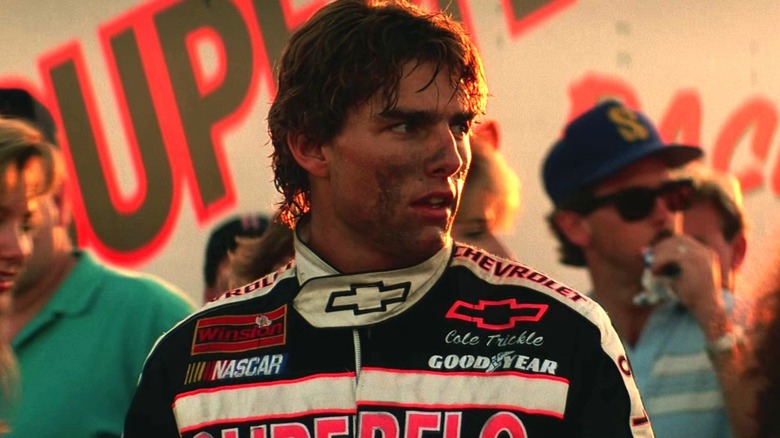
After "Top Gun," director Tony Scott and Tom Cruise partnered up for 1990's "Days of Thunder." Much like the previous film, this picture was all about the need for speed; However, the crew trades aircraft for NASCAR race cars here. In Days of Thunder, Cruise's rookie Cole Trickle enters the world of NASCAR with the ambition of becoming champion. His journey to success features a few roadblocks, including a heated rivalry with driver Rowdy Burns (Michael Rooker).
"Days of Thunder" features the appearance of former NASCAR drivers, such as Neil Bonnett and Rusty Wallace, and the sound design of the cars remains excellent as it ever was, especially for Cole's iconic Chevrolet Lumina.
Despite this being the second-best movie about NASCAR, second only to after "Talladega Nights: The Ballad of Ricky Bobby," there are better all-round films about racing. The recent "F1 the Movie," for example, balances the on-the-track action with the much-needed daily life drama. Also, I can't shake off the feeling that "Days of Thunder" tries too hard to be like "Top Gun" for its own good. It's a lot of flash, but it doesn't have the engine to back it up. As the Los Angeles Times stated in a review of the film, "That clanking noise, however, comes from [screenwriter] Robert Towne's tinny story and its malnourished characters."