

What Is The 3:1 Rule For Microphone Placement & Audio Engineering?

If there's one thing to know about sound recording and audio production, it's that there's a lot of different terminology and industry phrases to get your head around. One you might have come across is the 3:1 rule. It refers to a trick that can help to keep your recordings or performances sounding clean and as phase-free as possible when you're using multiple microphones at once to capture mono audio.
3:1 refers to the ratio you can use to figure out where to place your second microphone. When you use the ratio, your second microphone should be three times the distance from the sound you're recording than the first microphone is. That means that if you have one microphone one foot in front of a sound source — such as a piano, vocalist, or if you're a sound recordist, then perhaps something in the natural environment like a waterfall — then your next microphone should be three feet away from the first mic.
The idea behind using this method is to try to reduce something called phasing. To put it simply, phasing or phase cancellation happens when two very similar sound waves get stacked on top of each other in a way that risks muddying your mix. There are ways of reducing phasing during production using your digital audio workstation of choice, but generally speaking, sound problems are easiest to fix right at the source. The increased distance between the microphones helps create a volume difference in the audio captured by each microphone, as the signal captured by the microphone is lower. In turn, that can help to control phase issues. According to DPA Microphones, setting your microphones up using the 3:1 rule should create around 10 decibels of difference between each microphone.
Do you really have to use the 3:1 rule?
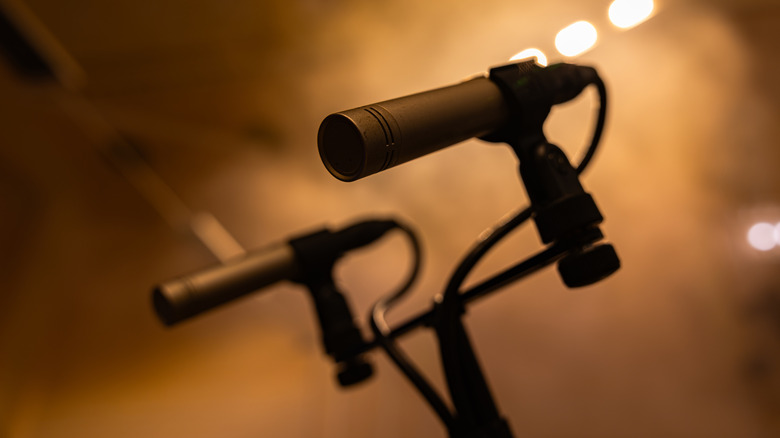
As with most creative endeavors, personal preference and your specific situation is key to how you set up your microphones. Therefore, whether you have to make use of the 3:1 rule comes down to a matter of taste and circumstances. For starters, if you're setting up two microphones for stereo miking to capture a stereo image, then you should disregard the 3:1 rule altogether. In those cases, the placement of your pair of microphones — and the equal distance between them — is crucial for achieving the desired effect. So, if you used the 3:1 rule instead, then you'd probably mess up what you're trying to pull off.
Another reason why you might choose to disregard the 3:1 rule is if the phasing actually creates a desired effect for you. A lot of the time, you wouldn't want your sound recordings to phase, but sometimes when it comes to creative and experimental sound art, theory can go out of the window in favor of aesthetics. You might be surprised by what you can stumble upon by setting your gear up slightly differently.
In the case that you've already recorded something without using the 3:1 rule and notice significant phasing issues in your mix, then you don't necessarily have to throw the whole recording out and try again. Instead, you can try fixing any unwanted phasing directly in your music production software using plugins or techniques like phase inversion. It can take a little more time and work than preventing it at the source does, but it's not all a waste.