

Can You Get Carbon Monoxide Poisoning From An Air Conditioner?
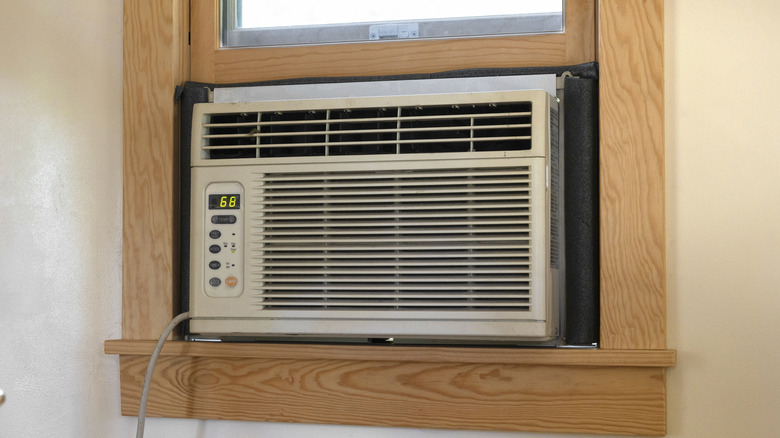
During the sweltering summer months, air conditioners of all kinds can turn indoor spaces from near-uninhabitable to entirely livable. With that said, this isn't a perfect form of technology, as air conditioners have a bevy of common problems all users should be aware of. At the same time, there are some seemingly possible issues, like air conditioners releasing potentially deadly carbon monoxide indoors, that aren't actually issues at all. An air conditioner isn't going to be the culprit behind anyone's carbon monoxide poisoning, and it comes down to how the gas is formed and how these essential summertime appliances function.
Carbon monoxide is only created as a byproduct of the incomplete burning of fuels, like when running a generator, burning wood or coal, or using a gas or kerosene heater, for example, without ample ventilation. In an air conditioner, no such action takes place. The basics of air conditioning come down to air movement, as these appliances take the warm air from an indoor space and pull it out. They have coils within full of refrigerant, which then cool the warm air that moves over them. This cool air is then pushed into the room, cooling temperatures down. This system utilizes electricity, so carbon monoxide poisoning isn't generally a concern. Unless faulty gas appliances introduce it into ductwork, sending it into the air the air conditioner is cooling, it won't be a problem.
With all of that said, while carbon monoxide poisoning isn't possible from an air conditioner, other health problems are. These appliances can push some undesirable materials into your living space with serious consequences.
How air conditioners can impact your health
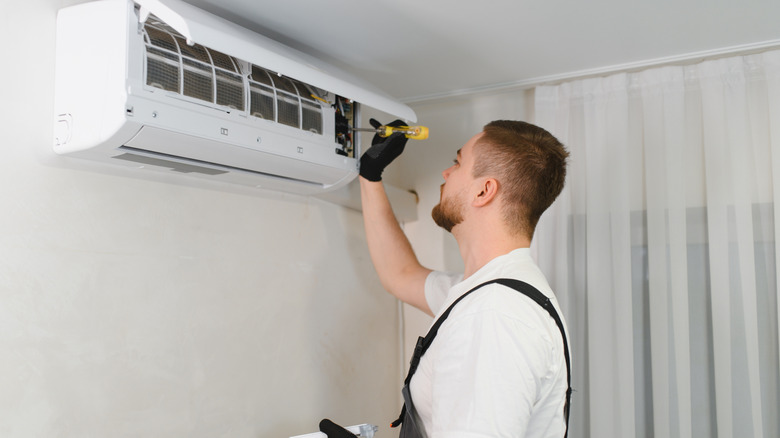
As wonderful as it is to enjoy cooling during the hottest months of the year, air conditioning systems can make you sick. For one, there's the moisture problem, which is prevalent in whole-building systems and window units alike. Air conditioners provide breeding grounds for fungi, mold, and other bacteria, then can push out all of these harmful entities into the air. At best, this can rustle up allergy-like reactions, and at worst, it can take a toll on the health of those nearby. Oftentimes, these pathogens are bigger issues in places like office buildings rather than residential homes, but they're still of some concern all the same.
Bacterial growth and other germs aside, there's also the matter of how the human body can react to an air conditioning unit in clean, functional shape. A byproduct of air conditioners running is the drying of air, which can have an adverse effect on the respiratory system. More specifically, dry air will, in turn, dry out the throat and nasal passages, which can lead to irritation and inflammation in short order. Worse yet, the drying of the nasal passages can lead to severe protective mucus reduction, making it easier for bacteria and other harmful microbial entities to enter the body and cause illness.
For these reasons and more, air conditioners can be as much of a problem as they are a solution. To mitigate their negative impacts on the body, it's crucial to take good care of them and keep them as sanitary as possible.
Taking care of air conditioning systems
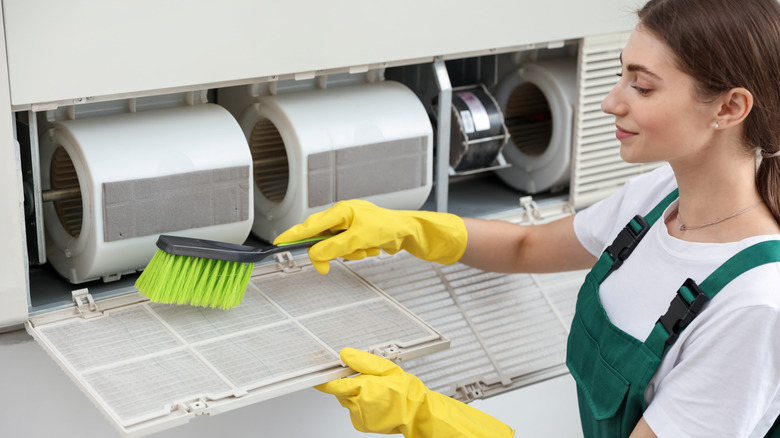
To keep your air conditioner running, and doing so with as little health risk as possible, it needs proper cleaning. For window units, this entails removing and cleaning the front cover with soap and water, clearing or replacing the filter, and wiping debris away from the condenser coils and spraying them with soapy water. Once all of these steps are done, give everything time to dry out before reassembling and using the window unit. Aside from the health benefits, a lack of cleaning could also be one of the reasons why your window unit isn't cooling properly.
Fortunately, cleaning an outside air conditioner unit isn't all that difficult either. First and foremost, cut off the power to the unit at the breaker, preventing harm to yourself and the unit alike. Next, open it up, and remove any accumulated debris, such as leaves and woodchips, to ensure good, clean airflow. From here, apply a designated air conditioner coil cleaner to the interior fins, let it sit for around 10 minutes, and spray it clean with a hose. Make sure not to use a powerful hose nozzle or a pressure washer, since these could damage the unit. Of course, if you're not comfortable cleaning an air conditioner of any kind, contacting a trusted HVAC technician to take care of it is a possibility, too.
When the weather warms up, you want an air conditioner that keeps you cool. While carbon monoxide isn't typically something to worry about, other unwanted elements could cause health problems from your air conditioner. Thus, the importance of proper care and cleaning can't be overstated.