

What Makes Chainsaw Bar Oil So Different From Motor Oil?

Working with a chainsaw usually means using bar oil, as it can help ensure a consistent performance. When it comes to the actual oil itself, understanding how it's different from motor oil can be tricky. The truth is that while both oils are mechanical lubricants, chainsaw bar oil is engineered to meet the demands of a fast-moving chain.
It begins with bar oil's consistency, as it must be tackier than motor oil in order to remain on the chain. Otherwise, the oil could be thrown off due to the chainsaw's vibrations. This allows the oil to provide continuous lubrication, while also preventing extreme heat buildup and reducing wear on the bar and chain. Bar oil can help clear sawdust and other debris from the chain and bar assembly as well.
In contrast, motor oil is designed to work inside a sealed engine and does not stick to the chain as well as bar oil. It also doesn't last as long and allows for faster component wear when used in a chainsaw. Relying on motor oil can lead to additional chainsaw maintenance for proper operation and adding previously used oil is not eco-friendly. Used oil could also have harmful elements that damage the saw. This is why, overall, it's not a good idea to substitute motor oil for bar oil long-term when working with a chainsaw.
The truth about chainsaw oil substitutes
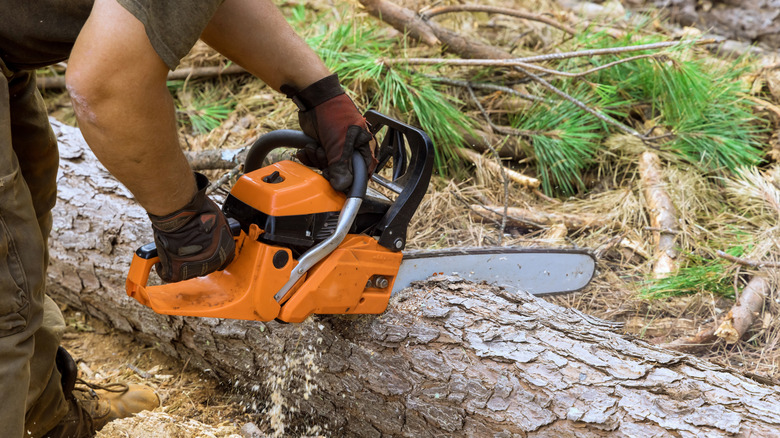
While you can technically use motor oil instead of bar oil in a chainsaw as a temporary solution, some manufacturers specifically advise against it. That includes Husqvarna, which recommends always using bar and chain oil rather than engine oil, whether fresh or used. While Echo also recommends using high-quality bar and chain oil, it also states that motor oil can be used instead. Some Echo owner's manuals specify that this should be SAE 30 motor oil, which is a versatile oil used in other equipment, for the summer months. Meanwhile, some Echo owners manuals also recommend SAE 10 in winter or when cutting trees with a lot of resin.
Motor oil isn't the only bar oil substitute that some people use, as vegetable oil has also become an option. While vegetable oil is biodegradable and more eco-friendly, it's also thinner and not specifically formulated for use in chainsaws. Still, there are vegetable-based bar oils that are designed for chainsaw use, and they can have the same benefits as straight vegetable oil. In fact, the U.S. Forest Service has found that canola-based chain oils can provide good lubrication, making them a viable alternative to petroleum-based oils.
However, even these oils have their drawbacks, including weaker cold-weather performance and oftentimes a higher price tag. They may also require additives to help stabilize them and decrease the chances of oxidation. When determining what sort of bar oil or possible alternatives are acceptable for a specific chainsaw model, users should consult their owner's manual.