

Can Biodiesel Be Used In Generators?
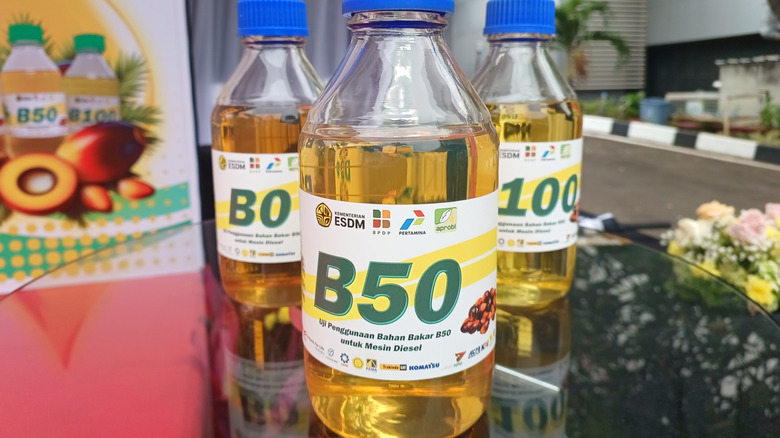
While traditional diesel remains a common sight at fueling stations, biodiesel has emerged as a viable alternative in some contexts. There are several notable differences between diesel and biodiesel, the most notable being that the latter is made out of vegetable oils, animal fats, and recycled cooking grease. This creates a significantly cleaner diesel fuel, albeit one with slightly lower energy density. These differences mean that you can't always use biodiesel machinery explicitly designed to take in regular diesel. Not all generators, for example, can run on biodiesel, and it depends on the specific model and the type of biodiesel used.
B5 and B20, for instance, blend traditional diesel with 5% and between 6 to 20% biodiesel, respectively. These low ratios generally make them safe for unmodified diesel engines. More concentrated biodiesel, however, like B100, should not be used with just any generator. While B100 is great for engine lubrication and is safe to store thanks to a high flash point, it has a higher viscosity due to the presence of vegetable oils and animal fats. This means it may be too thick for standard generator fuel systems and can impede performance. These oils and fats can also cause B100 to gel in cold temperatures and gum up the entire system.
Before using B100 in your generator, consult the manual or a professional to make sure it's compatible. If it's not, but you still want to use this fuel source, you have a couple of options.
Ways to utilize biodiesel in a generator
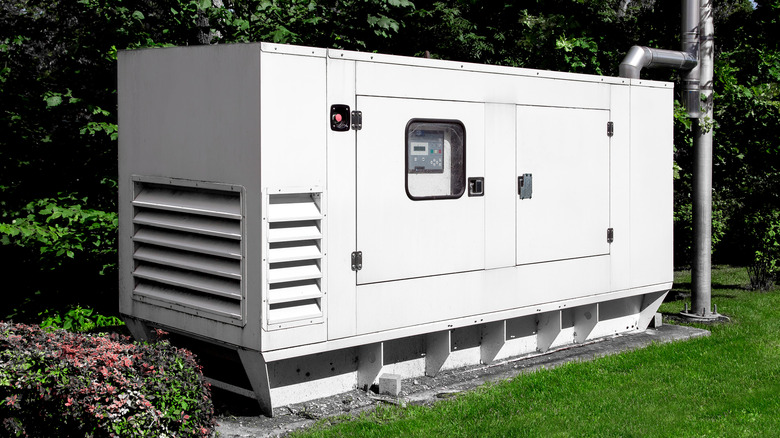
If you're adamant about using pure B100 biodiesel, your existing generator will need some modification. As mentioned, B100 is much thicker than regular diesel or lower biodiesel blends, so fuel lines and other fuel system components may need to be changed to accommodate it. You will also need a separate tank for the biodiesel and a system to keep the fuel warm and prevent it from gelling in cold temperatures. You also need to store the B100 in a suitable, climate-controlled area to ensure the biodiesel reaches its expected shelf life.
If this sounds like a lot of work, you can always purchase a biodiesel-capable generator. Brands such as Cat and Arken sell biodiesel generators for personal and professional use. Before selecting a model, though, it's imperative to double-check which types of biodiesel it is rated for. Pouring B100 into a generator designed for B20 will surely lead to mechanical problems in short order. There's a lot, then, that goes into using biodiesel to run your generators. Thus, it's worth asking: Should you even use it in the first place?
Should you use biodiesel at all?
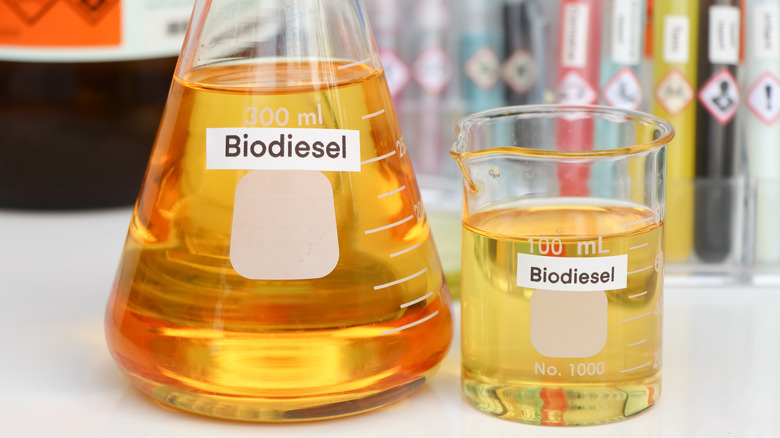
Compared to traditional diesel, B100 emissions are 74% lower on average, according to findings in a life cycle analysis conducted at the Argonne National Laboratory (via the United States Department of Energy). Add to that its lubrication benefits in compatible engines, and it looks like a great choice for users concerned with emissions and engine longevity. Unfortunately, this is where B100's benefits largely end, and its handful of drawbacks begin.
As mentioned, B100 fuel has a serious gelling issue, which means it's not the most dependable fuel source for those in colder temperatures. Not that it's great in hot climates, either, as it can grow mold when stored long-term. It's also harder to get hold of, as biodiesel production and distribution are considerably more limited than regular diesel. On top of all of this, data from the Alternative Fuels Data Center shows that biodiesel isn't any cheaper: B20 costs about the same as diesel, while B100 was nearly $1.00 more expensive per gallon at the end of 2025.
Ultimately, there's a lot to consider before using biodiesel in generators. Not only do you need to get the right hardware and fuel, but you'll also have to decide whether it's worth using as a replacement for regular diesel in the first place.