

5 Of The Worst Places To Put A Projector, And Why
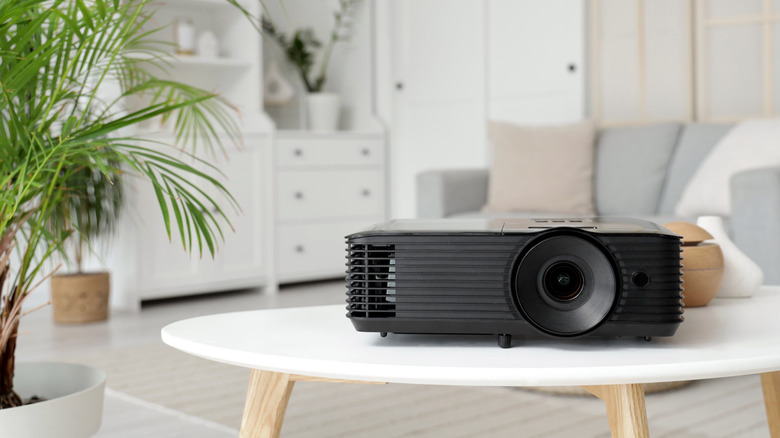
If you don't love the look of a big TV in the living room, have limited space in your home to accommodate a TV, or just want a fun and easy way to elevate movie nights, you might want to look into buying a home projector. It used to be considered a luxury to have a projector set up in your home, but modern projectors are surprisingly cheap, thanks to technological improvements, material swaps, and lower production costs. Plus, home projectors are worth buying used, allowing consumers to save even more money on a gadget that used to feel too premium for the average household.
There are so many different types of home projectors to choose from, but no matter which projector model you go with, they all come with similar placement recommendations. That said, some projectors are built to perform better in certain conditions, like niche outdoor projectors bright enough to clearly project an image in direct sunlight. However, for the most part, all home projectors share these worst places to avoid. We've gathered five spots you should absolutely avoid putting a projector, along with a detailed explanation and a recommendation for where you should set it up instead.
Any messy or overcrowded surface
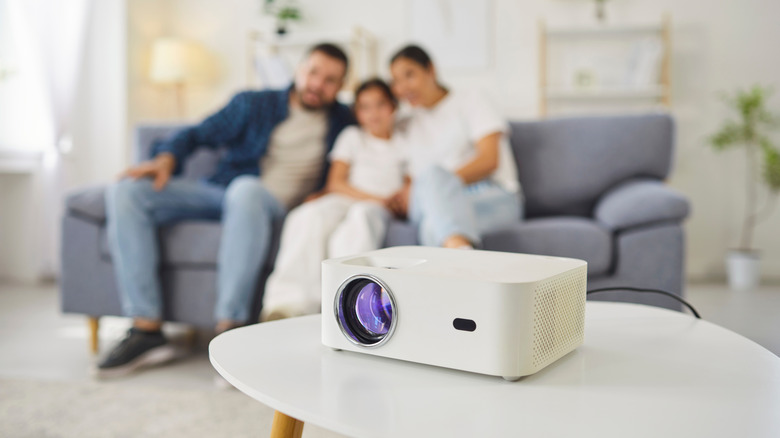
A projector, like any electronic media device, tends to get hot while it's working. And because projectors have a lamp or a light bulb inside, they typically get hotter than a standard DVD player or even a gaming console. To prevent overheating, a projector is designed to pull air through intake vents, over the hot components, and out through exhaust vents.
This ventilation process is so important for user safety and the life of the projector that most (if not all) brands will highlight how important it is to set up the projector in an uncrowded area where it can breathe while in use. According to Lisowod, maker of the best cheap projector on Amazon, users are supposed to make sure there's "adequate ventilation around the device" and that it's on a "stable, flat surface."
If your coffee table is frequently a dumping ground for takeout containers, dirty clothes, and other miscellaneous items, you shouldn't set up a projector there. And if you do, you run the risk of potentially starting a fire or damaging the projector past the point of fixing, either due to overheating or falling from an uneven surface. Instead, choose a surface you know tends to stay clean and dusted or, if you know that's not an option, you can tidy the surface each time you plan to use the projector.
The kitchen or the bathroom
Most people set up projectors in their living room, bedroom, a dedicated media room, or backyard, which are typically the best places to use a projector. However, some might consider using a projector in their kitchen or bathroom, both of which are terrible places for this media device. Putting a projector in your bathroom so you can watch a movie while you're relaxing in the tub or in the kitchen to keep you entertained while cooking dinner sounds great on paper, but in reality, a projector in either of these rooms will have a shorter lifespan.
In the kitchen, projectors can be exposed to oil, oil mist, steam, smoke, or airborne cleaning chemicals. Depending on how small your kitchen is, there's a chance the projector could be dangerously close to a hot stove or the sink. In the bathroom, humidity is the greatest danger to a projector. While kitchens can also get pretty humid while cooking, the risk of humidity damaging the projector is much greater in the bathroom, especially if there's not a good ventilation system. According to Epson, a projector being exposed to high humidity could result in a fire, electric shock, or damage to the case or the projector itself.
An enclosed cabinet in a TV stand
Just like balancing a projector on a messy surface can prevent a projector from ventilating properly, so can placing it inside a cabinet, even if the cabinet is completely empty. Most cabinets in entertainment centers or dressers don't have any active ventilation solutions set up inside. Some may have a hole built into the back panel or a larger cutout for cables to pass through, but with nothing actively pushing hot air out and bringing cool air in, this is too hot a space for a projector.
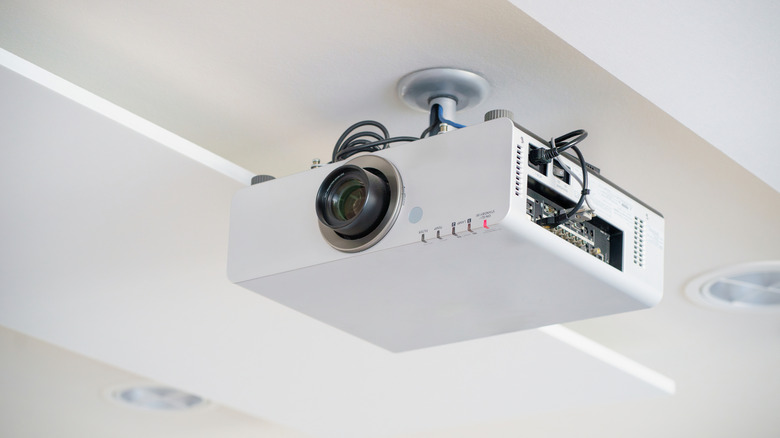
Most cabinets are also too compact for a projector to operate safely. Sony recommends leaving nearly 12 inches of clearance around some of its projector models, and other projectors from Sony and other brands likely need a similar amount of room to breathe. In a cabinet that's too small and doesn't offer nearly enough ventilation for a hot projector, you run the risk of the device overheating and possibly starting a fire or damaging the device beyond repair. Instead of sticking it inside a cabinet, a projector should be placed on a clean, roomy surface or mounted to the ceiling.
In direct sunlight or in rooms with bright lights
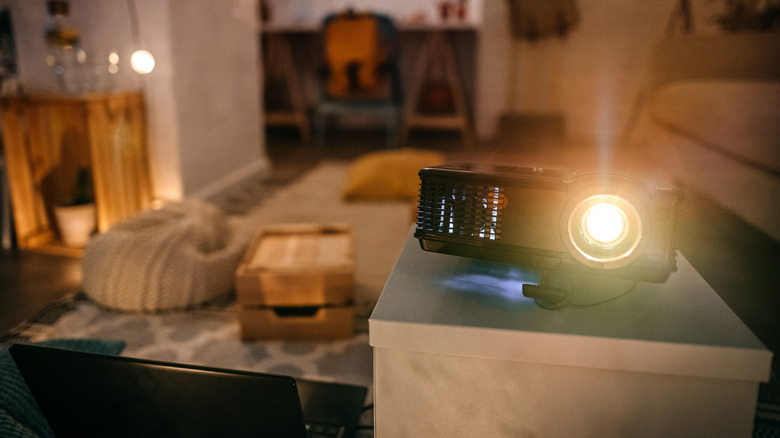
One of the worst places you can set up a projector is in a room that's too bright or anywhere that gets direct sunlight. This isn't because the projector might get too hot, though if it's in the path of a sunbeam for too long while it's actively in use, it's possible it could overheat. Rather, a projector shouldn't be set up in a spot that's too bright because it makes it nearly impossible to see the projected image.
Some rooms, like the aptly named sunroom, are designed to let the sun in, and it would be strange to put blackout curtains in there just so you could have a projector in that room. For living rooms and bedrooms, two common rooms for a projector to call home, blackout curtains are a great way to block sunlight from streaming in. If the lights you have installed inside are too bright, you can invest in dimmer switches or smart bulbs that allow you to adjust brightness within a mobile app.
Near an air conditioner
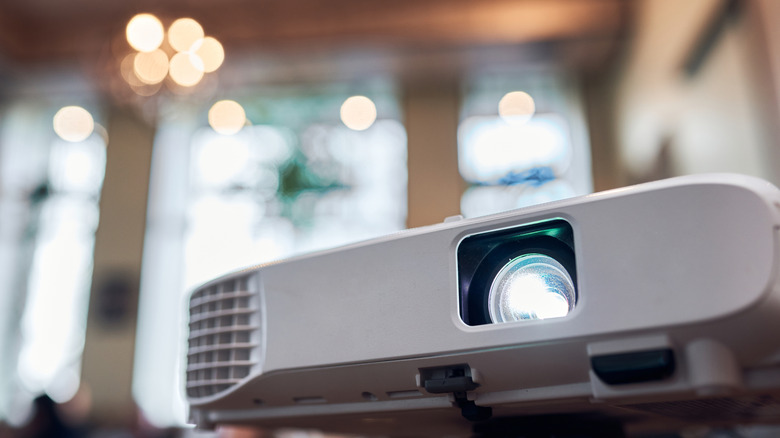
LG warns users of its ProBeam DLP projectors not to install them anywhere that's "under the air conditioner or is directly exposed to the wind from the air conditioner." The brand also notes that users should avoid installation anywhere that's "dusty or exposed to wind and rain," so it's likely that the constant (and possibly dusty) airflow and potential condensation are two of the biggest reasons LG recommends against installing a projector there.
A projector manual from Sony echoes this recommendation to steer clear of AC units during installation and use. The manual explains how air from air conditioners can cause oscillation in the projected screen. In more simple words, this influx of air can cause the projected image to look shaky or jittery. A jumping image could also be the result of setting up the projector on an air conditioner simply because of the vibrations produced by the AC unit, according to projector brand Miroir.
Methodology

Most of us on the SlashGear team have home projectors as well as other similar media devices, like gaming consoles, DVD players, TVs, and so on. Because of that, it's easy to rely on common sense to come up with this list of the worst places you can set up your projector. However, we didn't stop there. We took the time to verify each reason we thought of with documentation from reputable projector brands, including LG, Sony, Lisowod, and Epson, for suggestions and warnings on where to set up or avoid setting up a projector.