

Your Old Garage Fridge Could Be Costing You Big Time On Your Power Bill
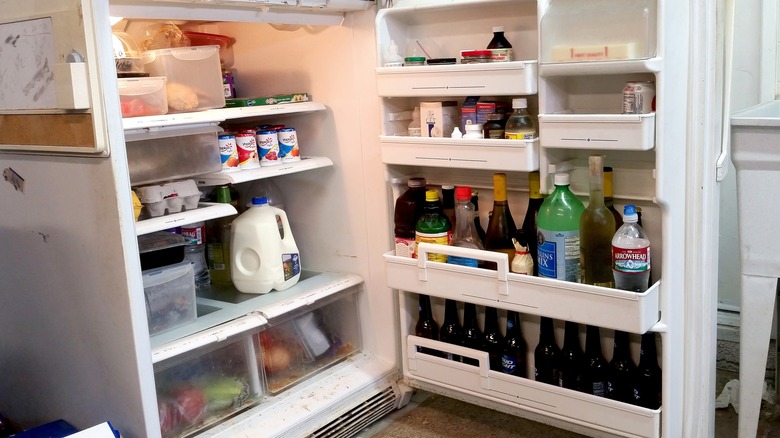
Maybe it's sitting in your parents' garage — an old, noisy, bisque-colored monstrosity that's still humming along, holding popsicles, canned sodas and those T-bones they're planning to grill over the weekend. Or perhaps you inherited one when you bought your home. Moving that old, dusty refrigerator would be a pain and, let's be honest, it's kind of useful.
Having a fridge in your garage is almost a rite of passage for many American homeowners. It can hold water bottles, canned beverages, ice and the extra goodies you've made or prepped for a summer picnic. But if that refrigerator has blown past the average lifespan – and by that, we mean Gen Z would label it an "unc" — it may be using more energy than you realize. Refrigerators built before 1990 typically have an annual running cost that is more than double a brand-new, similarly-sized fridge sold today. While you only use some appliances, such as your dishwasher or stove, part of the day, your refrigerator runs 24 hours a day, seven days a week, 365 days a year! It's the workhorse of your kitchen (or garage), and an older model can account for up to 10% of your monthly electric bill.
Let's break down the numbers. If your electric bill is approximately $200 per month, that old fridge may be accounting for up to $20 of that bill. That may not sound like much, but over the course of a year, that's $240 you're investing in storing ice and the burgers you've forgotten.
Should you replace your old garage refrigerator?
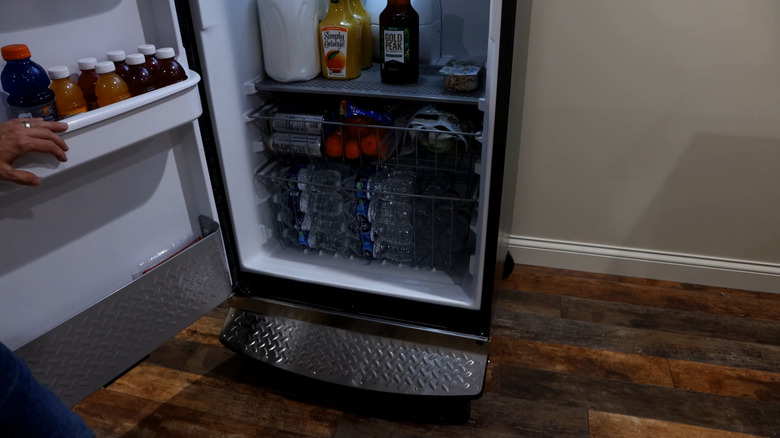
The simple answer? Probably. It's an energy-consuming relic. If you want to calculate how much you can save by replacing your old fridge, visit Energy Star's Flip Your Fridge Calculator, which helps you determine how much that refrigerator costs to operate. You must know your price per kilowatt hour, which should be provided on your electric bill, plus the approximate model year and capacity of your refrigerator. For example, in Pennsylvania, an approximately 20 cu ft fridge built between 1990 and 1992 costs about $200 a year to operate.
By comparison, you can purchase a brand new, garage-ready refrigerator from big box stores like Home Depot for under $500, though there are some budget choices you should avoid. Even with delivery fees and the cost to haul away your old one, the new refrigerator will pay for itself in energy savings in only a few years. The term "garage ready" means the fridge was specifically designed to handle wider temperature ranges than it would experience inside a typical kitchen. That old refrigerator your inherited with your house may not even be rated for garage use, meaning it's working harder in extreme temperatures and driving up your electric bill even more.
Older refrigerators also represent more of a fire risk. Older components, water build-up, accumulations of dust and debris, and the aging compressor could cause overheating or short circuits that may lead to a fire. This can be especially dangerous in a space that may not have a smoke detector, like your garage.