

If You Still Believe This Oil Change Rule, A Ram Engineer Says It's Time To Move On
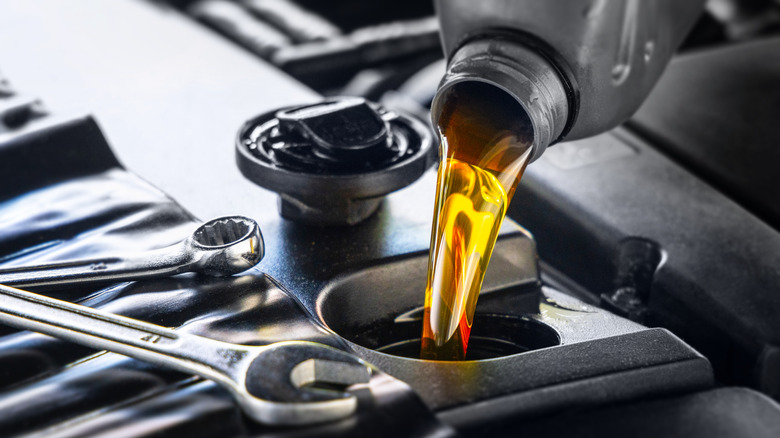
For decades now, drivers have been showing up at the service station for an oil change every 3,000 miles like clockwork. It's the one piece of maintenance advice every driver seems to have actually taken to heart. But according to the chief engineer behind Ram's new Hurricane inline-six engine, that long-standing rule no longer applies to modern engines running on today's synthetic lubricants.
Alan Falowski is Stellantis' director of propulsion systems. He's the engineer who worked on both the outgoing 5.7-liter Hemi V8 and its Hurricane replacement. And in an interview with Pickup Truck + SUV Talk, he said advances in engine design and oil technology have fundamentally changed the way maintenance intervals are determined.
For the twin-turbocharged 3.0-liter Hurricane engine, Falowski says the manufacturer's recommendation for oil changes is every 10,000 miles. What's more, he calls that figure a conservative guideline. (In other words, you may be able to push your car's oil to 15,000 miles.) The reason is today's full synthetic oils and their additive packages. They're significantly more advanced than those available even 10 years ago, which means they can protect engines for much longer periods than just 3,000 miles under normal driving conditions.
What to know about the Hurricane engine and oil changes
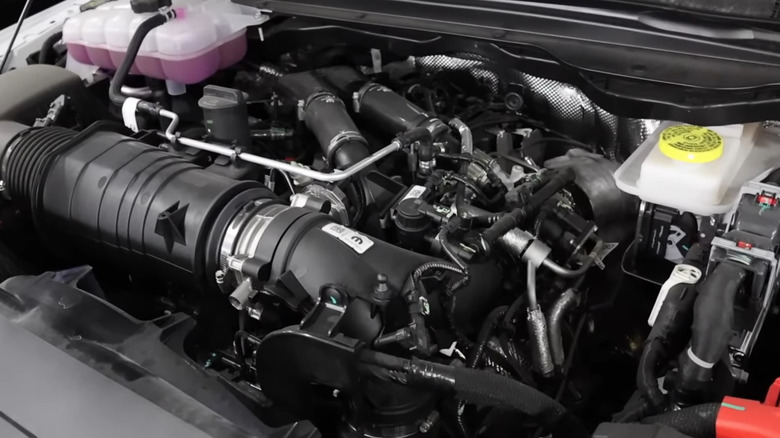
If you don't know, the Hurricane is what replaced the Hemi as Ram's flagship powerplant. The Standard Output Hurricane engine requires 0W-20 full synthetic oil, while the higher-performance High Output version uses 0W-40 thanks to its increased boost pressure and bearing loads. Falowski said the goal with the Hurricane was to surpass the V8 in three key areas: horsepower, torque, and fuel economy. To do that, they went with a turbocharged 3.0-liter inline-six configuration. The "turbocharged" part is interesting: Unlike older turbo systems adapted onto engines never intended to handle boost, Falowski says the Hurricane was designed to be a turbocharged engine from the start.
That design also comes with a move away from traditional dipsticks. Instead, electronic oil-level sensors continuously monitor oil levels and can immediately alert drivers if levels fall below a safe threshold. Fixed mileage schedules (whether they be 3,000 or 10,000) come from a time before cars had these oil-life monitoring systems built in. Now, engines like the Hurricane can continuously evaluate operating conditions... saving you the need to manually check with a dipstick. If you're driving it hard, the system will tell you if service is needed before that 10,000-mile interval. (And vice versa: If you've been taking it easy, you might be able to breeze right past 10,000 miles and still have oil life to spare.)