

US Navy Service Leader Sends Stern Message To America's Military-Tech Strategists
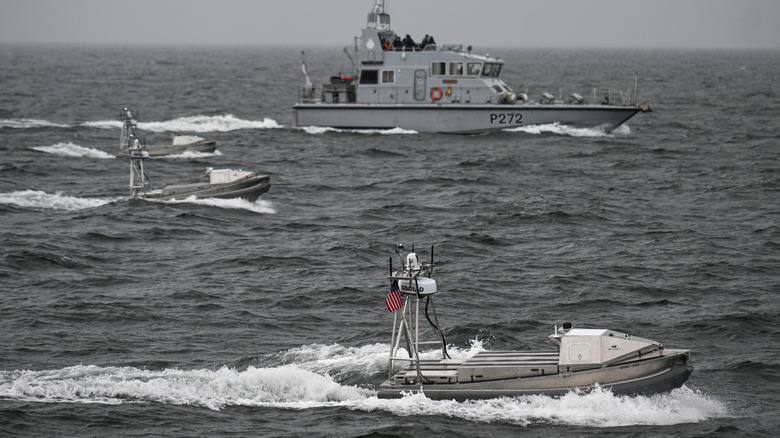
The United States Navy's issues with modernizing and replacing its fleet have been well publicized. On the production side, the gap between the Navy's required fleet size and America's shipbuilding capacity has prompted the Navy to consider building its upcoming ships in foreign shipyards. But the Navy isn't only looking for solutions to improve its raw shipbuilding capacity; it also wants to develop and push new technologies into fleet service at a faster, more focused rate.
The military's Office of Naval Research (ONR) is responsible for much of America's maritime defense research and development. The ONR was established in 1946, tasked with turning scientific research into new technologies for the United States Navy and Marine Corps. The ONR's experts work closely with the broader private defense industry to implement these new technologies. However, there's been a sense among some that the ONR's scientific culture has lost its edge, potentially putting the Navy's long-term tech supremacy at risk.
Now, ONR leadership is sending a message to its workforce to trim down the bureaucracy and focus on science. The ONR has an annual budget of about $3 billion, and the department recently announced a new strategy aimed at accelerating the development of naval technology. Specifically, the ONR intends to focus its research efforts on military technology that private-sector companies would not otherwise pursue.
Doing what the private sector won't do
As with so many government and military efforts, defense technology projects tend to get caught up in bureaucracy. The Office of Naval Research's new strategy, as reported by Defense One and outlined at the 2026 Defense One Tech Summit by ONR Chief Rachel Riley, aims to reduce these bureaucratic and policy hurdles so that only science itself is the limiting factor in the Navy's research projects.
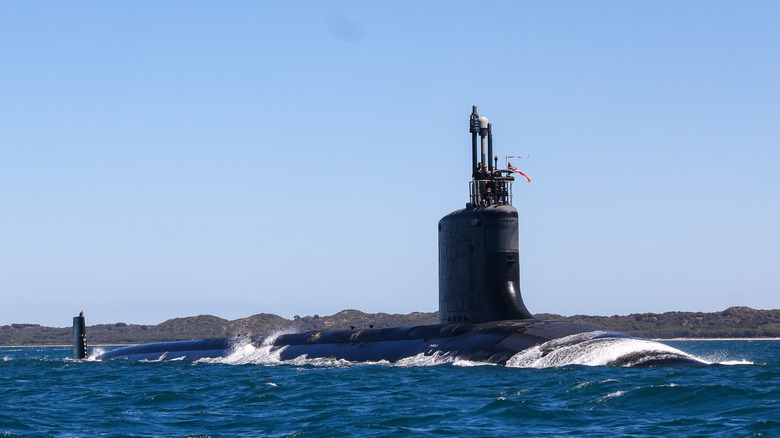
The updated ONR strategy also calls for an increased focus on research projects that are not being duplicated elsewhere in the commercial industry — or, in other words, projects that don't have a profit motive in the private sector. The ONR will now focus on more distant technologies that are specific to the military's needs. As seen with the Navy's massive new ballistic missile submarine that's set to join the fleet in 2029, stealthy operation is of vast importance for subs, and Riley uses submarines as a perfect example of technology that's very important to the Navy but doesn't have a larger market elsewhere.
The ability to move underwater quietly is vital for a Navy submarine that needs to avoid enemy surveillance, but is of little benefit for non-military use. Under the new strategy, the ONR wants to focus its sizeable budget on technologies like this, which would otherwise go undeveloped or overlooked by the private sector.
The naval drone technology of the future
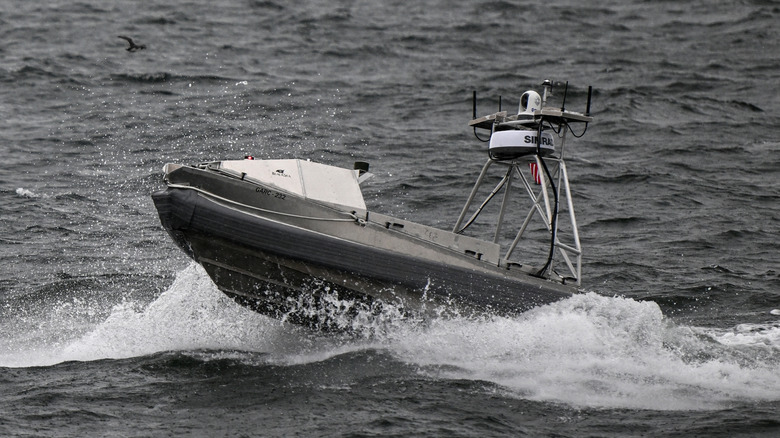
Along with traditional submarines, underwater and surface drones are another area where the ONR will be focusing its efforts. More specifically, on how those vessels are controlled and coordinated as part of a swarm or formation. When it comes to these expensive and time-consuming military research projects, one might wonder how often this technology is actually used in real combat situations, but there have been some high-profile demonstrations.
At the same Defense One Tech Summit, Jarred Conley of the Defense Innovation Unit (DIU), which works alongside the ONR but operates across the entire United States military, touted the life-saving success of the military's maritime drone tech during the war in Iran. In June 2026, in what would have been a difficult and dangerous mission for human sailors, an unmanned Navy boat successfully rescued two downed Apache helicopter crew members at sea, safely extracting them from the water in just two hours.
The Saronic Corsair autonomous surface vessel (ASV) used in the rescue mission had entered service just months earlier, quickly demonstrating its effectiveness at fast rescue operations in contested waters. Moving forward, both the ONR and DIU hope this sort of accelerated timeline will become commonplace across the United States Navy and the rest of the military.