

This Is The Chevy Tahoe Engine You Should Steer Clear Of
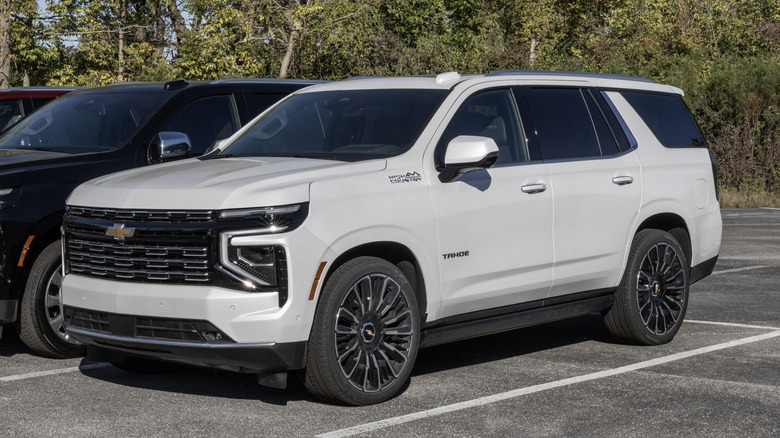
The Chevrolet Tahoe is one of America's most popular and most established SUV nameplates, with the model name itself dating to 1992 and its full-size Chevy truck underpinnings going back even further. As with most long-running models, there have been both good and bad model years for the Tahoe over the decades, with many different engine options over its history.
The majority of Chevy Tahoes on the road are powered by a variant of GM's ubiquitous naturally aspirated, overhead-valve V8, and the current model offers buyers a choice between three different engines. The base Tahoe engine is a 5.3-liter V8, and buyers can upgrade to either a 6.2-liter V8 or a 3.0-liter Duramax turbodiesel inline-six.
Of these three modern Tahoe engines, one has proven especially problematic in the Tahoe and other General Motors pickup trucks and SUVs that it powers. That engine is the L87 6.2-liter V8, which has become a fairly large thorn in the side of the Tahoe's generally strong reputation for reliability. The L87's problems are substantial and go far beyond your typical gremlins or minor parts issues, with a significant risk of total engine failure that's led to major manufacturer recalls and federal investigations.
The L87's problems are significant and ongoing
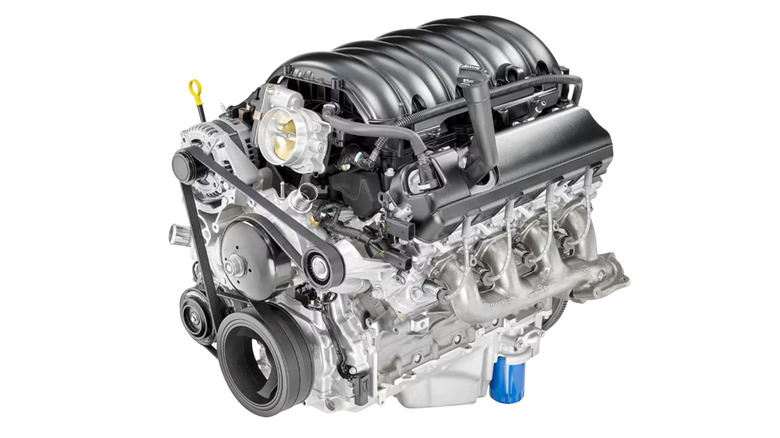
While issues with the GM's 6.2-liter V8 are well-publicized, it's important to note that there have been several iterations of the 6.2 V8 used in the Tahoe and other GM trucks and SUVs, including the L92 of the 2000s and the EcoTec3 L86 of the 2010s. The 6.2 V8 that's causing major issues for GM is the newer L87 variant, which debuted in the 2019 Chevy Silverado before making its way to the Tahoe for 2021.
The main problem with the L87 is the risk of bearing failure, which has been attributed to a manufacturing defect on GM's part. Since it involves the engine's internals, it's not an easy issue to fix and can lead to complete engine failure if things go wrong. To say that the L87 issues have been a problem for GM would be an understatement, with the company having to recall over 700,000 L87-equipped trucks and SUVs from the 2021 to 2024 model years as of mid-2025, and also coming under an NHTSA investigation for the problem.
While GM has been working on solutions to the problem, including complete engine replacements for affected vehicles and a switch to higher-viscosity oil, there's still concern that the automaker has not addressed the initial problem. According to the NHTSA, over 30 owners whose engines were supposedly fixed under the recall have reported engine failures after the repairs or replacements as of early 2026.
How to avoid issues with the 6.2-liter V8
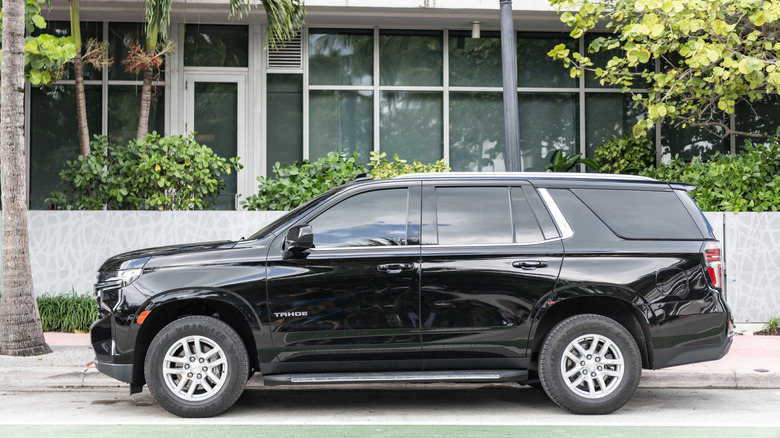
The 6.2-liter L87's issues have cast a shadow over the late-model Tahoe and other affected GM vehicles. General Motors has said that it updated the production design of 2025 and newer engines, which has kept newer model years out of the recall. The jury is still out on whether the problem was actually fixed, though, as some 2025 owners have reported similar engine issues with their 6.2s.
Potential Tahoe buyers have alternatives, though, as the L87's issues can be avoided by opting for either the base 5.3-liter V8 or the 3.0-liter Duramax turbodiesel. Both of these make less peak horsepower than the 6.2, but the Duramax makes up for it with impressive torque and good fuel economy.
Thankfully, potential Tahoe owners may not have to compromise on their engine choice for much longer. The fully redesigned 2027 Silverado will be available with a pair of next-generation V8 engines, one of which is a new 6.6-liter V8 that replaces the 6.2. That new engine will almost certainly make its way to the Tahoe as well somewhere down the line. Potential GM truck and SUV buyers will surely be hoping the new engine isn't just more powerful than the 6.2-liter, but also leaves its spotty reliability in the past.