

Avgas Vs Avtur: How Do These Fuel Types Differ?
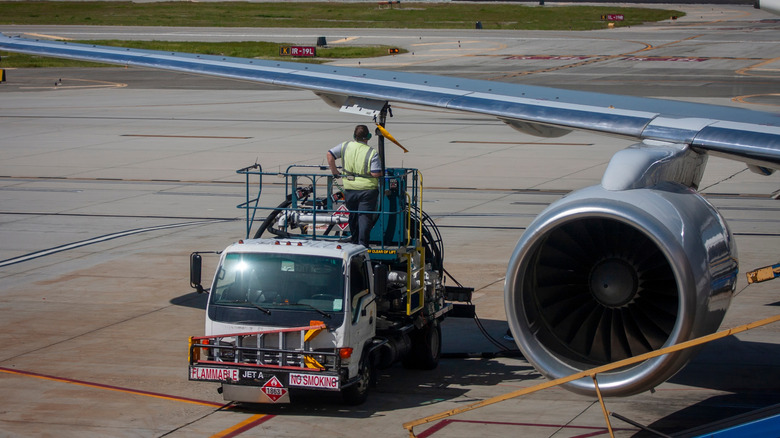
Aircraft don't use the same kinds of fuel as our cars, but not every plane burns the same type. In fact, there are two specially engineered types of aviation gasoline: avgas and avtur. And while both come from refining petroleum, they're ultimately designed for entirely different engine types and operating conditions. For operators, knowing the difference is essential, as aircraft engines are built to use very specific fuels that meet their exact chemical, physical, and performance standards. Without the right fuel, the aircraft won't be able to generate power or operate safely.
Avgas is made for aircraft with piston engines that use an internal combustion system and spark ignition. This includes helicopters and other general aviation aircraft such as privately owned planes, flight trainers, microlights, sports aircraft, and piston-powered propeller aircraft. Avgas grades use a Motor Octane Number (MON) alongside lead content designations, as most airplanes still rely on leaded fuel. These lead indicators include low lead (LL), very low lead (VLL), and unleaded (UL). Almost all avgas sold in the United States today is 100LL: a 100 MON-rated low-lead fuel. Of course, not all aircraft are piston-driven, and that's where avtur comes in.
How avtur compares to avgas
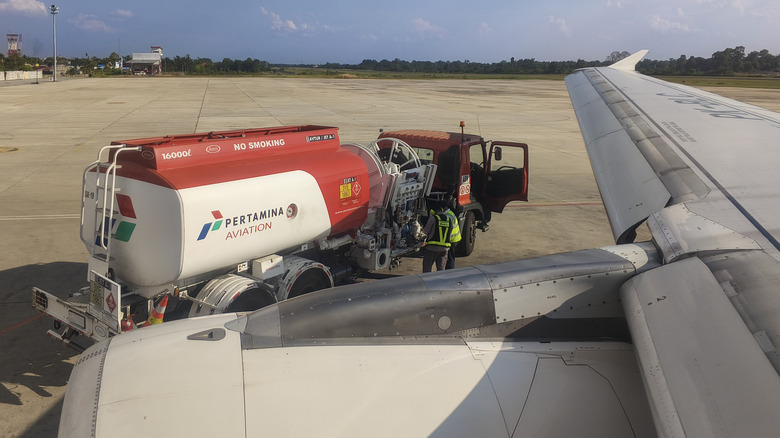
Avtur, short for aviation turbine fuel, is used by aircraft equipped with turbine engines. This includes jet aircraft as well as turbine-powered propeller aircraft. Why not use avgas? Well, rather than relying on spark ignition, these turbine engines compress air before combining it with fuel. That causes combustion through pressure and heat inside the engine's combustion chambers. It's a different operating principle, and it requires a different fuel.
Compared to avgas, avtur is much more highly refined; if anything, it more closely resembles kerosene than avgas. Avtur also lacks the lead additives found in something like 100LL avgas. On the other hand, avgas has a much lower flash point than avtur. That's because turbine engines operate at much higher temperatures and under very different combustion characteristics than piston engines. Avtur ignites only after being subjected to the intense heat and pressure generated within turbine engines.