

Why Do People Put Chainsaw Bars Upside Down?
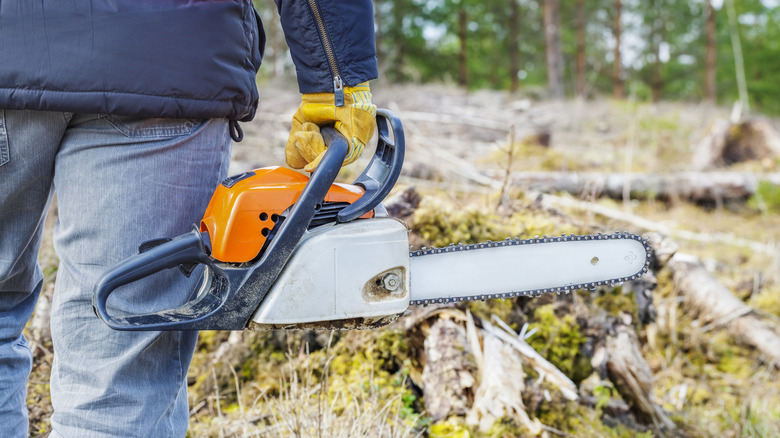
Whether they're made by one of the major manufacturers, or some lesser-known brand, chainsaws require plenty of upkeep to stay in prime cutting condition. Given the clear and present dangers that tend to come with wielding one, you'd be wise to keep that cutter in good working order, as it's one of the surest ways to prevent malfunction and injury on a job site or in the back yard.
There are, of course, any number of measures you can take to maintain your chainsaw. That list includes a few obvious tasks, like ensuring the chainsaw is oiled before every use, giving the cutter a good cleaning when you're finished, and properly storing your chainsaw. There are other measures that can help maintain a chainsaw which the average user may not be aware of, however, including flipping the device's bar upside down.
Flipping the chainsaw's bar is another way to say that you remove the device's guide bar, flipping it upside down and re-installing it for use. The move is intended to help reduce the amount of wear on one side of the guide bar, which endures an incredible amount of stress during even light usage. After all, apart from holding the cutter's chain, the guide bar also aids in controlling efficiency and precision during cutting. It acts as a stabilizing force, which makes flipping the bar upside down all the more important.
Is flipping a chainsaw bar safe?
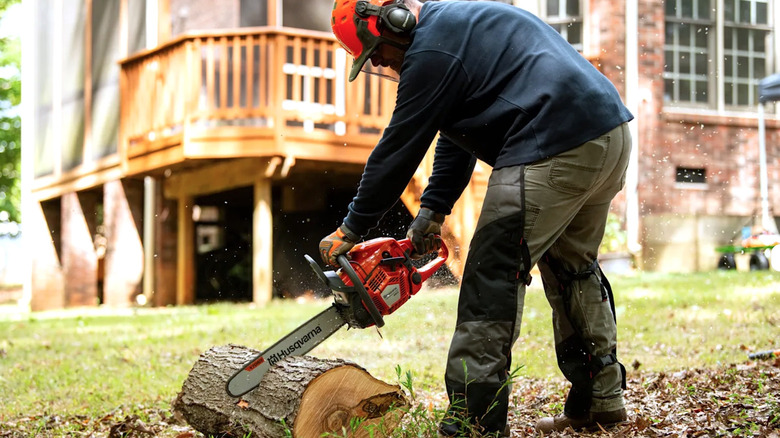
Apart from helping to preserve the integrity of a key component of your chainsaw, there are also obvious safety questions concerning the flipping of the guide bar. You are, after all, removing that component from the device and re-reattaching it for use. Fear not, however, as flipping your chainsaw's guide bar is considered a relatively safe procedure when done with care.
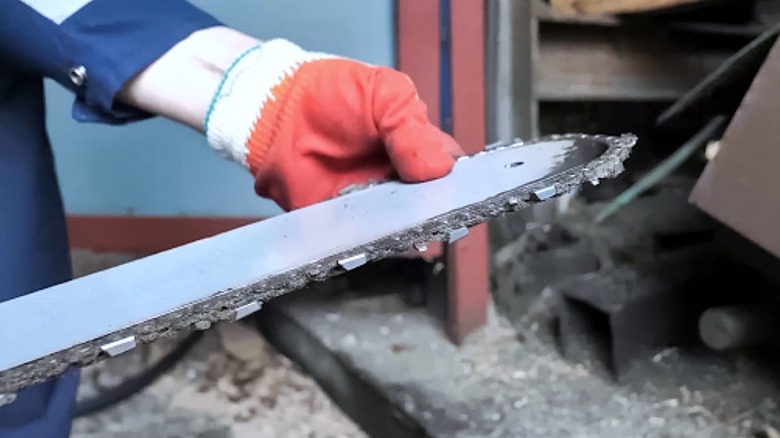
In fact, doing so with some regularity is recommended by many in the power tool world as a viable way to increase the cutter's operational safety. The reasoning for that logic is quite simple, and a direct result of the incredible stress the bar endures during usage. Those bars are, of course, capable of cutting both up and down when necessary, but cutting down through a limb or log is often the safer way to operate. The continuous downward cutting motion, however, leaves the bottom of the guide bar exposed to far more stress than the top. This leads to more damage over extended periods of use.
That damage can include things like chipping, cracking, and even bending. And yes, over time those issues will inherently affect the safety of the chainsaw to the point that the chain could bind, jump, or stall mid-cut. In some cases, the chain could even be thrown or broken. Every effort should be made to ensure that doesn't happen.
How to flip your chainsaw's guide bar
Given these safety concerns, some users may not be comfortable flipping the device's bar upside down. If that's the case, you can likely have the work done by a local small engine repair specialist or through some home improvement outlets and authorized equipment dealers. If you'd prefer to flip the bar yourself, follow these steps to do it.
- Ensure your chainsaw is powered down and not connected to a power source, including an AC outlet or a lithium-ion battery.
- Remove the chainsaw's guard cover, as well as the engine cover if needed. This will likely require either a flathead tool of some sort, or potentially a ratchet with the correct bit.
- Loosen and separate the chain from the guide bar.
- With the chain removed, separate the guide bar from the saw. This may also require a flathead tool or a ratchet, though some smaller saws may have a different setup.
- With those components removed, take a moment to clean any dirt, debris, or sawdust from the area.
- Flip the guide bar over and secure it back to the saw.
- Re-install the chain and ensure it is tight to the bar before re-installing the engine and guard covers using the requisite tools.
As noted, it is imperative that the guide bar assembly and chain are reinstalled with the utmost care to ensure the chainsaw's operational safety when pressed back into action. To that end, you should test the chainsaw's function prior to using it for cutting purposes. And again, if you are not comfortable with this task, please take your chainsaw to a professional for service.