

Is There A Speed Limit In A Roundabout If There Are No Signs?
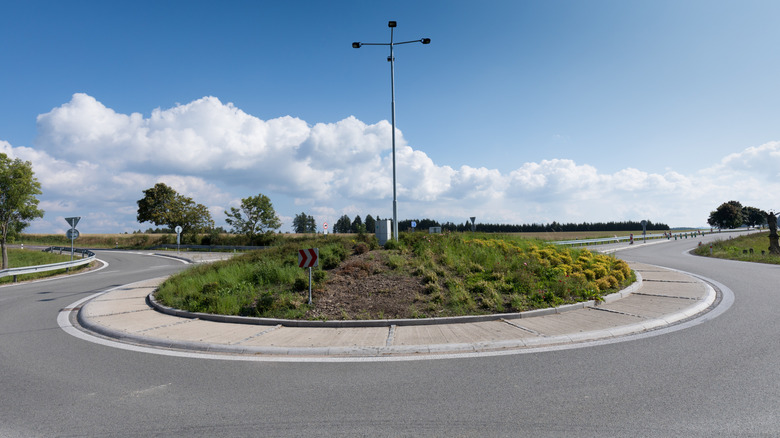
Roundabouts can help keep you moving in areas where a 4-way stop could otherwise bring everyone to an unnecessary and time-consuming face-off. But understanding a roundabout's rules can be tricky for some drivers, including whether or not to use a turn signal, or even knowing how fast to go. If speed limit signs aren't posted, it's best to slow down on approach and keep your vehicle to 25 mph or under.
This number is based on Federal Highway Administration (FHWA) guidelines, which state that roundabouts are typically designed for slower speeds of 15 to 25 mph. These speed limits are designed to help improve driver safety and decrease the chances of a crash. At those speeds, you should have more time to yield, get through the curve, and react to vehicles, pedestrians, and cyclists. The Florida Department of Transportation (FDOT) suggests being even more cautious, especially in single-lane roundabouts. FDOT recommends reducing speeds to around 10 to 15 mph before yielding to traffic already in the circle.
When entering a roundabout with more than one lane, maintain a low speed and keep moving steadily without changing lanes. Beware of other cars in the roundabout as well and especially watch for larger vehicles like full-sized SUVs or trucks, as they typically need to swing wider in order to make the turn. Take your time and when you're ready to leave the roundabout, use caution and exit safely.
Why roundabouts are the safer alternative to traditional intersections
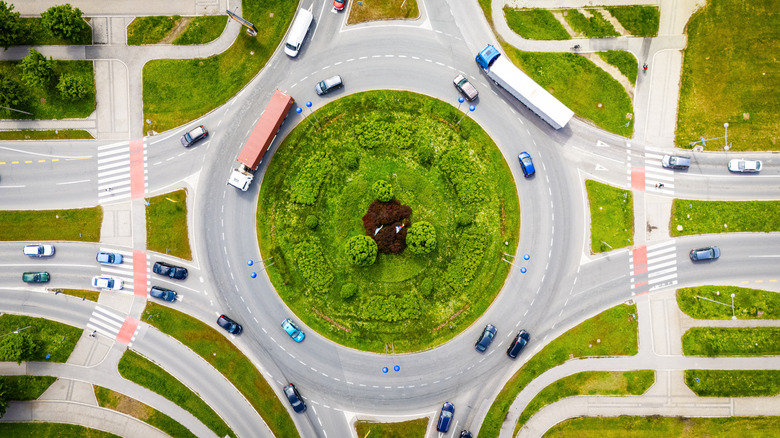
Roundabouts are not the only method used to improve traffic flow at intersections. Turbo roundabouts are a variation of the traditional roundabout, but built with a different design. Turbo roundabouts utilize spiral lanes and dividers that require drivers to choose the lane they want before entering. This helps eliminate lane changes in the roundabout and manage vehicle speeds while also promoting overall safety.
The reason roundabouts are generally considered safer than traditional intersections overall is because they change the way vehicles interact with each other. That's because drivers are moving in the same direction at slower speeds versus crossing in front of each other at much higher speeds. Pedestrians are typically much safer crossing in roundabouts as well. That's because they only need to watch for one direction of traffic at a time instead of multiple vehicles coming from different directions.
The nature of vehicle collisions is also different in roundabouts. Instead of the fatal intersection accidents and head-on collisions that can occur in traditional intersections, roundabout accidents are typically caused by other factors. This includes drivers failing to yield, losing control, or making contact when trying to enter or exit. According to the FHWA, intersections converted to roundabouts in the United States saw about a 37% reduction in total crashes, and a 51% decrease in total injury crashes. Collisions can still happen, but the severity of those incidents is far less than those in regular intersections.