

5 Reasons Why Audiophiles Prefer Turntables To Record Players
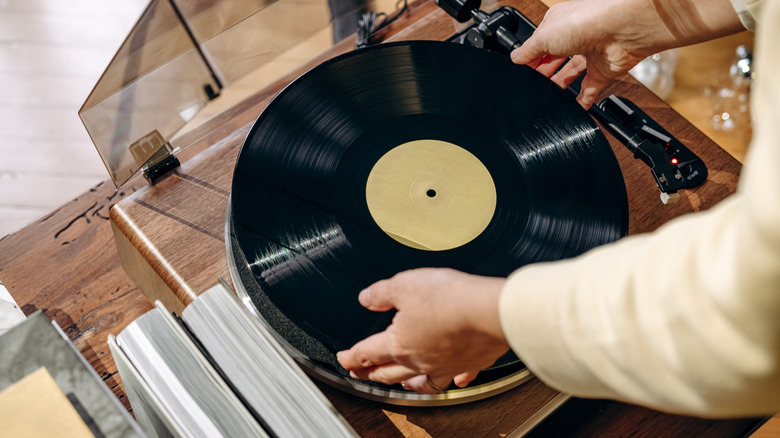
Building your ideal hi-fi setup is no small task. Depending on your specific goals, you could be in for buying a lot of different gear to perfect your sound and make sure you have everything you need to listen to what you love, how you'd love to. That's an expensive endeavor — and sometimes, a confusing one. It's sometimes difficult to tell what different devices can do, or how they differ from one another.
Deciding how to play vinyl is similarly difficult, yet vital. If you're interested in vinyl, then there's a good chance that you're already committed to achieving the best sound you can at home. So, naturally, you'll want to make sure you pick up the most suitable gear possible. There's a great turntable out there at almost any budget, but there's a crucial difference to be aware of before you splash the cash: whether you need a record player or a turntable.
Although the two phrases are used interchangeably, they're actually different equipment. Generally speaking, a record player is an all-in-one device that has everything you need to play vinyl, including built-in speakers. Turntables, on the other hand, only play records themselves, with no speakers. That means you need to hook turntables up to amps and speakers if you want to hear anything. That offers invaluable flexibility if you're an audiophile crafting your dream listening experience, even if it can be a little inconvenient.
A turntable offers more flexibility
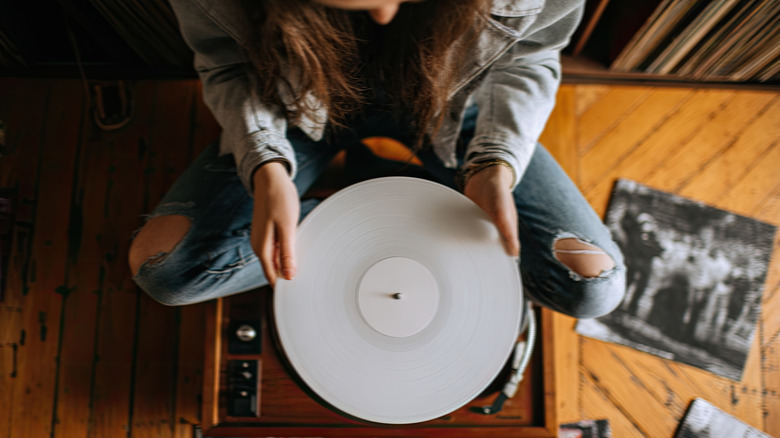
When you pick a turntable, you're just choosing the device that spins your records and the stylus that translates the grooves into electrical signals, not your speakers, amplifier, subwoofer, or anything else. As a result, you can build the exact setup you want by picking up a turntable instead. Think of it as a modular system, where the turntable makes up one part of the wider hi-fi setup. Meanwhile, when you pick a record player, you're also often picking the amplifier, speakers, and anything else it comes with.
For many audio lovers, selecting the equipment to get the sound they want is a big part of the fun. Audiophilia is a hobby, after all. With that in mind, using ready-out-of-the-box audio equipment — like a record player with a built-in amplifier and speakers — can take some of the joy out of the process. Using a turntable, on the other hand, opens up a world of possibilities, since you can use it with other components you may be interested in.
While it's convenient to grab a record player and be able to use it straight away without needing other equipment, that convenience comes with a compromise: you're generally restricted to the components it comes with, at least to some extent. That's not always the case, though, as some record players do essentially double up as turntables, allowing you to hook them up to other equipment like speakers. But you're still going to be somewhat restricted by the player's internals and overall capabilities.
All-in-one record players don't always offer the best sound
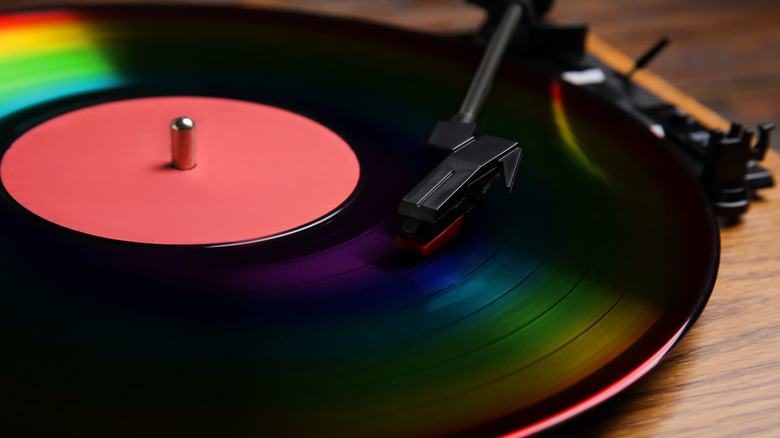
Being stuck with the amplifier and speakers that your record player comes with isn't only a problem of limited customizability. Unfortunately, sometimes whatever's built into your all-in-one record player just doesn't sound that good to start with. These decks have to spin the records, amplify the sound, and push it through the built-in speakers, and this all-in-one nature can lead to sonic compromises. If you can't enjoy the sound, it defeats the purpose of investing time and money into your setup.
Generally speaking, all-in-one record players don't offer the best sound quality. They can sound tinny and lack clarity, stopping you from getting the most out of your collection's potentially high-fidelity capabilities. Instead, you run the risk of getting a listening experience you could just as easily get from a small radio, speaker, or even your phone. For that reason, some opt to skip all-in-one options in favour of turntables designed to work with proper hi-fi equipment.
Interference is also a common problem with all-in-one record players. That happens when the stylus picks up vibrations from the built-in speakers as it's playing a record. Usually, this happens with a slight delay, which can lead to a messy, discordant, and even distorted sound. This can happen with any vinyl setup, but the proximity of the speakers to the turntable's stylus means it's much more common with record players.
Issues are easier to deal with
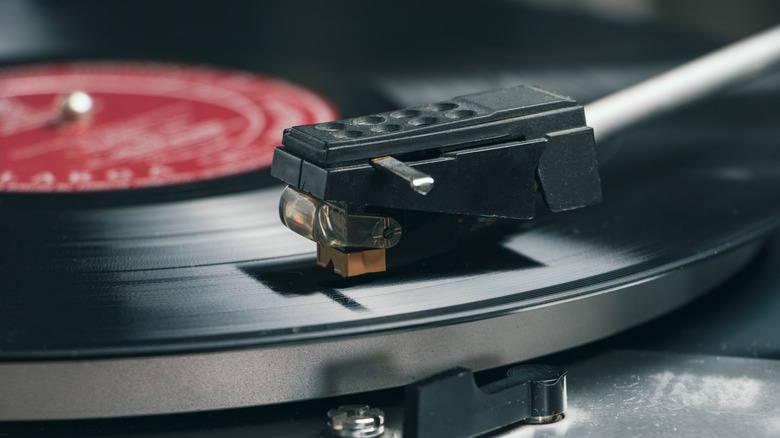
When a record player breaks, you could be looking at anything from a duff speaker to a busted amplifier and a good few things in between. That's because of all the functions they perform. In some cases, a broken part could even be the end of the line for that record player altogether, leaving you to pick up an entirely new one.
Turntables, on the other hand, are typically a little more straightforward. Sure, there is still plenty that can go wrong — including the belt (or drive motor), cartridge, arm, or power supply — but it'll be something specific to the vinyl-spinning process itself. Pretty much everything else that makes up your setup is separate, meaning that replacing a busted speaker is a matter of buying some new speakers rather than opening up your player to see what's inside, or replacing the player altogether.
One related area where record players are at a significant disadvantage compared to turntables is the stylus or needle. Styluses wear down over time, and you should replace them to reduce the risk of damaging your records. However, some record players are designed in a way that means you can't replace the stylus. So, that means that when your needle reaches the end of its life, your record player does as well. That's a lot of waste, and a fair amount of risk for your records.
Some record players can even damage your records
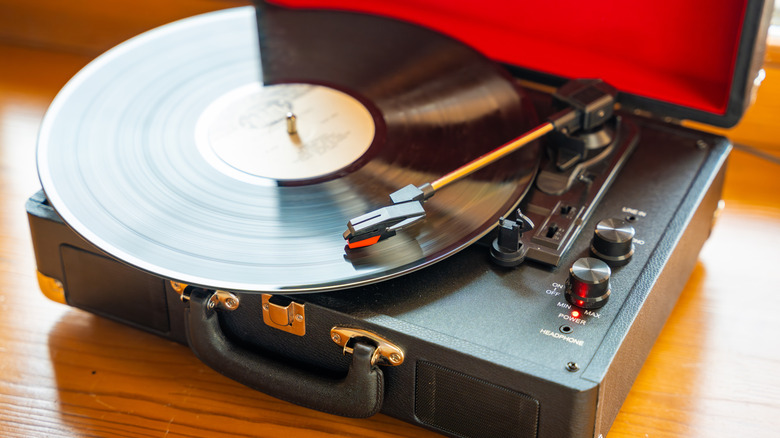
Even with all their faults, an all-in-one record player might still tempt some with its ease of use and affordability. However, that convenience and cost could quickly turn into an expensive and awful ordeal if it ends up damaging your records. There are a couple of culprits behind this, but one of them is down to the placement of your record player's speakers.
All sound is vibration. That means that when your record player's speakers blare out whatever you're spinning, your deck is also vibrating. Your record spins on top of the deck, while it's being read by the player's needle. Except that the vibrations will cause all of it to move slightly. In turn, the player's stylus might move around more than it should, and it may skip across the record and scratch it. Some slight scratches on records can go unnoticed, but damage builds up over time, and deeper scuffs can cause audible imperfections or even skips. Nobody wants that, audiophile or otherwise.
That isn't the only time that needles can cause damage to your records. Records can wear down over time, and this can happen on any system, regardless of whether it's a record player or turntable. However, budget all-in-one record players may also have budget needles, which could cause more damage in the long-term compared to a finer needle. Another thing to keep in mind is that you won't have much room to adjust settings like the tracking force.
Record players can have tonearm limitations
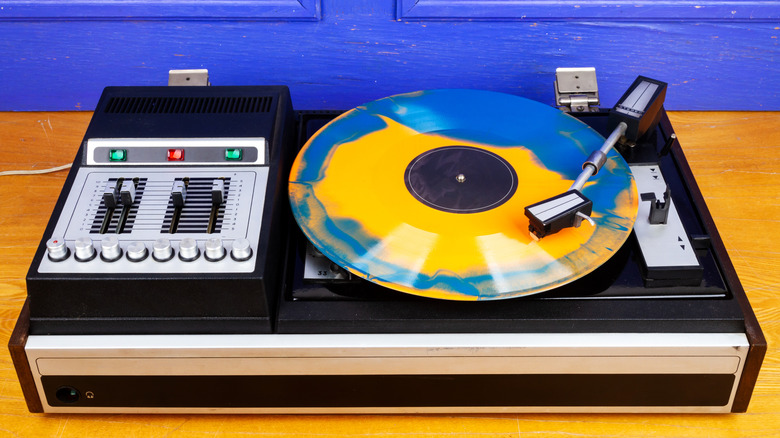
All-in-one record players are at a particular disadvantage compared to turntables when it comes to the tonearm. The tonearm is a crucial part of any record deck, as it holds the cartridge in place, allowing it to follow grooves on a vinyl record and for the turntable to produce sound. It also ensures the needle is stable and that the pressure (or tracking force) is consistent, reducing the risk of damaging your records while reproducing the music as clearly as possible. Overall, being able to adjust the tracking weight is important for playback, ensuring your records sound great, don't skip, and don't wear out too quickly. Despite that, it's not an option on many popular all-in-one record players.
In some cases, the arm is set to the wrong weight altogether, so the tonearm places far too much pressure on the record. That's no big deal if you can adjust the weight, but if you can't, you're stuck with a significant risk of your LPs getting damaged over time. That's the last thing anyone would want, but it's probably going to be a deal-breaker if you're especially invested in enjoying the highest fidelity sound possible, or if you collect rare records. As a result, any gear that doesn't offer tonearm adjustability is inherently less appealing than gear that does.