

What's The Difference Between A Solid And Flashing Yellow Turn Arrow?
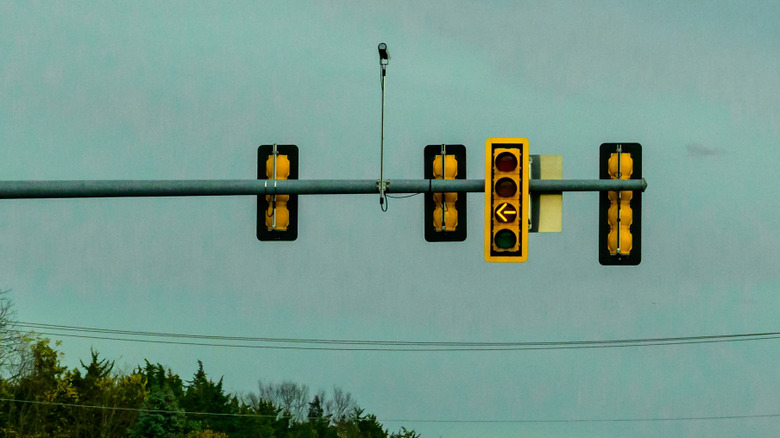
You think you know your traffic signals. Green means go, red means stop, but yellow gets a little tricky, especially when the light starts throwing an arrow symbol your way. As it turns out, flashing yellow arrows and solid yellow arrows mean two completely different things. You need to be familiar with both in order to abide by the rules of the road.
Whether solid or flashing, drivers are bound to encounter a yellow arrow at intersections with a turning signal. On the most basic level, both are telling you to use caution. But a solid yellow arrow is telling you to be cautious as you prepare to stop. A flashing yellow arrow, on the other hand, is telling you to be cautious as you go ahead and make your turn.
Neither one should be confused with a green arrow, which gives you right-of-way, nor a red arrow (or the obscure double red arrow), which means stop. A flashing yellow arrow says you can only make a left turn once other motorists and pedestrians are out of the way. Officially, a solid green arrow allows a protected turn, while a flashing yellow arrow allows a permissive turn. Meanwhile, a solid yellow arrow is really no different than a full yellow light — the signal is about to turn red, so you should start slowing down or get out of the intersection.
Flashing yellow arrows are becoming the new standard
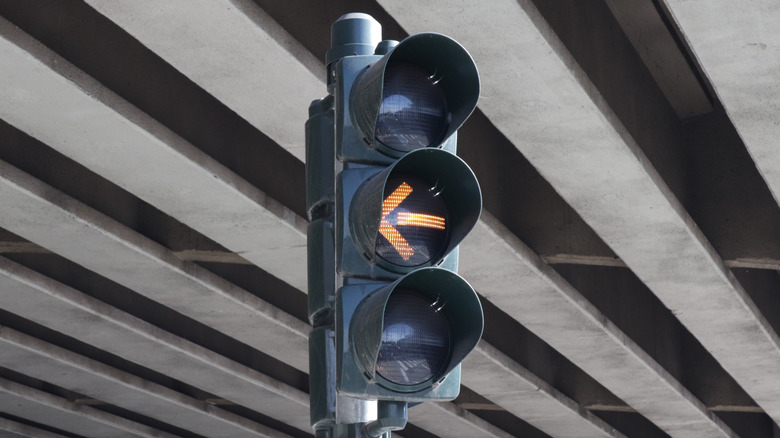
Flashing yellow arrows have become a lot more common in the last decade or so. They've gradually replaced the green lights that used to show at permissive left turns because transportation officials determined it was being misunderstood far too often. A solid green light gives you permission to make a left turn, but it's only permitted after yielding to opposing traffic. Nevertheless, drivers often interpreted the green light as an unrestricted invitation to turn immediately.
Today, the flashing yellow arrow is the preferred way to let drivers know about permissive left turns. It's a move backed by research: In a University of Minnesota survey, of 480 drivers in the state, nearly all respondents recognized that the signal marked a permissive left turn that required drivers to yield before going ahead. Other observations in the survey found that flashing yellow arrows can also improve traffic flow by giving drivers a chance to take advantage of safe gaps in traffic instead of waiting for a solid, fully protected green arrow.