

What Does The Trash Can With An X Through It Mean On An Electronic Device?
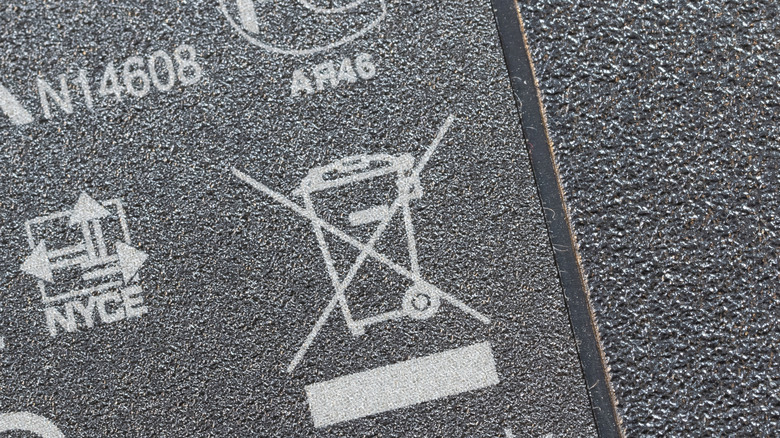
When was the last time you really looked at some of the electronic devices you have set up in your home, or potentially even on your person. Sure, you look at the screen, and have no doubt at least glanced at fixtures like buttons, charging ports, USB ports, and speakers. You might even have noticed some of the additional markings that are often imprinted on the back and sides. It's a safe enough bet, however, that you don't know what many of them mean, including the one that shows a trash can with a big X over top.
For the record, that marking is not found on electronic devices in all corners of the world. It is, instead, largely found on products purchased and distributed in countries throughout the European markets. As you've no doubt discerned, the symbol does indeed concern the method in which you should dispose of the device when you no longer need it, or it is no longer functional. And yes, that marking means you shouldn't just chuck it in the nearest waste bin.
In fact, that WEEE marking essentially mandates that you aren't allowed to do so, and are instead meant to take it to a dedicated collection facility. So, what exactly does WEEE mean? The acronym stands for Waste Electrical and Electronic Equipment. The program has been in effect throughout Europe in some capacity since 2003, and is designed to help limit and reduce the amount of important electronic waste.
What to do with your old electronics
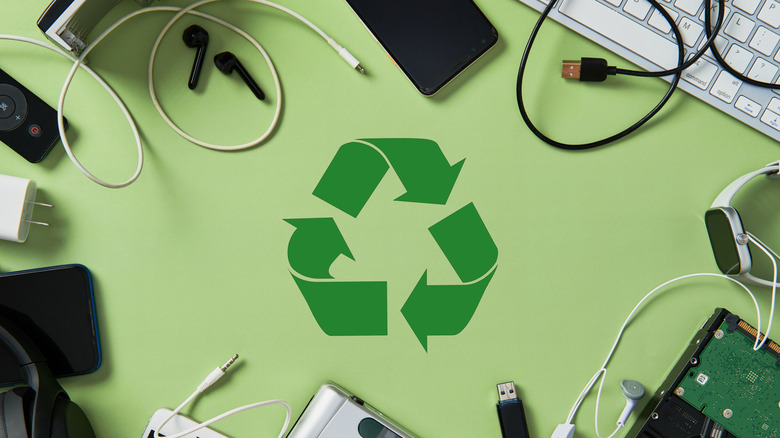
In European quarters, the WEEE marking is mandatory on larger appliances like major brand refrigerators, washing machines, air-conditioning units, copy machines, and rooftop solar panels. Ditto for lamps, watches, vacuum cleaners, smoke detectors and any product with a screen larger than 100 centimeters squared, among various other devices. At the end of their life cycle, those items are intended to be taken to dedicated collection facilities where they can be responsibly disposed of or even recycled and put back into circulation in some capacity.
The directive is designed to limit the amount of so-called e-waste in Europe, which should, in turn, benefit not only the environment at large, but those who inhabit it. According to numbers touted by the European Commission, in 2022 alone some 5.5 tons of e-waste were collected under the directive, which comes to about 11.2 kilograms (just over 24.5-pounds) per person. According to sources, Europe continues to boast the best e-waste recycling numbers by continent at 42.8%.
Of course, not every country has a legally mandated e-waste recycling program, with the United States one of the more notable names among those international parties. That does not, however, mean you can't recycle your electronics. Quite the opposite is true, and even as the federal government does not operate such a program, many states, cities, and municipalities throughout the country have recycling programs or e-waste recycling legislation. So too do many energy companies and big box retailers who deal in major appliances and electronics. If you're curious about e-waste recycling programs in your area, the information should be readily available through local government websites.