

How Does The Modern Dodge Demon Logo Differ From What Was Used In The '70s?
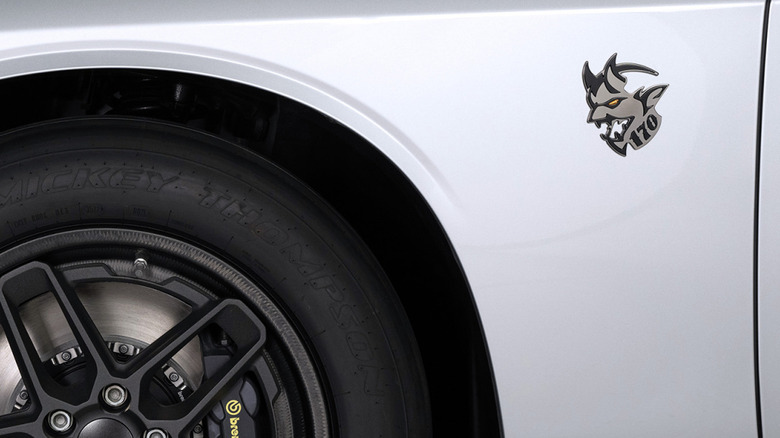
Even if it wasn't the first production car to break the 1,000-hp barrier, the modern Dodge Challenger SRT Demon is a heavyweight of the contemporary muscle car era. When it arrived in 2018, the Dodge Demon took what was already the mega-powerful Dodge Challenger SRT Hellcat and amped up its performance in a big way. Power climbed to 808 hp and eventually hit 1,025 hp with the ultra-limited 2023 SRT Demon 170.
What longtime Mopar fans and auto historians know, though, is that 2018 wasn't actually the start of the Dodge Demon story. The Demon model name stretches back over 50 years of Dodge history to the early 1970s. Along with its massive jump in horsepower, technological advancements, and higher price point, the Demon's logo also changed significantly during its long hiatus.
For Dodge, updating the Demon's logo for the 21st century was not a quick process, nor was it taken lightly. As with the original muscle cars of the '60s and '70s, marketing is a big part of the formula for their modern equivalents, and the SRT Demon was a brilliant example. For the new car, the Dodge marketing team went with a more modern, Hellcat-influenced, and, most would say, more evil Demon logo compared to the cartoonish version used on the 1970s car.
From the 1970s to the 2020s
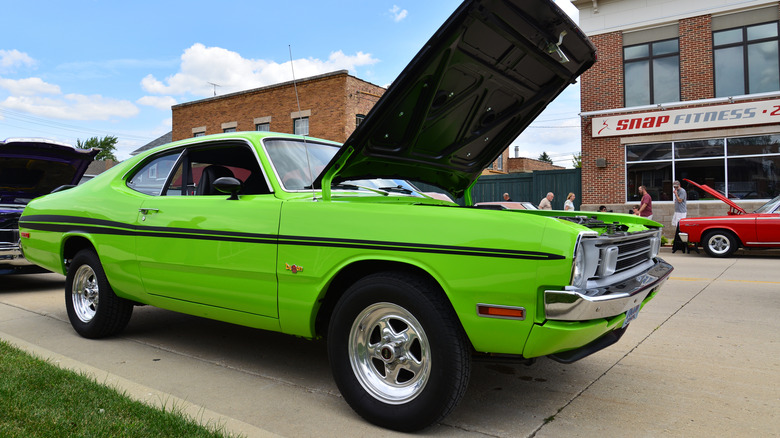
Before we get into the details of the modern SRT Demon's logo, it's time for a quick history lesson on the short-lived, original Dodge Demon. While the name might bring to mind images of a wild, HEMI-powered monster muscle machine, the 1971 Dodge Demon was actually a smaller, affordable two-door coupe for the Dodge brand. Dodge based it on the popular but now oft-forgotten Plymouth Duster, which had arrived one model year earlier.
The '71 Demon essentially just took the Dodge Dart's front end and put it on the Duster's body. With the new model name came a new logo, featuring a very 1970s-looking cartoon devil character holding an upside-down pitchfork, inspired by the Little Devil comic book character. The Demon's logo fit right with Chrysler's muscle-car iconography of the era, which included Plymouth's Road Runner character, the Dodge Super Bee, and the Duster's own tornado cartoon motif.
While it may seem cute and innocent now, the Demon's name and logo proved controversial with religious groups of the time. Dodge eventually renamed it the Dodge Dart Sport for the 1973 model year, by which point the outlandish marketing trends of the original muscle car era had already begun to subside. The Dodge Demon name then returned briefly in 2007, but only on a small sports-car concept that never reached production.
A bigger and badder Demon
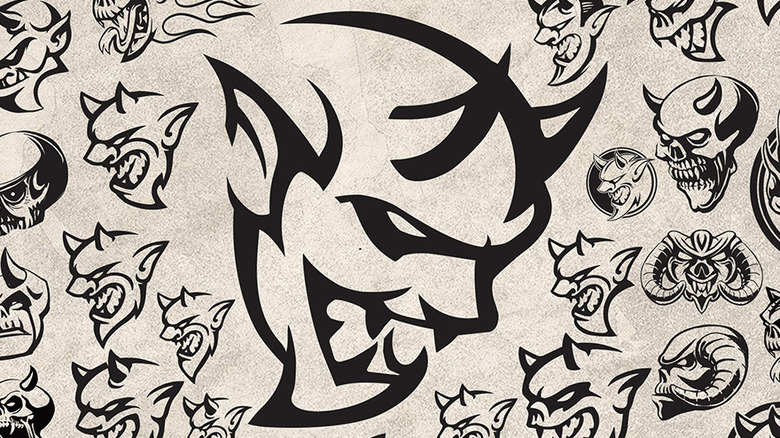
Fast forward to the late 2010s, and Dodge fully revives the Demon nameplate on a more powerful, drag-focused variant of the Dodge Challenger SRT Hellcat. When designing a logo for the new Demon, Dodge's design team drew inspiration from the original early '70s Demon cartoon character, but moved things in a more modern direction. Ultimately, the team settled on a design that blended elements of the original logo with the modern SRT Hellcat logo. It was meaner and more sinister-looking, while still paying homage to the original.
Of course, the new Demon logo wasn't just an emblem on the side of the car; it would become a key part of the car's launch and marketing blitz and, ideally for the Dodge team, a big part of the SRT Demon's personality. The logo received some updates with the subsequent release of the even more powerful Demon 170 model, including yellow eyes and a "170" neck tattoo.
Both the evolution of the Demon logo and the lack of modern controversy surrounding the name show just how much things have changed since the original Demon's early 1970s debut. That's only fitting, really, given how much faster and more extreme the modern version of this muscle car is compared to its predecessor.