

This Reusable Car Accessory Can Save You Money In The Long Run
We may receive a commission on purchases made from links.
Vehicle maintenance can be costly, because there's a seemingly endless cycle of oil to change, old components to replace, and so on. The familiar dilemma arises: Do you buy the cheaper one-off replacement for the item at hand, or is it worth splashing out on a pricier yet reusable one? You might find, for example, that a reusable air filter may save you significant money in the long run.
A car requires several different types of filter. For starters, there's the type that protects the engine's intake. Then there are those air filters that service the air conditioning and heating for those within the vehicle itself. Regular filter changes are important for your cabin air filter and engine air filter, but whether you're better off opting for a reusable variety or a disposable one will depend on factors such as the type of vehicle you drive, because the prices of different models' filters can differ quite significantly.
Disposable air filters from retailers like Walmart like the $15.73 ECOGARD XC10621C Premium Cabin Air Filter and the $8.39 A-Premium Cabin Air Filter CF11663 are cheap and readily available. Walmart also stocks more expensive reusable versions, like the K&N's Performance Cabin Air Filter VF2071 for $38.39 and its VF1001 cabin air filter for a hefty $67.19.There are a lot of factors that go into the decision as well as the ultimate savings you'll be able to unlock, because considerations like the particular brand and how fastidious you are with cleaning and caring for filters have to be taken into account. Let's take a look at some of these crucial factors, how you can best take care of a reusable filter if you choose one, and the circumstances in which it'll be in your best interests to do so.
Types of air filters and further concerns
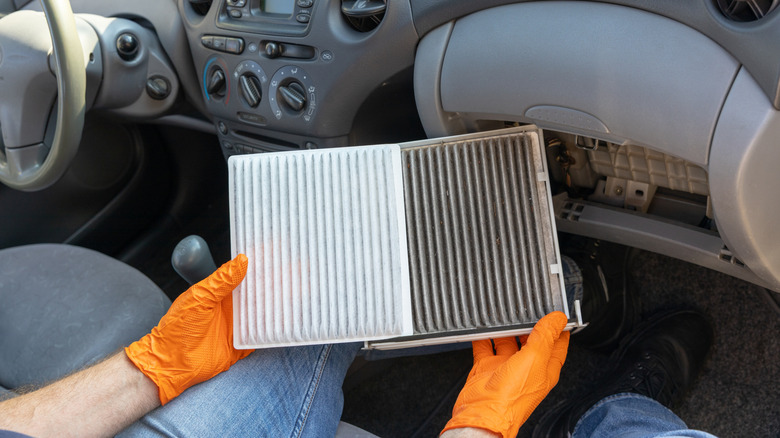
Car filters, just as they are with HVAC systems, are key for preventing dust and debris from building up in your vehicle. It's crucial to stay on top of this, because an air filter that has become too dirty or hasn't been changed often enough can severely compromise your car or truck's performance. You risk reducing your fuel efficiency because less clean air can pass through the system to your engine, and there's also the risk posed by increasing the amount of pollution emitted by your engine.
There are also factors such as the tiny and extremely delicate engine components that you put at risk by not regularly refreshing your air filter. In short, some awful things can happen if you don't change or clean your engine's air filter. You should wash a reusable filter every 50,000 or so, according to Speedway Motors; doing the job properly, in order to preserve the model for as long a lifespan as possible, can require soaking in a special solution as well as filter oil/filter cleaner. The cost of these can be considerable, and it's important to determine how much the necessary materials and filter itself if will run you between reusable or disposable options. If you're opting for an OEM model, for instance, you can generally expect a higher outlay than with a non-branded model.
For a cabin filter, Runex Auto adds, customers may spend about $10 for a more basic model, while a premium counterpart could cost as much as $50 or more. This is due to be crucial differences in the material and performance characteristics between the two. For example, a more expensive premium version may sport HEPA (High-Efficiency Particulate Air) technology, allowing for more efficient filtration.
How often might you change a one-use air filter in your car?
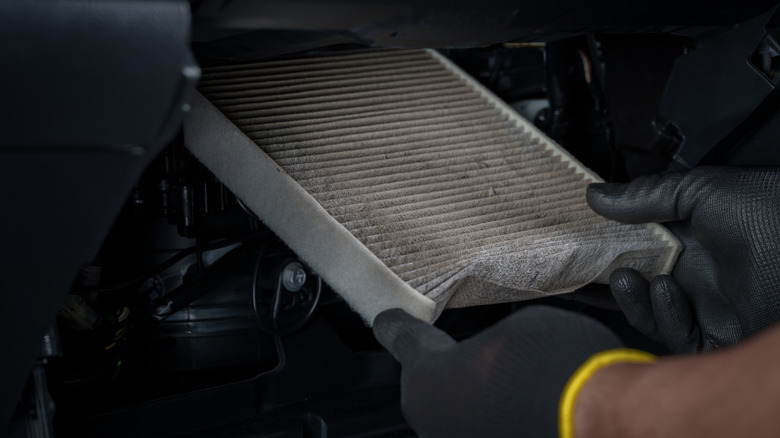
Ted Russell Ford suggests that a standard air filter in a vehicle should be changed between every 12,000 to 15,000 miles, or annually. The disparity is owing to the fact that a lot depends on the type of roads you cover. If you primarily drive on particularly dusty or dirty roads, you should make a point of changing your filter closer to the lower end of that scale.
Reusable air filters are considerably pricier as a rule of thumb, and they will also require more maintenance because they have to be cleaned properly; there's a risk of mold forming if they aren't completely dry before being placed back in the vehicle. You'll have to weigh the convenience of trips for more filters and the ongoing cost against the convenience of one purchase but semi-regular washes and maintenance in between. From a sustainability standpoint, a disposable product will always be the less environmentally-friendly option than one you can clean and reuse for potentially years to come.
In fact, it's possible that a reusable filter will last as long as your vehicle itself, but you have to be diligent with cleaning to get the most from it. Oiled models, for instance, will also require re-application of that oil in order to continue to function as though new every time. After all, the longer the lifespan you can coax from it through regular car with each change, the more money you'll save on not having to buy replacements. Stay aware of the telltale signs that your cabin or engine air filter needs to be changed or cleaned and reused (such as a stronger odor of gasoline).