

Is It Illegal To Put Up Your Own Speed Limit Signs?
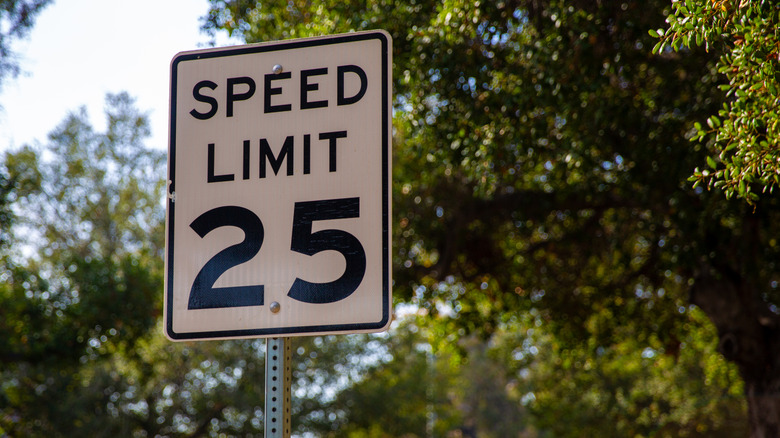
Whether we're simply keeping up with traffic or getting caught up in jamming out to a favorite tune, almost everyone on the road is guilty of speeding occasionally. Excessive speeding is always dangerous, of course, and never recommended. If you're only going a few miles over the speed limit and you get pulled over, you may be let go with a warning, or your day may be ruined by a citation.
According to a study by the AAA Foundation for Traffic Safety, 36% of surveyed drivers admit to driving at least 10 mph over the speed limit on residential streets. Young, male drivers tend to break the limit more often than older drivers or females, and many studies indicate that a majority of car accidents actually happen close to home.
If you're frustrated with drivers tearing through your neighborhood, however, you may be tempted to take matters into your own hands, and purchase a speed limit sign on Amazon to post near your home. However, while you may think you're improving safety, what you're doing is probably illegal, and it could even be dangerous. Speed limit laws date back to 1901 and when it comes to public roads, the rules are always in the hands of government agencies. Private property owners can post speed limits, but they are rarely enforceable in any kind of official capacity.
How speed limits are established
According to the Federal Highway Administration, speed limits are set by state and local transportation agencies following speed studies and other guidance. This is why you may notice the speed limit changing after you cross a state line even though you remain on the same highway. Speed limits set by the state, called statutory speed limits, are used to enforce interstates, rural highways, and city streets, and they vary from state to state. Local roads may be enforced by a county, city, or borough.
Each state may have its own set of rules, but rules are rules, and individual citizens are not allowed to change them. Unless you live off a private lane you own, you cannot post or change the speed limit, even if you head up a homeowner's association. It's also illegal to try to enforce any speed limit changes. In some states, if an HOA is abiding by the legal speed limit set by appropriate authorities, it may have the right to fine residents internally, even without involving the police, but it cannot fine non-residents.
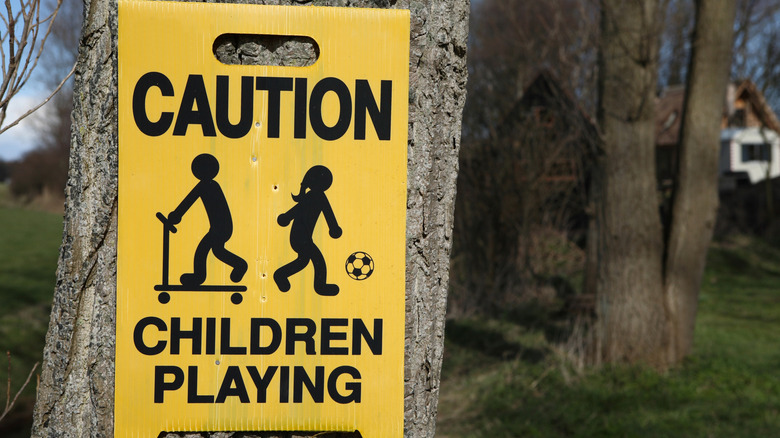
Almost 30% of crash fatalities involve a speed-related crash. Adhering to posted limits doesn't just mean avoiding a ticket, it could mean saving a life. If you think the speed limit in your neighborhood is too high, getting it changed could be challenging. The governing body that set that limit would likely have to conduct a traffic study. Speak directly with your neighbors about your concerns and look into additional safety measures, such as installing "Children at Play" signs."