

China's New 3D Printing Method Can Print Something Almost Instantly
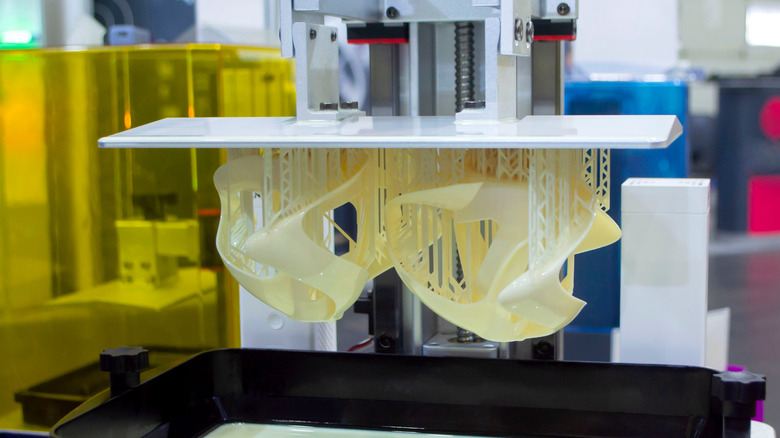
You hit print on an object downloaded from an online database, and watch as it lays down skinny cross-sections one after another. That's how 3D printers work. It takes its sweet time as it works away. That's just how it goes with most printers today. Often, printing can take hours to complete. But a team in China figured they were done with all that hanging around.
Researchers working at Beijing's Tsinghua University have designed a new 3D printing method that manages to print in 0.6 seconds. All you do is pour in some liquid, switch on the light, and in one quick flash you get a solid millimeter-scale object sitting right there — as if it just teleported in from nowhere. The method is called DISH, short for Digital Incoherent Synthesis of Holographic light fields.
Reviewers of the paper, published in the Nature journal in February 2026, have reportedly gone on to call it "the fastest volumetric 3D printing ever reported". As if the speed isn't enough, it's wildly precise too, able to achieve features thinner than a strand of human hair.
Most light-based volumetric printers work by beaming images into a spinning vial of resin, the same light-cured liquid a desktop resin 3D printer hardens. Whirl it too hard, though, and the print comes out wrong. The old fix was to thicken it into a gel so it holds shape, but gel sets slower, so you lose the speed you wanted. However, DISH works differently.
How DISH works
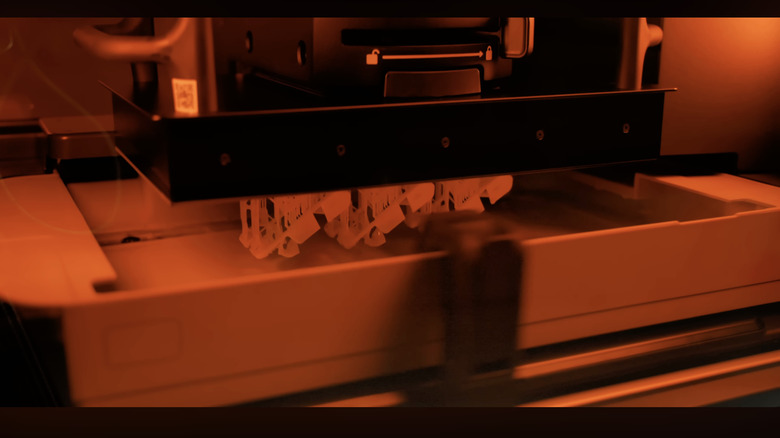
In DISH, the resin never moves. Instead, it's the light doing the moving. It gets patterned into a stream of flat images, each one a snapshot of the object from a single angle. These frames are fired into the resin from every angle, and they start to overlap, quickly curing into solid plastic. The images come from a digital micromirror device –a chip the size of a fingernail that's coated in millions of tiny mirrors. They flip to refresh the picture about 17,000 times a second. By using an algorithm and a spinning periscope light can hit the resin from every angle.
That's the other major advantage: There's no vibration to warp the print. On top of that, since the rig doesn't need thick goop, it also accepts watery liquids. This is the kind of flexibility that's crucial for biology. The team has already made tubes shaped like blood vessels, and since the material holds still, it can be printed right onto living tissue. They even printed a tiny bust of Theodoric the Great, a king who ruled Italy around 1,500 years ago. It's the latest development for a fast-moving field in which another team was recently working out how to 3D print with metal harder than steel.