

Should You Paint The Underside Of A Mower Deck?
We may receive a commission on purchases made from links.
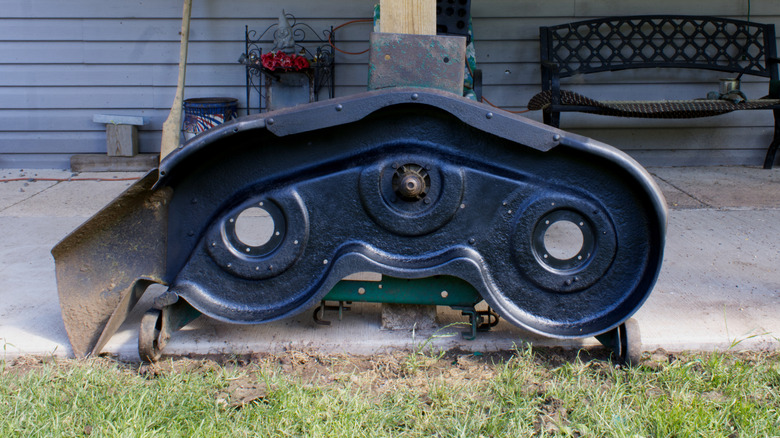
Regardless of what time or how often you decide to mow, the underside of the deck endures some unique conditions. For one, grass clippings can stick to the areas around the blades, eventually causing problems. This is especially true if you decide to cut wet grass, which is one of the mistakes everyone makes with their lawn mower from time to time.
Even grass that appears dry still contains moisture, and clippings can build up underneath. For this reason, some non-stick lubricants might be the solution for those looking to keep grass from sticking to the mower deck. Gone untreated, this results in matted layers of turf, leading to poor mower performance and potentially rust.
Many homeowners are also exploring another option: applying rust-prevention products like specialized paint to the underside of the deck. Adding an anti-rust protective paint coating can be beneficial because it forms a thin protective coat over the metal, preventing moisture from making direct contact. That being said, properly maintaining and storing your mower are still the most important considerations for extending the lifespan of your mower's deck.
How anti-corrosive paint works on your mower
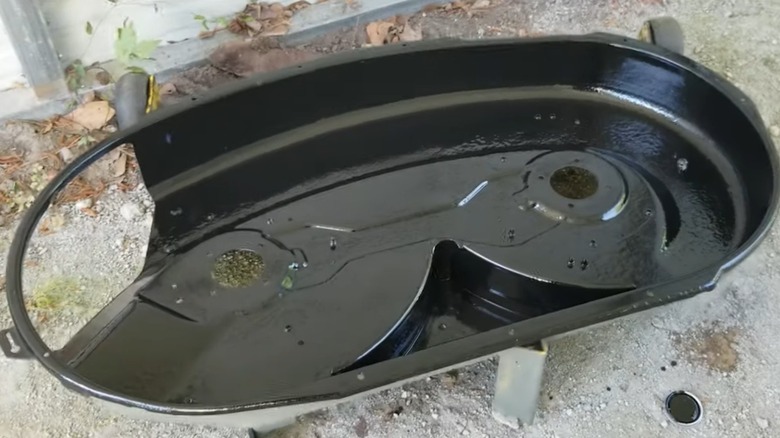
When correctly applied, anti-rust paint can protect metal. Its non-porous composition prevents moisture and metal from coming into contact, stopping rust. Some products are made from moisture cured urethane. This material makes it such that, unlike other paints that dry as moisture is slowly removed through evaporation, these rust-prevention paints actually cure faster in a moist environment. You can find these products, like POR-15, for around $71 per quart on Amazon.
However, some question these products effectiveness. For instance, YoutTuber HometownWes said he found much of the protective paint had come off about a year after using POR-15. Rocks and other debris can also strike the underside of your deck, potentially reducing the paint's effectiveness. On MyTractorForum.com, poster Alien5044 explained, "At age 67, and now on my 3rd tractor/mower deck, the only thing [I've] learned for sure is that virtually no coating will remain on the underside of a mower deck, especially if any sand is in the soil."
Sure, simply reapplying the paint might be a temporary fix, but it is also important to keep in mind that preparation is one of the most critical steps for rust-preventative paint to work properly. For the coat to adhere to the metal, you'll need to remove any debris from the underside of the deck and use a degreaser. Even a brand-new unused lawn mower will include an oil finish coating, which will inhibit the rust preventive paint from taking hold.
Preventing rust on your mower deck is more than just a coat of paint
Anti-rust paint might work for some, but the best way to maintain your lawnmower is to properly clean it regularly. Among the many available tips to maintain your lawn mower, arguably one of the most vital is regularly cleaning the underside of the deck. It's easy to forget this step, but failure to properly remove buildup leads to compounding problems. For one, this affects the blade's ability to cut grass and wreaks havoc on proper airflow. It's also an open invitation for rust to move in. Using something like a putty knife can help gently remove caked on layers of grass. (Plastic versions avoid scratching the deck.)
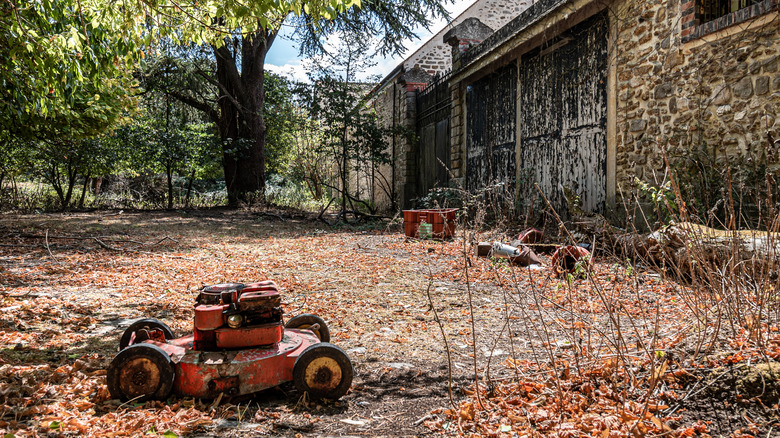
Where you store your machine also can have a profound impact on its lifespan. For example, it's always best to store your lawn mower in a shed or garage if possible. A machine left outside will degrade faster as the elements will accelerate the formation of rust. If a shed or garage isn't an option, try to position the mower on a raised surface and put a cover over it to reduce exposure to moisture.