

Keeping Outdoor Lights On All Night? Here's How Much It Could Cost You
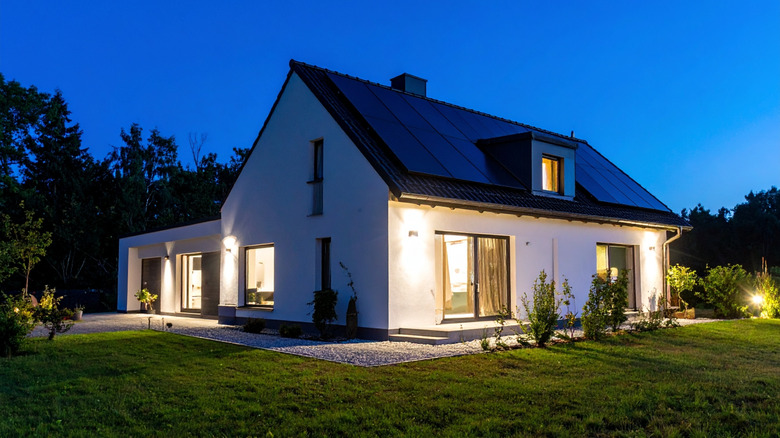
Outdoor lights on a home can serve several purposes. In the early evening, exterior illumination is primarily a welcoming sign or perhaps a means of helping visitors or delivery drivers navigate to the front door. However, once households begin settling into bed, some homeowners choose to keep the lights on all through the night for security reasons.
However, one issue with this practice, is that it will drive up your energy bill. How much it will depends on what type of lights you're using and how many of them you have switched on. The most efficient option, LEDs, will cost you around $7.50 each per year according to Money Digest. In a report by the U.S. Department of Energy as reported by Fortnightly.com, the average American home was estimated to have around nine outdoor lights.
According to WattCosts, routinely operating outdoor flood lights overnight can tack on up to an extra $3 monthly to your utility costs, depending on where you live. Of course Consumer Reports offers several tips for saving money on your energy bill, which could help offset the extra charges. Except perhaps for the most expensive state for energy, Hawaii, which sits at 42.23 cents per Kilowatt hour, according to the U.S. Energy Information Administration. In other words, if you live in Oahu and you have a single 50-Watt light on for 10 hours a night, it could cost you roughly $6.43 per month. If you're running nine outdoor lights (same wattage), it could run over $57 every month.
Are overnight exterior lights for security effective?
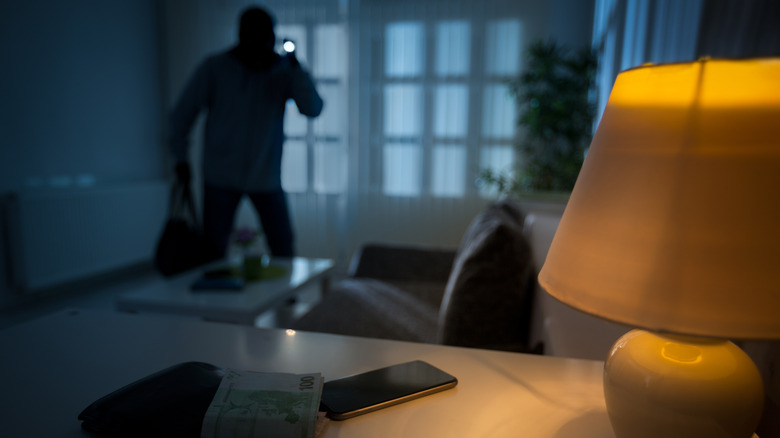
One of the main reasons many chose to keep the outside of their home illuminated overnight has to do with security. The thought is that a thief looking to break in isn't going to want to approach a brightly lit home. But does it even work to deter burglars? According to some experts, a more effective strategy involves motion-activated outdoor lights. Contrary to popular belief, according to Samantha Nolan, a Neighborhood Watch trainer with the Washington, D.C. Police, "People who leave their lights on during the day and they're on 24 hours a day actually attract attention from burglars," per NPR. Fortunately, the best home security systems on the market all offer the latest in motion-sensing technology.
What type of area you live in can also have a significant effect on whether static outdoor lighting helps ward away burglars. While a suburban neighborhood may have several homes lining up on both sides of the street, more rural areas won't. Essentially, exterior lights around your home are only going to matter if you have nearby neighbors or anyone around to notice criminal activity. Otherwise, you could be making it easier for a burglar to see what they're doing.
Things to consider with motion-activated lights
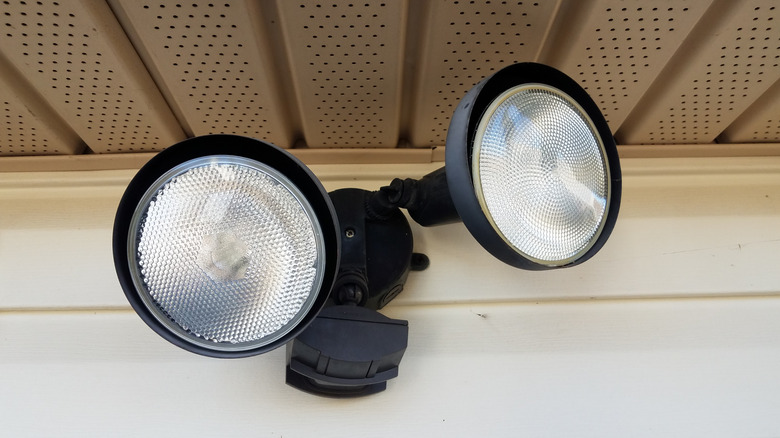
Unfortunately, not only does the practice of running lights all night cost more in energy and can be less effective than people think, it can also raise neighborhood hostilities. A perimeter of a home adorned with bright security lights all night could be shining into neighbor's windows and potentially keeping them awake. This could lead to some problems and choice words by those sharing a property line.
Even if you opt for motion-activated outdoor lighting, you should ensure each light points down and away from other homes. A bright beam of light intermittently shining into a neighboring bedroom might even be worse than a static one. Besides, it's recommended to position these lights in such a way that it potentially reveals the identity of a would-be thief approaching the home. This way, if someone in your neighborhood notices the light switch on, they can get a better look at the suspicious individual. For extra measure, you can also add additional gadgets that can discreetly give your home security a hidden boost.