

Mack Vs Peterbilt: What's The Difference Between These Semi-Trucks?
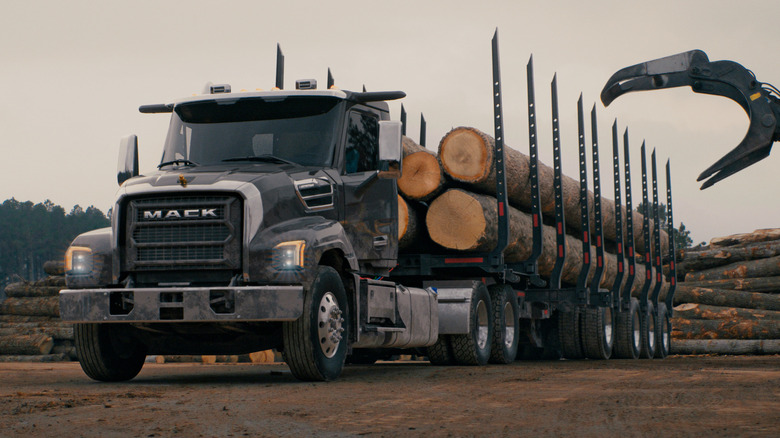
Both Mack and Peterbilt semi-trailers have been part of American trucking history for a long time. Let's take a closer look at these two venerable semi-truck brands that are made in America and note some of the differences between them.
Mack trucks are primarily aimed at "vocational" markets that get heavy use, like refuse collection, logging, and construction. Macks are powered by the company's own MP series engines, which provide reliable power. In terms of the engines Mack trucks use, their horsepower ratings range up to around 505, with up to 1,860 lb.-ft. of torque on tap. Mack trucks are utilitarian, made for tough jobs in difficult environments. As you might expect, Macks are priced lower than the Peterbilts in view of the vocational markets the Macks are designed for where every penny counts — and rugged reliability counts for much more than driver comfort.
Peterbilt trucks are made for long-haul, over-the-road drivers who put large amounts of highway mileage on their vehicles. Peterbilt uses PACCAR's MX-series engines, which provide as much as 510 horsepower and 1,850 lb-ft of torque for their owners, similar to the Mack's outputs. Peterbilt also offers Cummins engines on their order form as an additional option. Peterbilt trucks offer a wide variety of customization options with a major emphasis on comfortable interiors, which are important to owner-operators. This aligns with the Peterbilt's higher initial price tag compared to the Mack, although they are reputed to retain a higher percentage of their resale value when it comes time to trade up.
What else you should know about Mack and Peterbilt trucks
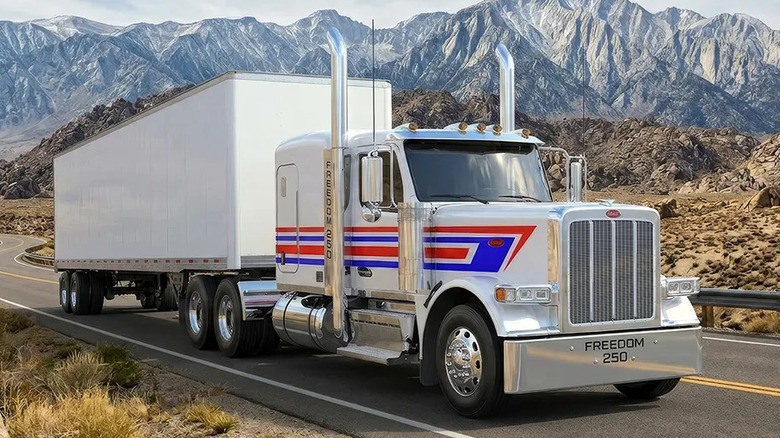
Mack Trucks was founded in Brooklyn, New York, in 1900 by brothers Gus and Jack Mack. Five years later, the company moved to Allentown, Pennsylvania. In 2000, Mack was acquired by the Volvo Group. It kept its headquarters in Allentown until 2010, when it was moved to Greensboro, North Carolina. Mack's trademark is the Bulldog, thanks to the reputation it garnered from the durability of its trucks that were used by the British armed forces during World War I. Over the years, Mack trucks have been used to build the Hoover Dam, the Empire State Building, and the Interstate Highway System. Mack has also been making electric trucks since 2019.
Peterbilt started up a bit later in 1939, when T.A. Peterman, a plywood maker from Tacoma, Washington, began buying the Army's surplus trucks and upgrading them for heavy-duty usage. After several successful years and a transition to in-house truck production, Peterman died in 1944, with the company sold to its managers. Some notable elements of Peterbilt history include the use of aluminum to reduce weight in 1945, the creation of Peterbilt's red oval logo in 1954, and the company's acquisition by Pacific Car & Foundry (what is now PACCAR) in 1958. Peterbilt has built its trucks in a variety of locations over the years, in places like Oakland and Newark, California, Nashville, Tennessee, and Denton, Texas.
Both Mack and Peterbilt trucks have established their bona fides as established players in the American trucking scene. The brand you select is all about its ultimate use case, whether it's vocational or over-the-road.