

This Company Wants To Pay Your Power Bill (And Put A Mini Data Center In Your Yard)
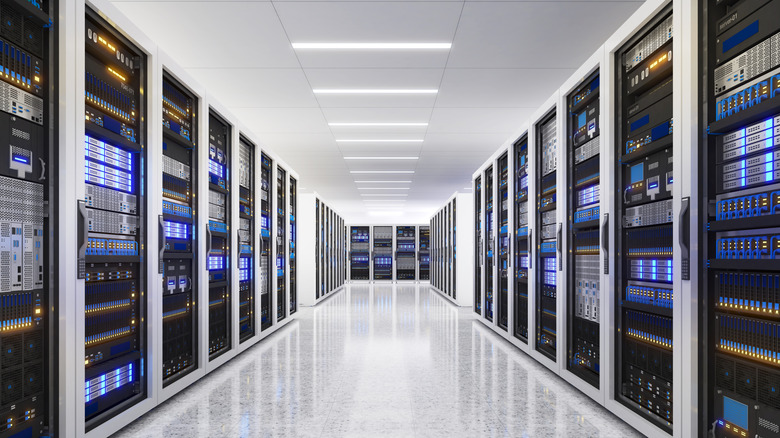
The public face of AI is something we're all very familiar with. Turn on your phone, tablet, or computer — hey presto — all the power of AI at your fingertips. However, the technology powering all that AI needs a vast network of data centers and network infrastructure.
The use and power of AI are both increasing exponentially, which is pushing the demand for more data centers. However, this isn't as simple as building a big shed, cramming it full of technology, and plugging it in. There are plenty of bottlenecks stopping us from building enough data centers. Among the factors concerning the industry are environmental impact, power infrastructure inadequacies, and community concerns. The latter is demonstrated by the growing protests against AI data centers.
Now, one company believes it may have a solution that can help bridge this impending shortfall in computing power. San Francisco-based SPAN is not a tech giant; they're a company that specializes in clean energy solutions for homes.
The company has released details of a scheme that could ease the computing power problem and the cost of your electricity bill. The company plans to use the spare electrical capacity available to most households to power a "mini data center."
The system, known as XFRA, might not be as small as the tiny Odinn portable data center, but coming in at about the size of a domestic air-conditioner, it certainly doesn't need to be housed in a data center. Let's have a closer look at XFRA, and just what carrots the company is offering to entice you to install the air-con-sized unit in your garden.
What is Span's XFRA system?
SPAN's XFRA system is a distributed, residential-scale compute cloud. To understand why such a system is being considered, we need to look at the bottlenecks currently slowing the development of data-center capacity. More specifically, electrical distribution bottlenecks. In some cases, the grid can't deliver power to new data centers, even if the power exists somewhere on the network.
XFRA addresses this bottleneck by utilizing the fact that residential electrical infrastructure has plenty of spare capacity up for grabs. Essentially, the grid is configured to run at peak capacity, but for most of the time, it only needs about half this capacity. The XFRA system proposes to use this capacity to power its mini data centers.
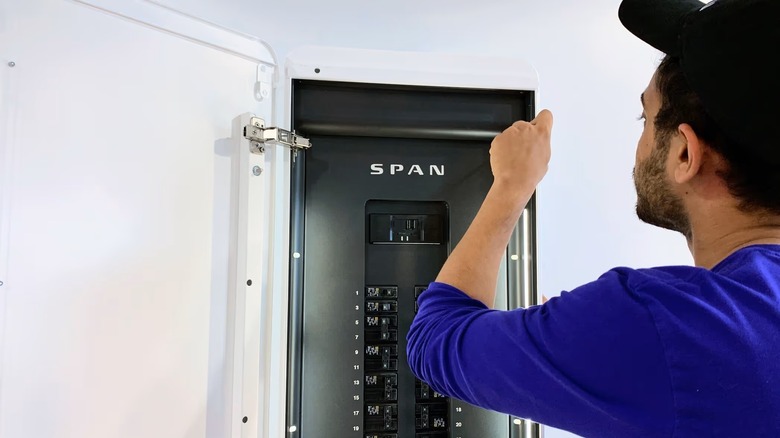
Each XFRA node is a liquid-cooled "compute module" built around a bank of eight enterprise-grade GPUs. Importantly, controlling this is a SPAN smart electrical panel. This panel monitors the household's electrical circuitry and utilizes the spare capacity when household needs allow for it.
As well as the server and the control panel, a whole-home battery is part of the installation. Although homeowners should always consider a few things before installing a new home battery. The battery ensures that the hardware has a stable power supply that can ride through brief outages or fluctuations.
Finally, each node is connected to SPAN's orchestration layer, which treats each distributed node as part of a single, cloud-like compute resource.
The company is hoping to have a pilot scheme running in 2026, with a larger-scale deployment following in 2027.
What's in it for homeowners?
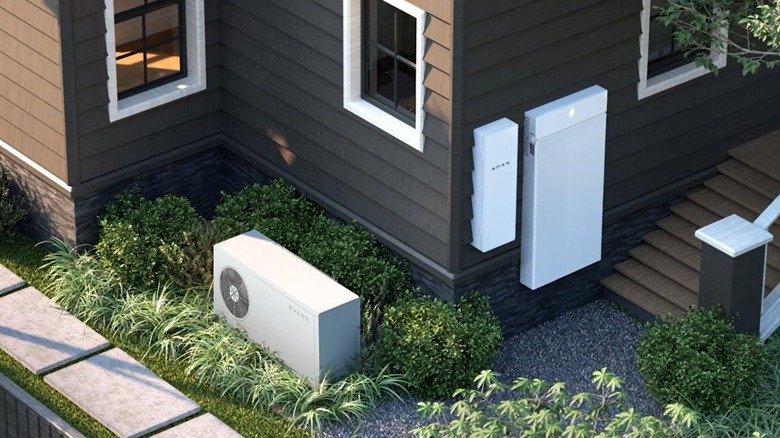
The size of the units means there won't be too much intrusion for those who install them, at least aesthetically. However, very few people would rush to install such a system without there being some incentives on offer. From a hardware perspective, the most obvious advantage is the installation of a whole-home battery. While this supports the XFRA node, it also acts as a home power backup.
While the company doesn't promise that householders can completely wave goodbye to electricity bills, there are financial incentives on offer. Primarily, it's offering a monthly payment for hosting an XFRA node, essentially subsidizing energy and high-speed broadband bills to a large degree. In some cases, subsidies could be large enough to supply these utilities free of charge. There is also an optional solar panel scheme.
However, before we all rush out and get a data center installed in our yards, there are some potential downsides to consider. The first thing is that having such an expensive bit of technology in your yard could raise questions about theft and vandalism.
There are also some uncertainties about the underlying principles of the system. For grid planners, the spare domestic capacity isn't a luxury; it's a designed-in feature that's often used to smooth the peaks and troughs of electrical demand. Power problems may also occur in situations where there are clusters of XFRA nodes in close proximity. This could lead to particular areas drawing more power than is expected under normal circumstances.
While everyone would love free electricity, the success of XFRA will depend on whether the advantages of having a mini data server next to your grill are worth it.