

What Is The Average Lifespan Of Concrete Driveways?
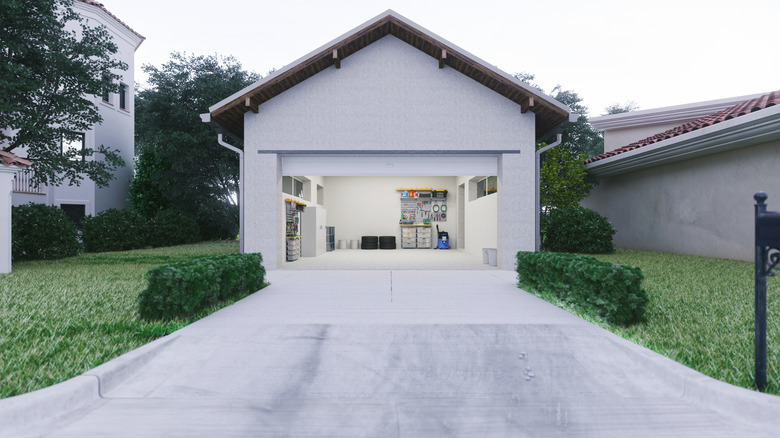
Like your roof or your HVAC system, your driveway is one of those things you hope you never have to replace. Still, the reality is that many homeowners will inevitably have to do exactly that. And while it's good to know how much a new driveway will cost you up-front, it's just as important to know how many years you can expect to get out of your investment before it needs to be redone.
Let's look at the science. According to loads of industry and transportation data, properly installed and maintained concrete can remain serviceable for 30 years or more. That makes it one of the longest-lasting paving materials around. Other factors like the environment or the total vehicle weight will determine just how many years you end up getting, but 30 or more is the typical timeline to be expected.
And remember: the key word is "serviceable." That means you have to put in the work from the start if you want to get that kind of life out of it. Otherwise, you may only get about 15 years or less.
Tips to get more years out of your concrete
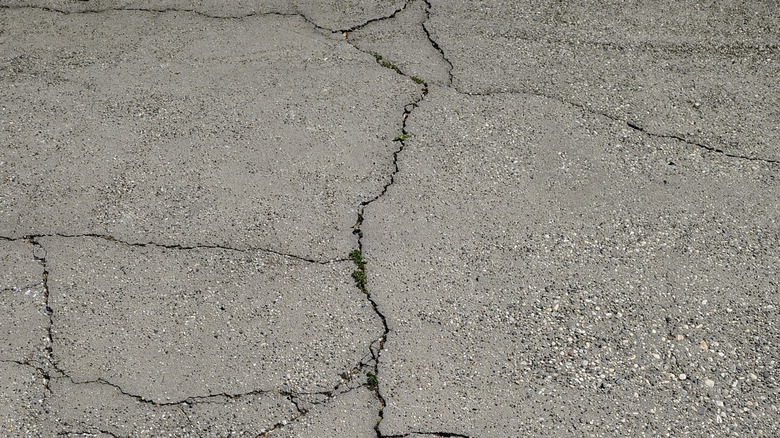
Various concrete and transportation organizations agree: Concrete needs maintenance for life, but it'll first start needing service around the 20-year mark. According to federal concrete preservation schedules, minor repairs such as partial-depth or isolated full-depth panel repairs are to be expected 15 to 20 years after installation, though some say this may be necessary as soon as 12 years afterward. Meanwhile, major rehabilitation work like resurfacing will be needed in the 30- to 50-year range.
Of course, without proper maintenance, your driveway could end up in bad shape long before even the 15-year mark. One of the most important things you can do is to protect the surface from moisture intrusion and freeze-thaw damage. To do so, industry guidance recommends sealing concrete periodically. Sealers act as a protective barrier, helping preserve the concrete's structural integrity while extending its service life. That'll keep you from ruining a concrete driveway.
For newly installed concrete specifically, experts recommend using salt alternatives to melt ice during the first winter. Also: Certain chemicals, including products containing ammonium sulfate or ammonium nitrate, can rapidly deteriorate your concrete and should never be used on driveways. When maintained right, you'll easily be able to get a few decades out of your concrete driveway.