

The Motor Type That Shows If A Cordless Drill Is Built To Last
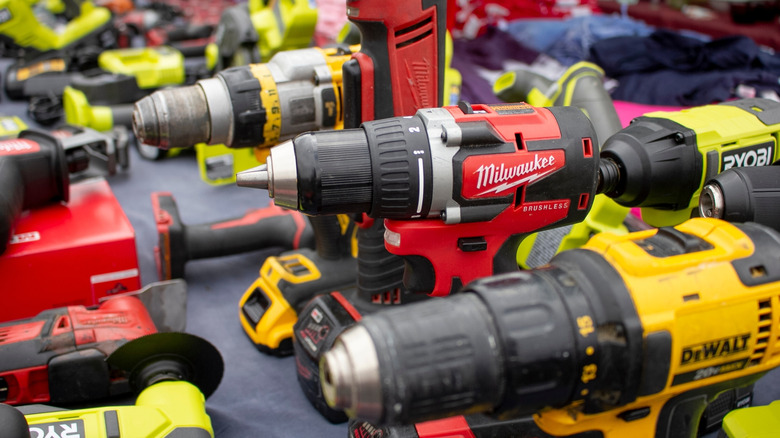
There's no one-size-fits-all approach to tool purchases. Depending on your budget and use case, it can range anywhere from cheap and practical to a buy-it-for-life sort of an arrangement. In fact, some specialized jobs might even justify renting tools. A cordless drill, however, is used often enough in both DIY and professional jobs that it's almost always smarter to buy one that lasts. And fortunately, there's a nearly certain way to guarantee the longevity of most modern power tools: buying the brushless motor variant.
A name-brand cordless drill outfitted with a brushless motor is virtually guaranteed to outlast one powered by a traditional brushed motor. A brushless motor not only offers a long service life, but it's also efficient enough to deliver enhanced battery endurance. Let's take a look at exactly what makes a brushless cordless drill the obvious choice for the long haul compared to its brushed counterpart.
In the simplest of terms, both brushed and brushless motors operate by inducing magnetic flux in electric coils in a manner that interacts with permanent magnets to generate rotational motion. Brushed motors go about that process by passing current through coils rotating at 10,000 RPM, using a pair of sacrificial carbon brushes with permanent magnets that remain stationary. A brushless motor, on the other hand, flips that arrangement by keeping the electric coils stationary and rotating the permanent magnets instead. It basically achieves near-zero friction, vibration, and wear by eliminating the carbon-on-copper contact plaguing brushed motors. But that's just one way brushless motors make cordless drills more durable.
Brushless motors are inherently smart and durable
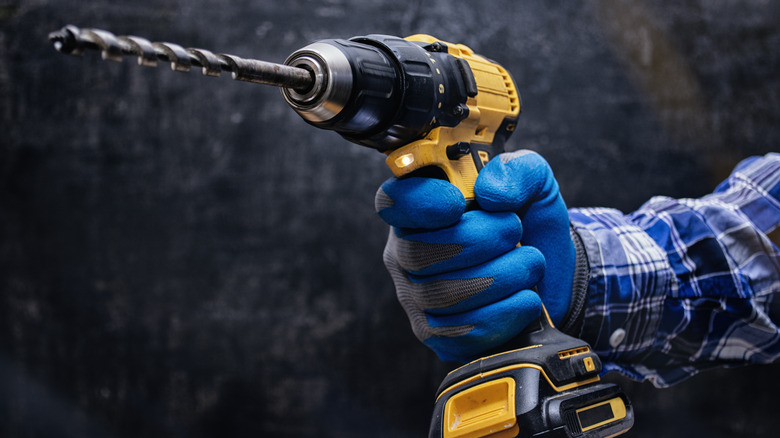
Cordless drills equipped with brushed motors are typically rated to last between 1,000 and 3,000 hours, which can be further extended if the power tool allows brush replacement. Even then, the carbon brush will eventually wear out the soft copper commutator via friction. Brushless motors usually last tens of thousands of hours, so the total life of a brushless drill usually comes down to some other weak link, be it the bearings, gearbox, clutch, or the chuck itself. However, such drills have an inherent advantage in that area as well, because their higher price usually brings with it higher quality components that last longer.
The frictionless nature of a brushless motor is achieved by replacing the brush and commutator of a traditional brushed motor with a solid-state electronic speed controller, replete with a microcontroller. The "smart" prefix touted in the marketing material for many brushless drills isn't just spin. Such cordless drills can sense the position, speed, and load experienced by the brushless motor and leverage that information to great effect. This can range from adjusting power according to the density of the material being processed to detecting when the drill is bogged down to prevent the motor from burning out.
The brushless drill's ability to vary torque and power significantly reduces wear on the moving parts and prevents both the battery as well as the motor from perpetually operating at maximum power. For the extra cash you pay upfront on a cordless drill bearing a high-tech brushless motor, you also gain between 20% and 30% improvement in efficiency, which directly translates into improved runtime and fewer batteries needed.