

4 Things I Couldn't Ignore While Driving Cadillac's Escalade (Which Is Very, Very Large)
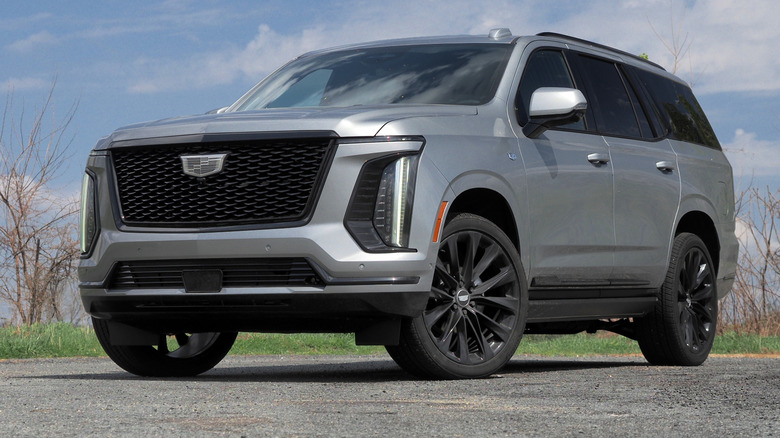
The week after I returned Cadillac's Escalade, a woman in a lifted Chevy drove straight over a Lamborghini in Texas. The wedge-shaped Huracán squeezed neatly beneath the towering Silverado's outsized wheels. I'm sure, once the sting of insurance settlements has dimmed, all involved will chuckle at the irony of it happening in a Crunch Fitness parking lot. Crunch, get it?
Thankfully, I didn't need a reminder to check this behemoth's blindspots and thus avoid a collision with some Italian exotica. I find a little extra precaution comes as standard when you're driving someone else's $132,000-as-tested car, even if it belongs to GM. Of course, having just announced an estimate-beating $4.3 billion net income for the first quarter of this year, buoyed in no small part by sales of very large trucks, the company could probably afford to replace it without too many shareholder grumbles.
 Chris Davies/SlashGear
The bigger concern, of course, is of losing a child (or, given the scale of today's full-size SUVs, a "The Sound Of Music" cast's worth of children) in the limited sight-lines of burly, beefy boys like the 2026 Escalade. All the cameras and sensors in the world can't dull the fact that opting for a cocoon for your family may well put others at greater risk. That's not a slight for the Cadillac alone, no, but nor do the Escalade's luxury ambitions excuse it.
1. Big really does pay off, and most other SUVs don't come close
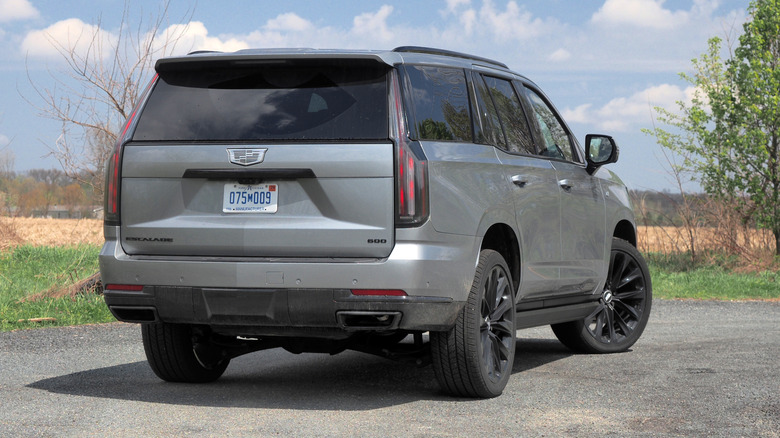
Big is the operative word, when it comes to the Escalade, in just about every possible direction. Clearly, it's a large SUV: very nearly 212 inches long, or over 17.5 feet, and over 81 inches wide with the side mirrors folded in. That's for the "smaller" version, too, since Cadillac will happily sell you an Escalade ESV that adds a further 15 inches of length.
 Chris Davies/SlashGear
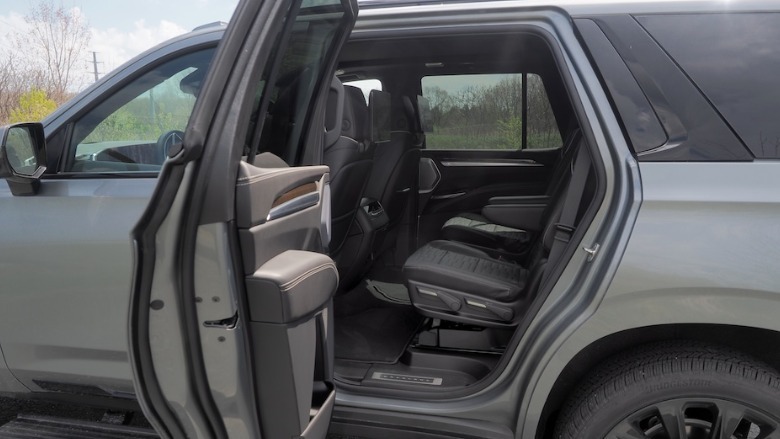
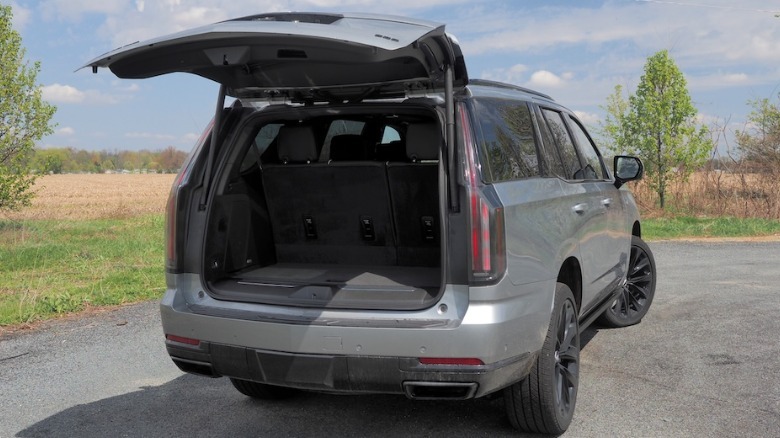
Most of that extension is in the wheelbase, contributing to more third-row legroom and a whopping 142.2 cu-ft of maximum cargo space. That said, the standard Escalade is hardly deficient in either respect. Usually, the rearmost seating in a vehicle is scaled either for kids or to leave adults ruing the decisions that landed them back there. In the Escalade, my 5'8 had third-row legroom to spare.
 Chris Davies/SlashGear
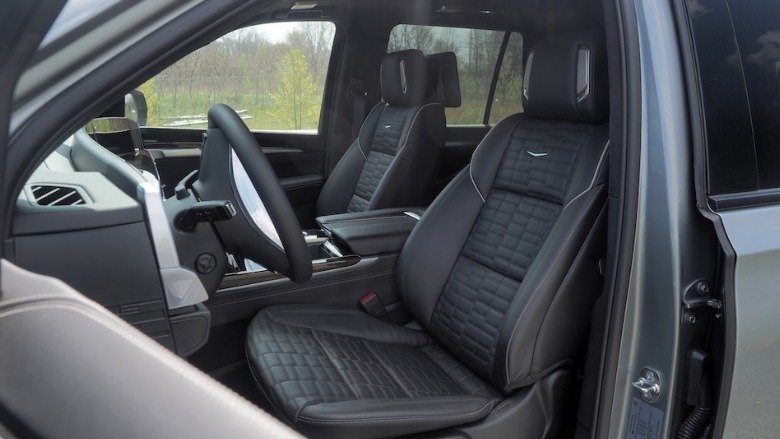
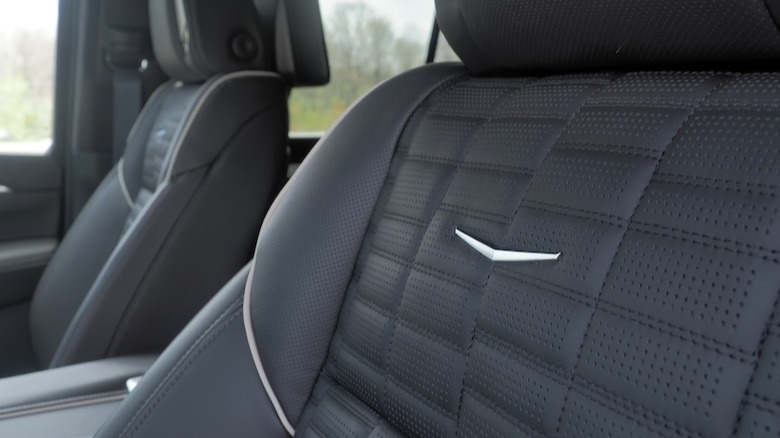
This Platinum Sport trim has a fairly standard set of seats: heated/ventilated in the front, with massage; heated buckets in the second row, and a 60/40 power-folding bench for three at the rear. It'd be snug on shoulder room back there, for three adults.
 Chris Davies/SlashGear
All rows get real leather, and there's a microphone and speaker system to make sure those in row three can hear those in row one, and vice-versa.
2. With great power (and scale) comes great responsibility
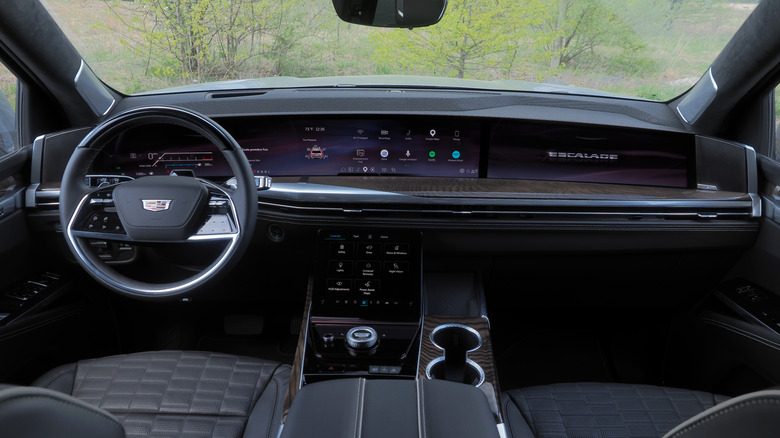
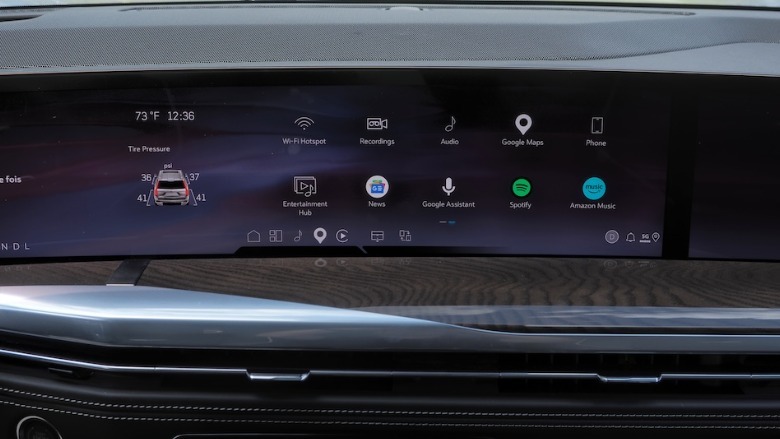
I had to laugh, as I stretched across the ridiculously broad 55-inches of dashboard display, to try to tap the distant buttons in the standard wireless Apple CarPlay (Android Auto is supported, too). The "Now Playing" button in the top right corner of the Spotify app proved particularly distant; I waited until I was standing at the next set of lights, before I lunged across to stab it.
 Chris Davies/SlashGear
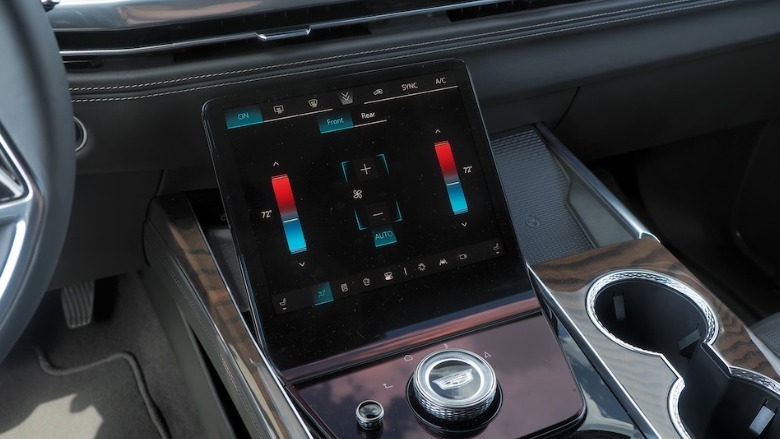
There is, at least, a little wheel/joystick controller in the center console — ahead of the far more approachable second touchscreen that actually seems to operate most of the Escalade's settings — with which you can inch through areas of the UI beyond fingertips' reach.
 Chris Davies/SlashGear
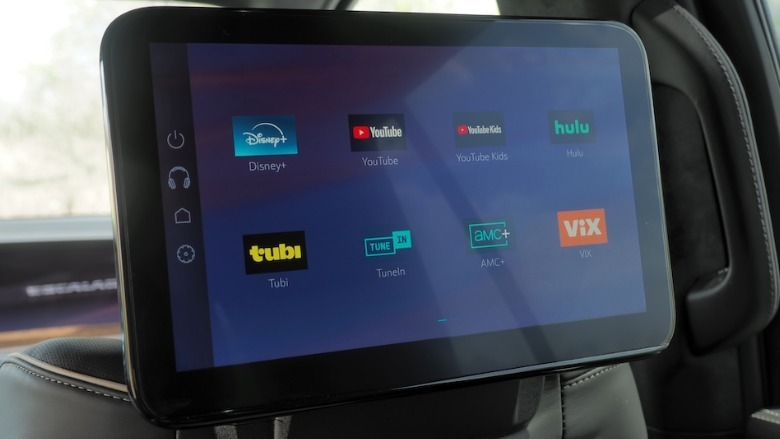
There is silliness that comes with such scale, you see. Actually navigating the big SUV requires a combination of brute confidence, faith in the various sensors, and a commitment to the promises made by Cadillac's spec sheet. Getting up to speed isn't difficult, though — given the curb weight — the V8's 420 horsepower and 460 lb-ft don't quite deliver the storming force you might expect. There's more a general gathering of pace that's achieved with deceptive hush, courtesy of the air suspension, Magnetic Ride Control dampers, and well-insulated cabin.
 Chris Davies/SlashGear
No, it was slowing where my palms got itchy. There are big brakes, but they're being asked to do a lot, and the feel through the pedal is as remote as every other message from outside. If the 6.2-liter engine's thirst wasn't sufficient reason to temper your accelerator indulgence, then fear of safely restraining this beast anywhere pedestrians or other traffic might be found will likely do the trick.
3. I don't trust the driver's aids as much as I thought I did
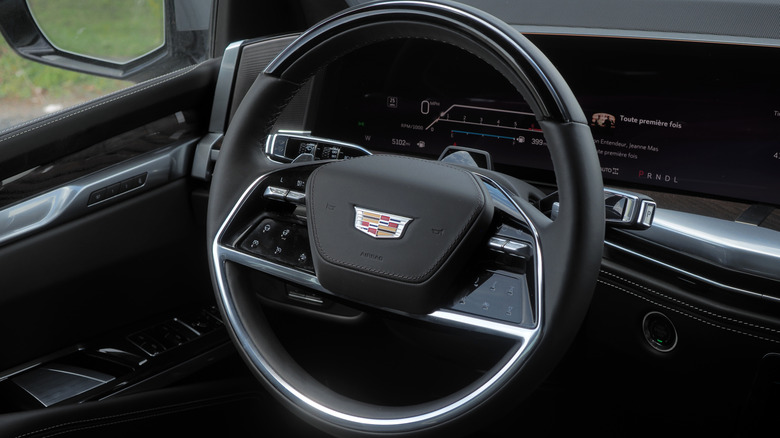
The sheer size of the Escalade adds a fresh dimension to Super Cruise, GM's hands-off driver assistance for highways. I'm generally a fan of the system: it's absolutely not autonomous driving (and neither does GM claim it to be) but, with human supervision, it does a good job of keeping pace with traffic, automatically changing lanes when the vehicle ahead is slower than the speed you've set, and even consulting your currently-set route in the Escalade's native Google Maps so as to move into the correct lane for upcoming maneuvers.
My usual complaint is that Super Cruise can feel a little too cautious in congested traffic — other drivers eagerly dash into the gaps the system leaves — but the Escalade's inescapable bulk left me thankful for that extra prudence. For dealing with congestion, then, I'd probably take the wheel myself, but as a long-distance cruiser the Escalade has clear appeal. Road trips are the Caddy's raison d'etre.
4. This gas-powered Escalade feels especially selfish right now
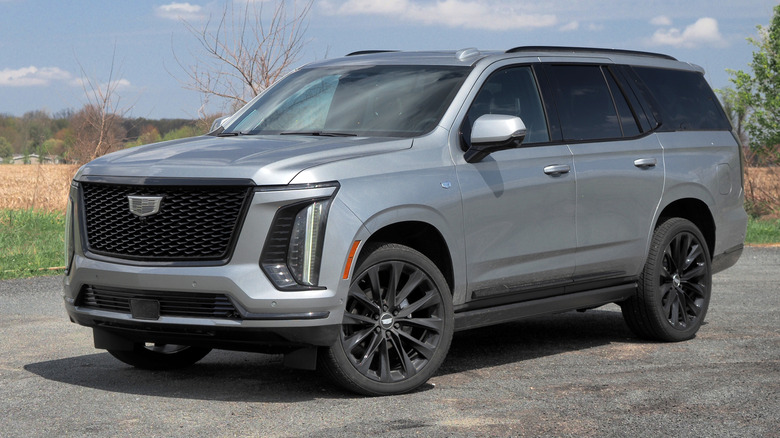
Opting for the Escalade — like, perhaps, opting for any bigger-than-big luxe truck — involves a conscious decision to center yourself, not the world around you. It's isolating: in height, in hush, in a more-than-healthy appetite for resources like fuel and space. If the average SUV is a white picket fence, holding neighbors at a cheerful arm's distance, then the Cadillac and its ilk are concrete blocks and razor-wire.
It's a decently luxurious compound on wheels, though I couldn't help but feel like Cadillac has already outclassed it. The Escalade IQ doesn't just swap the V8 for dual electric motors but thoroughly demonstrates why EVs feel more refined and luxurious than their internal-combustion counterparts. It's faster, smoother, and quieter. It looks better, sleeker, and less akin to the Tahoe this gas Escalade is so closely related to. Plus, while the electric Escalade's 465 miles of range feels primarily motivated by "big number is big" bragging rights, there's no denying it's a compelling retort to range anxiety.
 Chris Davies/SlashGear
The regular Escalade's profligacy seems old-school, in comparison. It's comfortable and capacious: total up the legroom and leather, and the hefty sticker price doesn't feel quite so wild. I can't say I dislike it, even if I question whether most buyers truly need the space to justify the excessive dimensions and thirst.