

The Reason Your Garage Floods (It's Not Just Rain)
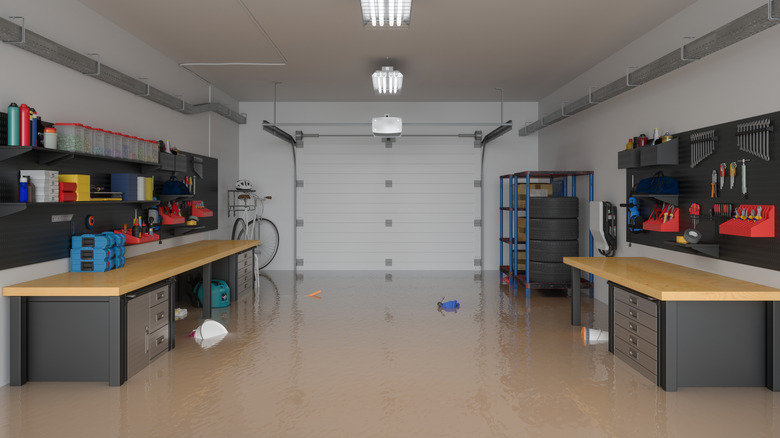
A garage that floods once is unlucky. But a garage that floods every single time there's rain has a design problem — and that rain is just the messenger. In such a case, the two things you might need to look at are the pitch of a driveway and the height of the garage floor relative to it. How the driveway is built matters as much as the garage.
A good contractor will aim for a slope of between two and five percent for the driveway — and that's actually the sweet spot most civil engineers point to. The actual range is much wider, and many residential driveways are graded between one and 12 percent. Two percent works out to a quarter-inch drop per foot, so on a 20-foot driveway, you're looking at a five-inch height difference between the garage end and the street end. Other degrees work well, too, but anything under 1 percent and water may just end up sitting there.
The garage also needs to sit higher than the ground around it, which is something the International Residential Code does specify. Code R404.1.6 requires foundation walls to extend at least 6 inches above the surrounding grade (or 4 inches where masonry veneer is used), and R317.1 demands the same 6-inch buffer between wood siding and the earth. R401.3 then handles the slope itself. It calls for the ground to drop 6 inches within the first 10 feet of the foundation. Stack all that together, and the finished garage floor naturally ends up several inches above grade. A lot of builders still drop the garage floor an inch or two below the door into the house as a habit, even though current code no longer requires it.
Why slopes matter so much
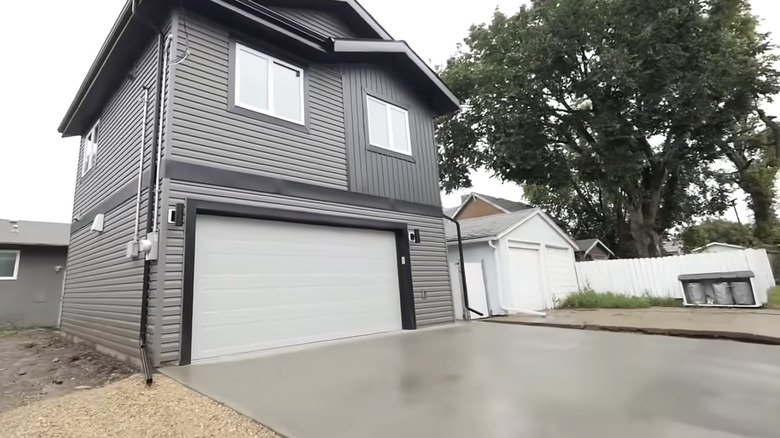
You get a better idea of why slope and elevation matter so much once you look at the numbers. The University of Arkansas Cooperative Extension Service says every square foot of pavement sheds about 0.6 gallons of water for every inch of rain that falls on it. A 500-square-foot driveway in a two-inch storm can gather over 600 gallons of runoff. All those gallons can quickly roll down to your garage door if the driveway tilts even slightly toward the house instead of the street. If this is an issue you face, looking into concrete alternatives that could save your driveway from flooding entirely might help.
When the contractor does mess up the slope or elevation, the consequences show up as puddles by the door, or as a garage door that stops sealing because the slab no longer meets it cleanly. There's no quick patch for any of this.
In more extreme cases where the elevation came out too far off, regrading the driveway becomes the only real fix. That's an expensive afternoon, sure, but still cheaper than the problems water can cause in the long run. One of those problems, thanks to poor drainage, is cracked concrete driveways, which then has to be patched with sealant.
Drainage is important, too
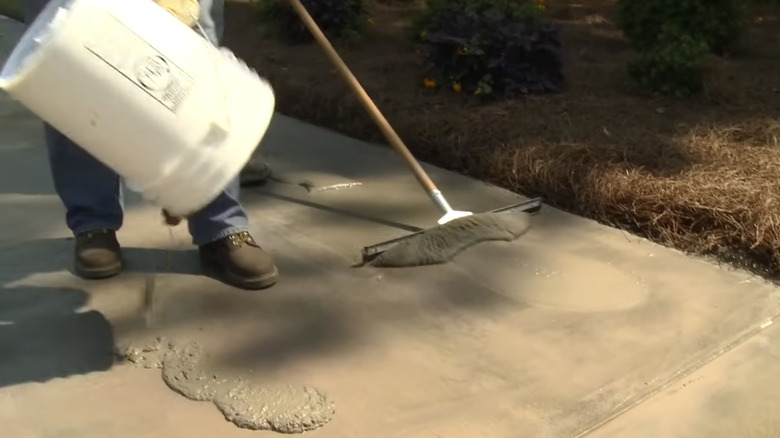
You don't need to rebuild your entire driveway-garage setup for milder issues, though. Decent drainage can pick up the slack. A trench drain set right at the mouth of the garage will catch surface runoff before it reaches the door.
A trench drain is basically a long, narrow channel that runs across the garage opening and catches water before it can reach the door. For it to actually work, two details matter. The channel itself has to slope gently along its length, around 5 mm per meter, so water flows toward an outlet instead of pooling inside the drain. That outlet usually feeds into a 110 mm pipe that runs out to the main storm system.
Sometimes, the land itself dips the wrong way. In that case, a grassy swale (essentially a shallow ditch with grass growing in it) along the driveway edge can redirect water toward the street. Just remember that whatever you build, never aim runoff at a neighbor's lawn or the public sidewalk. That's how lawsuits start.