

Can You Call The Cops Over A Neighbor's Security Cameras? Here's What FL Law Says
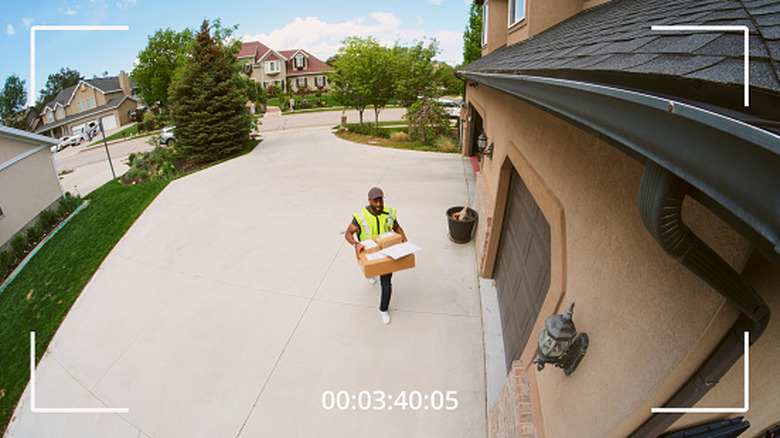
The wild and crazy antics constantly perpetrated in Florida are well-documented. Given all the zaniness, it makes total sense that Floridians would want to feel safe at home, even if they have to fence off their pools so alligators don't get into them (it's a thing). Home security camera systems aren't new, but given how cheap they've become, it's not a surprise that more and more people have installed them around their property (including doorbell cameras). Hopefully, you have a law-abiding neighbor who knows where those cameras can be aimed, and if not, both Florida and Federal law have your back.
First, it's entirely legal to install outdoor security cameras on private property in Florida — as long as those cameras are pointed toward openly public areas like driveways, front or back porches, and open yards, all of which are considered spaces where there is no reasonable expectation of privacy. Federal law states that places like the interior of homes, dressing rooms, and hotel rooms are areas where people have every right to expect complete and total privacy, thereby making cameras that view them very much illegal.
It's also a requirement that the cameras are pointed primarily at your own property. So, if a neighbor points a camera at an area of your home or yard where the expectation of privacy lawfully exists, you can absolutely call the police. Otherwise, you're just going to have to be okay with the fact that we now live in a society where most of our movements are being tracked.
Don't be a Peeping Tom
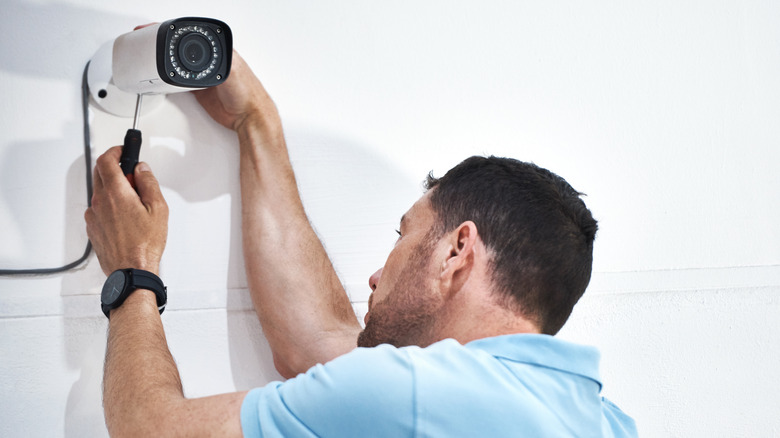
Florida Statute §810.145 (the Video Voyeurism Law) makes it illegal for anyone to aim a security camera at your bedroom, bathroom, or the hot tub inside your fenced back yard — or any other place considered "private" — without your consent. A "reasonable expectation of privacy" pertains to any scenario where a reasonable person would believe they could undress without being viewed.
Residential homes, bathrooms, changing/dressing/fitting rooms, and tanning booths are just some of the areas that fall under this category. Voyeurism (aka "peeping Tom" offenses) is when someone secretly spies on someone else while in one of those private settings with the express purpose of carrying out some lewd, lascivious, or indecent intent.
If that offender is 24 years or older, they can be slapped with a third-degree felony, facing fines of up to $5,000, and as much as five years in prison. If they're under 19, they can be charged with a first-degree misdemeanor, punishable by a fine of up to $1,000 and a year in jail. Repeat violations will ratchet up the associated penalties substantially, including getting placed on the sex offender registry.
These laws also pertain to law enforcement, who can't use cameras in private areas to capture illegal activity for evidentiary purposes. What's more, both video and audio recordings obtained in this manner are illegal and inadmissible in court. Florida is one of several "all-party consent" states, meaning that both the person recording and the person being recorded must consent to the recording for it to be legal. So, you can go ahead and set up a DIY home security system properly — and legally — even if you're on a budget.