

What's The Best Way To 'Unseize' An Engine?
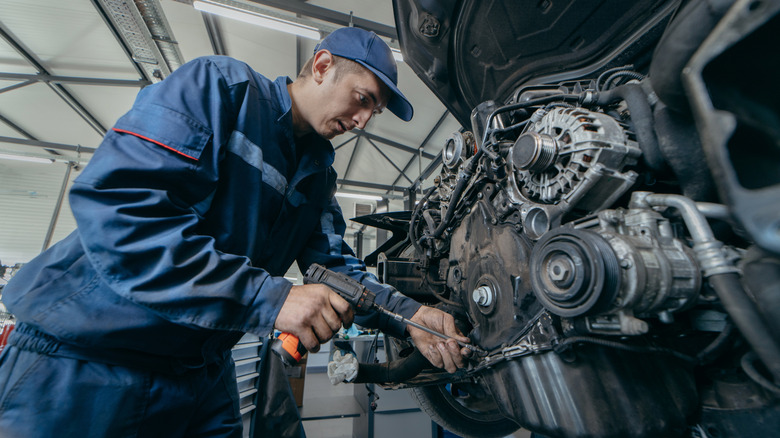
When an engine seizes up, your only option is typically a full rebuild. This can often cost more than a full replacement due to the labor costs involved. However, this isn't always a death sentence. Irreparable damage typically strikes when the engine is wrecked by oil starvation, severe overheating, or water ingestion. Sometimes an engine seizes for less catastrophic reasons, like rust from sitting outside in a damp field. That's common in old cars left unused for years or decades.
If you suspect your engine is seized, the first thing you need to do is confirm that's actually the case. Sometimes it may seem that way due to a dead battery or a busted starter, so it's important to rule those out. To do that, pop the spark plugs out and try to rotate the crankshaft. You can usually do that by hand on smaller engines. But on bigger stuff, you'll need a breaker bar and a socket that fits the crank pulley bolt. If it doesn't budge with reasonable force, it's stuck, meaning you have a case of engine seizure on your hands.
In most cases, the best approach involves soaking the cylinders with penetrating oil and then carefully rocking the crankshaft back and forth until it frees up. But that only works if the damage isn't too far gone, which is why we'll get to it later. The diagnosis comes first.
Diagnosing how far gone a seized engine is
There are degrees to how badly seized an engine is. While you're cranking it, check whether the starter is at least nudging the front pulley when you hit the key. It's not the easiest motion to feel, but if there's a tiny springy movement at the damper, the crank bearings are probably fine. The lockup then is happening at the cylinders. That's the good outcome. The bad outcome is when the starter just thunks dead with zero movement transferred through the engine. That's how you know the bearing is spun or the connecting rod is snapped.
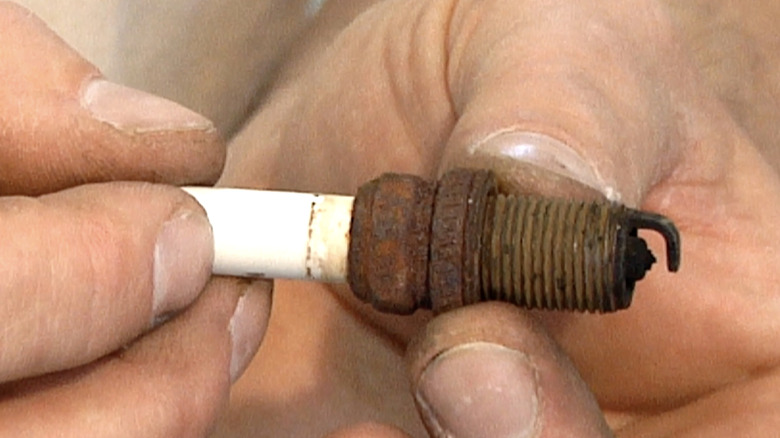
While you're at it, pull a spark plug out and inspect it too. It's workable if the threads — the part that plugs into the cylinder head — are only lightly rusted. But a plug that looks like it was fished out after spending years at the bottom of a lake, kind of like this rusted Ford that spent 40 years underwater, would mean that the ground strap is corroded as well. That's how you know the cylinder is rotted out, and you're done.
How to work a stuck engine loose
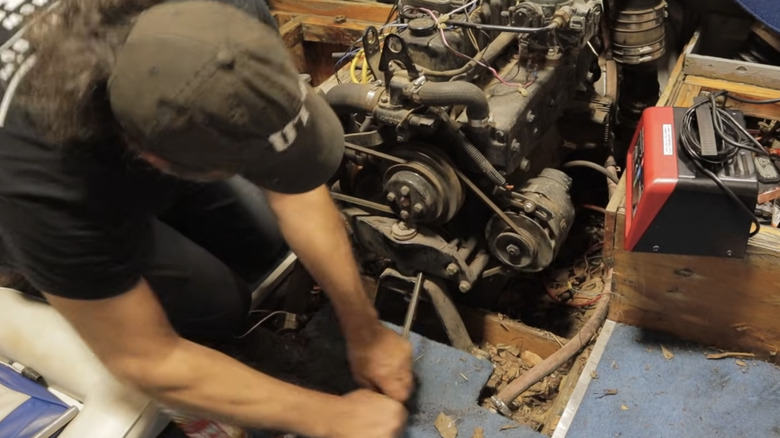
A rotted cylinder typically also results in a seized piston. But sometimes, when the damage is relatively minor, some of the best penetrating oils on the market can be a lifesaver. Whichever one you pick, dump a generous amount through the spark plug holes before you get started with the unseizing process. Half a can per cylinder is about right. After pouring, tap the cylinder walls gently with a hammer handle to help the fluid work its way past the piston rings.
Once that's done, let it all soak for at least an hour, ideally longer. Some people even repeat this step several times a day for the course of two weeks before trying to spin the engine. The point is to clear as much rust as possible before attempting anything, which reduces the chances of further damage.
When you're confident enough, wedge a long bar onto the crank pulley and rock the engine back and forth, just a couple of thousandths of an inch at a time. The right way to go about this is rotating in one direction until you reach a point where the engine won't move with reasonable force, then reversing direction and cycling back and forth. You should start to feel those tiny movements expand slowly until you achieve a full revolution.
If this doesn't work and the engine still refuses to budge, the next step is pulling the head and tapping the piston out with a wooden block and a mallet. After that, it's machine shop territory. And if the engine seized from oil starvation rather than rust, you might as well skip the whole dance. The bearings are already cooked, and the clearances are gone, so a replacement engine is almost certainly the only real fix.