

How Much Do Precast Concrete Steps Cost? What To Know Before You Buy
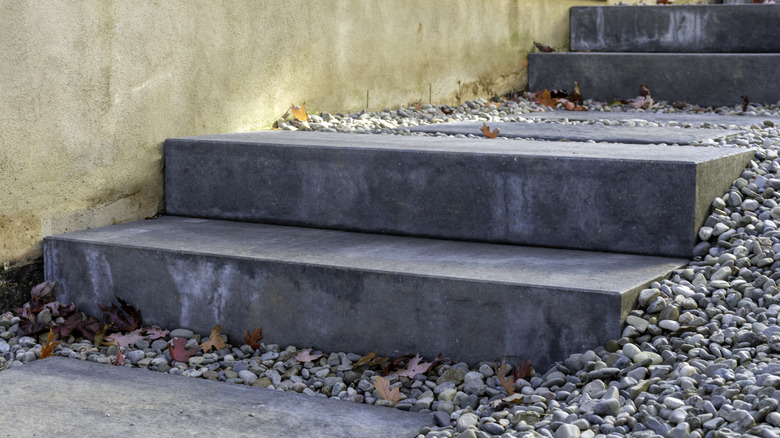
For some homeowners, there's nothing like tackling a DIY project instead of calling a pro. Not only can it be more cost-effective, but you can do it at your own speed and do it the way you want. Sometimes, though, even the smallest project can take more know-how than you might actually have. That's why items like precast concrete steps are a great solution. According to HomeAdvisor, you can expect to pay anywhere from $600 to $5,000 for a set, installed.
That range is wide because the cost depends on how many steps you actually need. Precast units alone typically run around $150 to $900 per step, not including installation. The more complex the setup, the more money you'll spend. That's because larger staircases with wider landings and different shapes usually cost more due to additional materials and labor. Then there's custom features, like reinforced concrete, textured or anti-slip finishes, and decorative trim, which can add anywhere from $50 to $500 more.
The cost of installation can also increase due to ease of access, drainage work, and leveling, among other factors. Even the delivery plays a part as well, since precast steps are heavy, often needing specialized equipment to transport and place them. If there is any work to be done before placement, a crew may need more time, which can impact the project. All of this adds labor costs on top of what you're already spending, which means your total cost may go higher than you expected.
Precast concrete steps explained
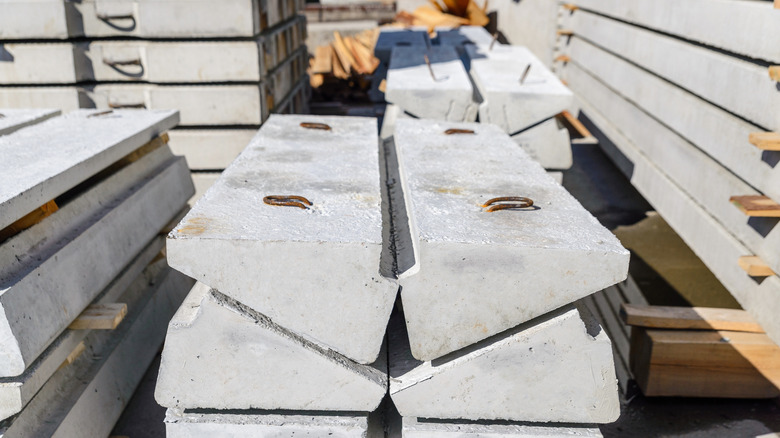
If you want to save money on a precast concrete step project, you can choose to install them yourself. The area must be exactly measured, cleared, and stable, with a solid base in place. Otherwise, the steps could shift, or even sink, over time. Some homeowners may even use a concrete calculator to help estimate the materials needed. Once the area is ready and all the necessary preparation is complete, the steps are set into position. Additional features like railings can be added after the installation is completed.
Generally, precast steps are more affordable, as they're installed faster, and they don't require extended curing time since they're already fully constructed. This means that once they're installed, they can be used right away. Additionally, precast steps are more durable, and more uniform compared to traditional concrete work that may involve on-site mixing ratios like the 4-2-1 rule.
One of the biggest disadvantages to precast steps is their margin of error. They must be precisely measured before being cast, because they're made to exact specifications. Once the steps are cast, they can't be adjusted. This means that any errors in sizing or uneven ground conditions can create problems. Poured steps will require mixing on-site, and they will take longer to cure, but the upside is that they're a lot more flexible in terms of sizing; since they're not cast off-site, there's a lot more room for adjustment.