

What's The Average Lifespan Of A Weed Eater Engine?
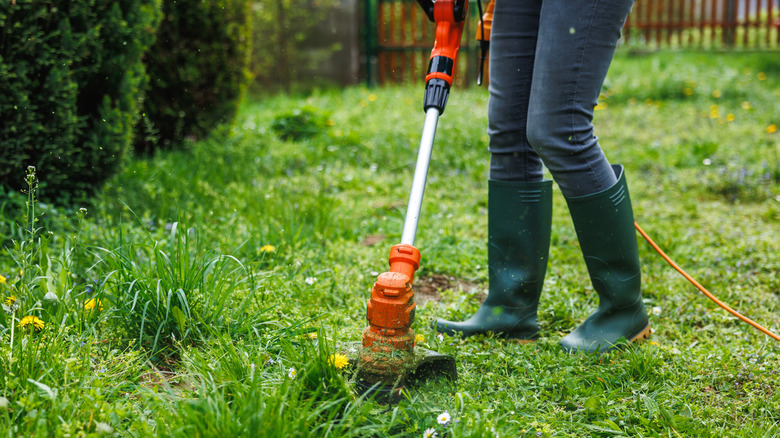
Tending to your yard is a chore that must be undertaken with some level of regularity, if only to ensure that your green space looks good. There are, of course, many tools that are considered essential in keeping your yard healthy, and most lawn care experts would surely agree that a weed eater is about as essential as it gets.
Those devices are also known as string trimmers, and if you're unfamiliar with their function, they are essentially a long stick with a string attached at the end that spins on a spool and clips any grasses or weeds that stand in its way. As their name suggests, the battery or gasoline-powered devices can also be used to keep grass back from the edges of sidewalks and flower beds, giving the yard on the whole a more polished look.
Specific to gas-powered string trimmers, it's worth noting that they are not overly expensive. That means you can bring that crisp look to your own yard without spending too much money, even as fuel prices continue to be on the high side. You can expect a pretty solid lifespan from the device either way, with sources reporting that a gas-powered trimmer may operate anywhere between 5 and 10 years, and the device's lifespan could potentially be extended past the decade mark under the right circumstances. Several factors go into the potential longevity of a weed eater's engine, and they stretch beyond the general quality of the device itself.
How to properly care for your weed eater
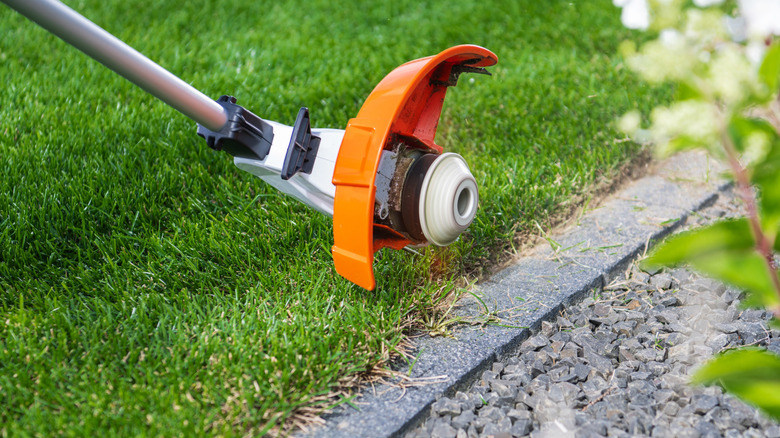
That's not to understate the quality of the string trimmer itself, of course, as design and build are clear keys to the potential lifespan of any power tool. Apart from quality, maintenance is, arguably, the bigger part of the lifespan equation of any gas-powered engine that is spinning the string attached to your weed eater.
As with most lawn care tools, there are a handful of preventative maintenance measures that every owner can take both before and after every use to ensure the device will continue to function at peak capacity over the course of its lifespan. First and foremost, you should inspect your device before using it. Be sure it's powered down prior to inspection. Once it is, what you're looking for is the buildup of excessive dirt and debris, visual damage to the device, or any loose fasteners. Not only do these issues affect how the device functions, but they also affect your safety while using it.
Next, you'll want to inspect the device's air filter, which helps prevent the buildup of dust and dirt inside the gas-powered engine. If it's clogged or dirty, remove the filter and clean it. If the filter has visible holes, replace it immediately. It's also recommended that you lubricate moving parts on the trimmer prior to use with a compatible oil. Finally, it should go without saying that cleaning your weed eater and storing it in a clean, dry place after every use will go a long way in lengthening its operational lifespan.