

This WWII Plane Is Still Flying After Being Found Under 268 Feet Of Ice
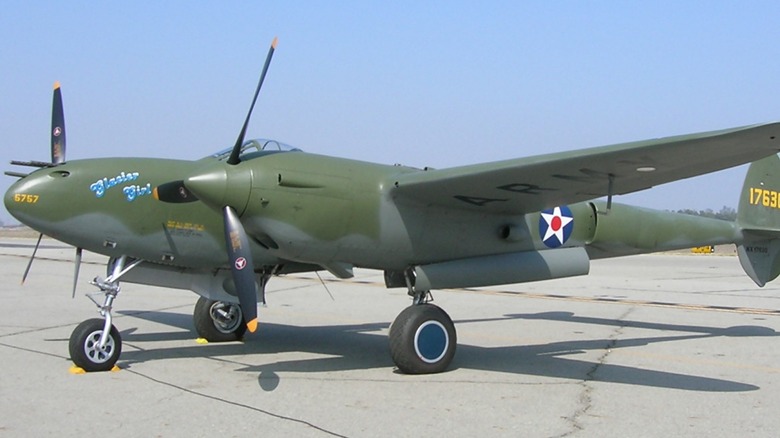
World War II saw the development of all manner of aircraft, some of which have become iconic. One such plane was the bizarre-looking Lockheed P-38 Lightning, which was a single-seat aircraft with a twin-boom design. Throughout the war, P-38s flew all kinds of missions, including escort, fighter-bomber, and night fighter operations; they were heavily used. There are some well-known P-38s from the war, but one of the most fascinating is known as Glacier Girl.
That's because the plane, which flew for the 94th Fighter Squadron, First Fighter Group, had to make an emergency landing in Greenland on July 15, 1942. The aircraft, along with two B-17 Flying Fortress bombers and five other P-38s, were all lost to the ice, which covered them as time passed. The aircraft remained buried under 268 feet of ice for decades. Then, in 1992, the Greenland Expedition Society excavated the P-38F, which was in inoperable condition after half a century under the ice.
It had to be removed and brought to the surface in pieces. Over time, every piece of Glacier Girl made it. The P-38F was moved to Middlesboro, Kentucky, where a great deal of time and effort made it flightworthy once more. Restoring the aircraft to flightworthy status was a big deal, as only 24 of the 10,113 built by the U.S. during the war survive today, and only six are flightworthy. That makes any operational P-38 a hot item as a Warbird, which is a restored military aircraft flown by enthusiasts.
Glacier Girl took to the skies after 60 years
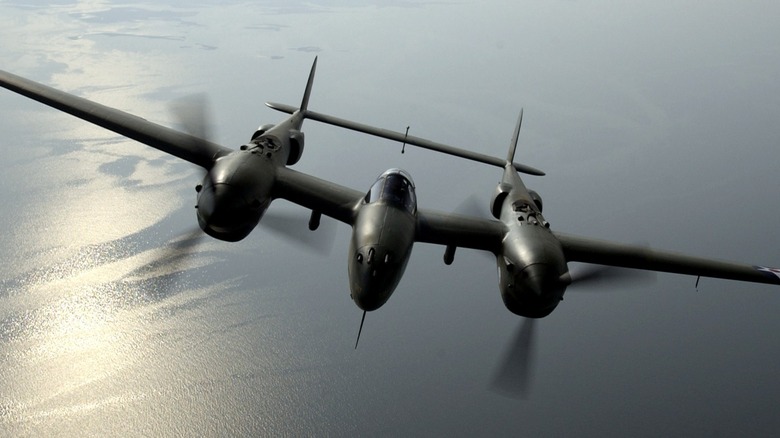
It took four months to bring the plane up to the surface at a cost of $638,000, and all told, the entire project ran closer to $3 million. Despite where Glacier Girl was found and how long it remained buried, much of the aircraft was in surprisingly good condition. Initially, the project to fully restore the fighter to flightworthy status was thought to take two years. It ended up taking a decade, and it was made possible with around 80% of Glacier Girl's recovered original parts.
Once Glacier Girl was fully restored, the next thing to do was take it up into the air, so pilot Steve Hinton climbed into the cockpit and flew the restored Glacier Girl for 30 minutes in October 2002. Hinton is a name that many in the Warbird community know well, as he's dedicated his life to flying restored military aircraft, having spent years doing so for the Planes of Fame Air Museum in Chino, California.
Glacier Girl continued flying for many years, transferring from one owner to another until it landed as the centerpiece of the Air Legends Foundation collection. It was later loaned to the Lone Star Flight Museum in Houston, Texas, and has continued flying and wowing onlookers for years. The P-38 was one of the best American planes of World War II, and it's a testament to the craftsmanship and drive of U.S. war production in the 1940s that a plane buried for decades under the ice could be made to fly once more.