

You'll Never See This Classic Car Feature On Your Dashboard Again - Here's Why
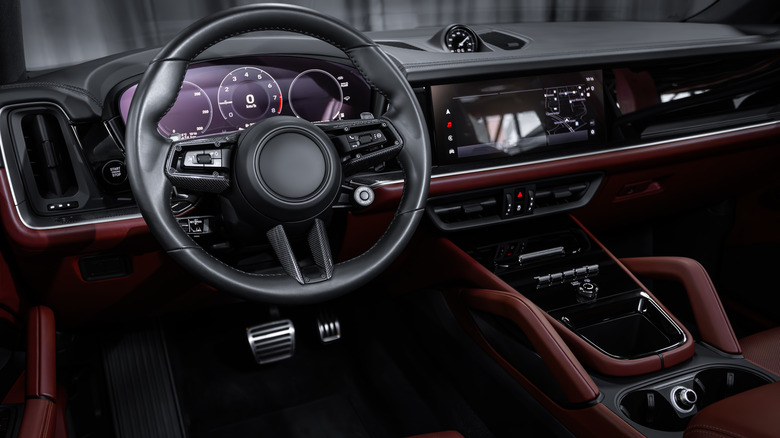
If you ever listen to an auto enthusiast talk, you'll hear them reminiscing about when cars were analog — physical buttons, knobs, and dials rather than large screens. While there are some new cars that retain physical buttons, there is one older dashboard feature you'll never see again: rolling drum odometers.
This odometer is a numbered drum that rotates as the vehicle travels, moving each digit to reflect how many miles you've driven. While many think it looks neat, it has some noteworthy flaws.
From the late 1970s onward, concerns grew that dealerships could manipulate odometers as illicit profits from mileage fraud grew. Digital odometers would primarily emerge in the 1980s, and industry predictions said they would virtually eliminate tampering risks. While it's not impossible to manipulate a digital odometer — it's much easier to tinker with the rolling drum odometer. By the early 2000s, automakers phased out mechanical odometers, with the 2005 Ford Crown Victoria being the last example.
Tampering, wear, and mileage limits in rolling drum odometers
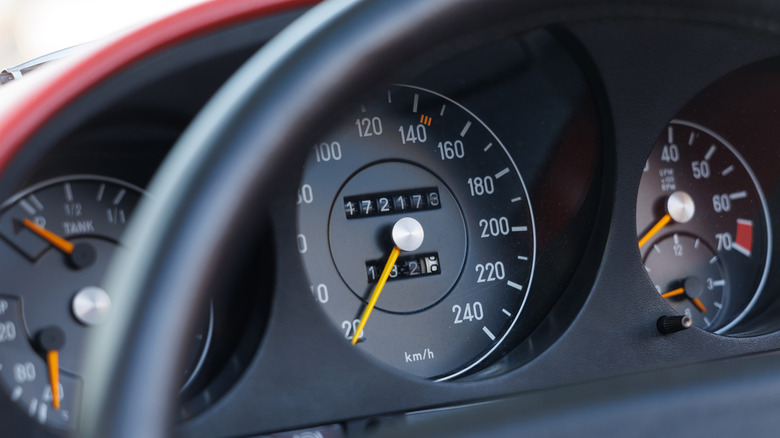
Due to being analog, the rolling drum odometer was also more prone to wear and tear. This means the mileage could end up being inaccurate — even if nobody is trying to pull a fast one. Digital odometers, on the other hand, are part of the vehicle's electronic control unit, allowing it to gather data from different sensors and keep the mileage more accurate.
Lastly, most of these rolling drum odometers only had six digits, meaning the highest mileage possible was 999,999. Once the final drum hit 9, there was nowhere else to go but a total reset, resulting in a reset back to 000,000. It wasn't a huge problem back in the day — car life expectancy in the 1960s and 1970s was just 100,000 miles. However, there are now a handful of cars that have reached over 1 million miles driven.