

Not Ford, Not Chevy: This Was The First-Ever Crew Cab Truck
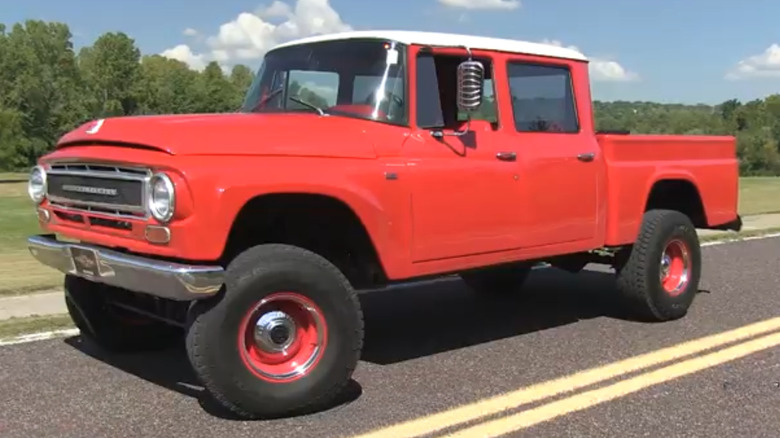
Historically speaking, the pickup truck market in the U.S. has long been dominated by both Ford and Chevrolet. These two powerhouse brands are among the most reliable pickup trucks available today, and they've both produced innovative models throughout the years. Despite their histories, however, neither Ford or Chevy can lay claim to building the first-ever crew cab truck. That title is instead claimed by International Harvester, which created the 1957 Travelette.
The Travelette's design addressed the limited seating found in many early trucks at the time. Trucks often served as job site vehicles rather than just everyday drivers, and carrying more than two or three workers proved to be difficult. This led to passengers riding in the bed, which was not always a safe solution (and is now only legal in a handful of states). When International Harvester introduced its crew-cab pickup that could carry up to six passengers, it signaled an important shift for pickup truck design in the United States.
Despite that innovative design, the Travelette was not a big seller. In fact, many buyers seemed to prefer traditional trucks with one row of seating instead of the additional room the new truck provided. Though the Travelette was used by drivers for industrial purposes like railroad work, it didn't do too well in consumer sales. However, International Harvester continued manufacturing and selling the vehicle over the next two decades before production of the Travelette eventually stopped after the 1975 model year.
The evolution of pickup cab design
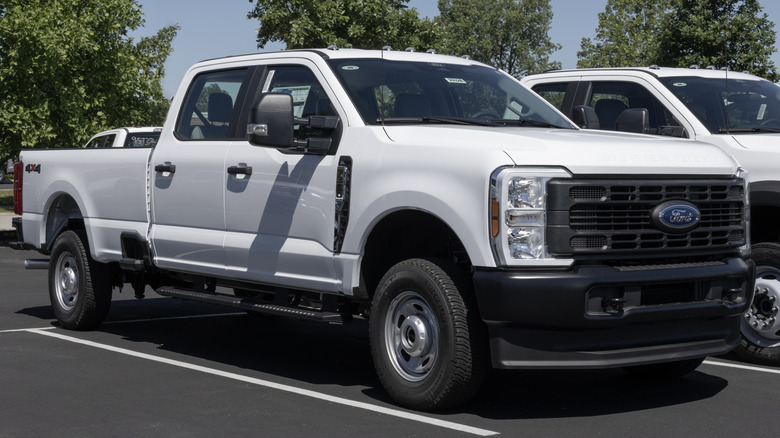
The 1957 International Harvester Travelette inspired Ford and Dodge to follow up with their own crew cab pickup trucks in the early 1960s. But the innovation didn't stop there. Consumer demand began to shift, and buyers wanted more room to accommodate families. Automakers eventually began producing pickups with different cab sizes and seating arrangements in response.
That evolution led to the Dodge Club Cab being introduced in 1973. This extended cab pickup truck stretched the cab and added extra space behind the front seats. This allowed the Club Cab to maintain a two-door layout, while also having additional room for cargo. Ford took a similar approach with the SuperCab in 1974. These designs gave buyers more room for passengers, while also keeping bed space and maintaining the overall utility of the truck itself.
The late 1990s and early 2000s brought the crew cab layout to a whole new level, as it became the most popular pickup configuration in the United States. By that point, crew cabs featured full-size rear seating and four doors, feeling more like a car than a truck. As a result, these new trucks became more common on U.S. roads than their predecessors. While trucks with earlier cab designs are still around, crew cabs remain the most dominant option in the pickup truck category.